
The war in Ukraine and the European Union’s decision to eliminate Russian gas imports by 2027 have redrawn the map, placing Greece in a pivotal position. Athens is emerging both as a key entry point for U.S. liquefied natural gas (LNG) into Europe and as a potential producer, should exploration south of Crete yield commercial results.
American LNG already dominates the Greek market. In the first half of 2025, 81 percent of Greece’s LNG imports came from the United States, a striking reversal of past dependencies. Washington views Greece as a strategic hub for channeling LNG across Southeastern Europe, with projects such as the Vertical Corridor—linking Greece to Bulgaria, Romania, Moldova and Ukraine—designed to reduce the region’s reliance on Russian energy.
The alignment of energy and geopolitics was underscored in early September, when U.S. Interior Secretary Doug Burgum visited Athens just one day after Chevron submitted its bid for offshore blocks south of Crete. Chevron’s involvement, alongside Helleniq Energy, is more than commercial. It places a U.S. giant directly in areas that overlap with the contested Turkish-Libyan maritime agreement, effectively undermining Ankara’s “Blue Homeland” claims.
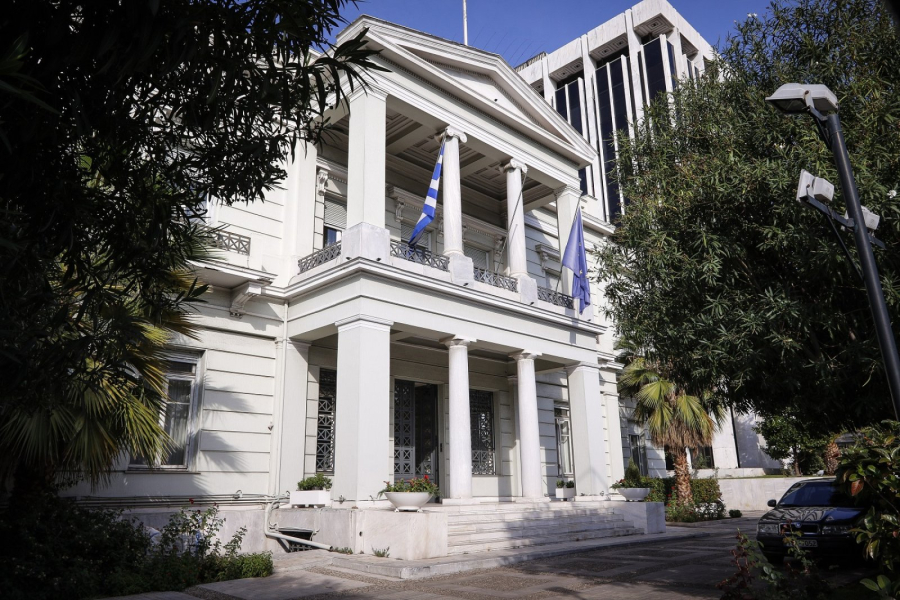
At the diplomatic level, Greece is moving just as assertively. On September 3, Athens submitted a formal letter to the United Nations responding to Libya’s May 27 note that unilaterally sought to define its exclusive economic zone (EEZ) in a way that overlaps significantly with Greece’s. The Greek letter argues that the Turkish-Libyan memorandum, on which Tripoli’s position is based, is illegal because it disregards the existence and rights of Greek islands. It stresses that Athens’ maritime zoning and offshore block delineations fully comply with the UN Convention on the Law of the Sea, and rejects the claim that the median line should be drawn only from the two countries’ mainland coasts. That, Athens insists, is a position Turkey has long sought to impose in both the Aegean and Eastern Mediterranean to negate the sovereign rights of islands such as Crete.
The letter also highlights the legality of the 2020 Greece–Cyprus EEZ agreement, pointing to it as proof of Athens’ commitment to international law. By submitting the document to the UN just days after Chevron’s expression of interest in Crete, Greece reinforced its strategy of combining energy diplomacy with legal and political moves on the international stage.