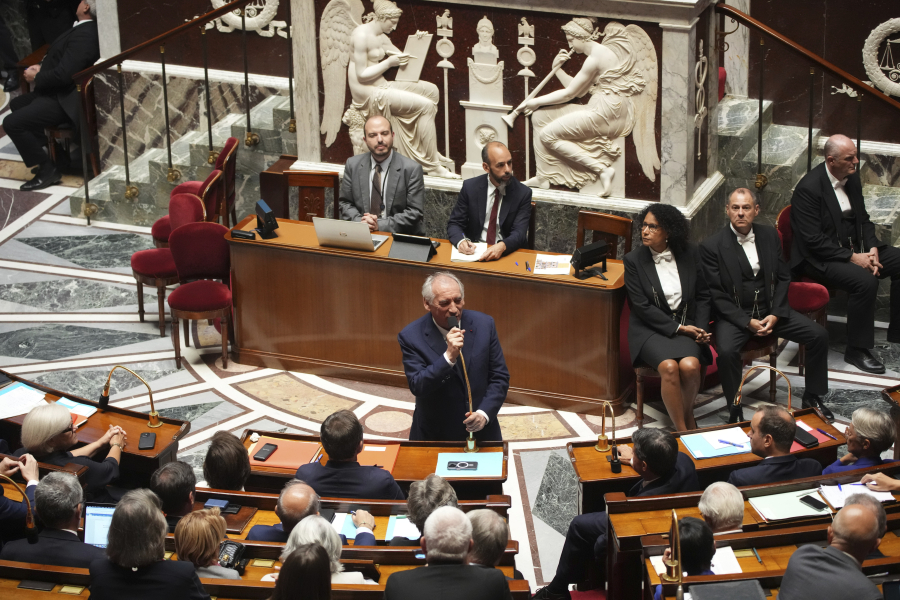

All eyes are on how markets will react to France’s latest political upheaval, as the eurozone’s second-largest economy faces narrowing fiscal space and a looming wall of debt repayments. France plunged into a fresh political crisis on Monday after parliament voted down the government, forcing Prime Minister François Bayrou to resign and pushing President Emmanuel Macron to search for his fifth head of government in less than two years. The political shake-up comes at a time of heightened market concern over the country’s public finances, with debt reaching 114% of GDP and the deficit running at nearly double the EU’s 3% ceiling.
Bayrou, 74, had only taken office nine months ago, tasked with pushing through a €44 billion austerity program in the 2025 budget. But opposition parties rejected the plan, unwilling to align themselves ahead of the 2027 presidential race, leaving the prime minister politically isolated. Finance Minister Éric Lombard had warned before the vote that the government’s collapse would inevitably derail the fiscal consolidation effort. Now, attention turns to Brussels, where the European Commission has long failed to enforce fiscal discipline on France.
The specter of early elections now hangs over the Élysée Palace, though Macron has so far dismissed calls from the far-right National Rally and the radical left France Unbowed to dissolve parliament. At the heart of the standoff remains the contentious issue of passing a new budget—a battle that ultimately cost Bayrou his premiership.
Macron must now choose a successor, either from within his centrist governing coalition or the conservatives—a fragile formula in the past. Alternatives include a moderate socialist or a technocrat, though a stable parliamentary majority appears elusive.
For now, French bond spreads held steady at 77 basis points for 10-year debt on Monday evening (compared with 70 basis points for Greek bonds). But prolonged political paralysis could trigger serious complications. France, with public debt of €2.7 trillion, must refinance or repay €206 billion within just 123 days—an amount equal to 7.6% of its total debt.
The comparison with Greece is hard to ignore. In May 2010, Athens was forced to seek an IMF bailout after failing to roll over €16 billion of maturing bonds—just 5.3% of its then-total debt of €300 billion.