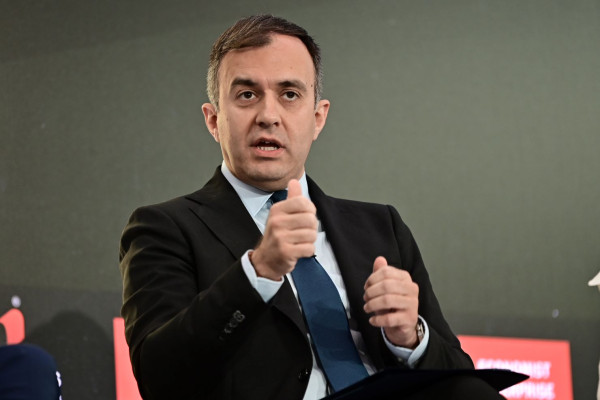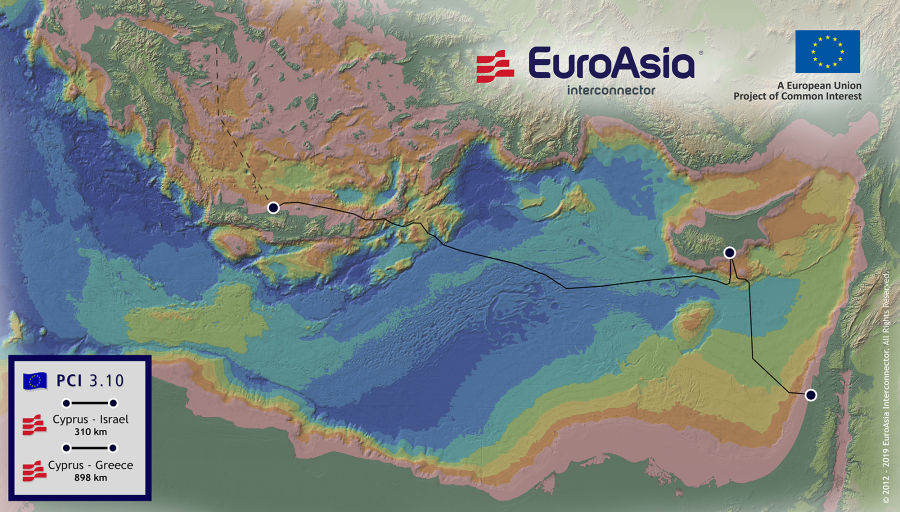
The Great Sea Interconnector project, designed to link Cyprus and Greece with the European electricity grid, is facing renewed uncertainty amid Turkish threats and tensions between Athens and Nicosia. Greek MEP Nikolas Farantouris has formally raised the issue with the European Commission, warning that delays are undermining an initiative of strategic importance to the European Union.
Farantouris, who sits on the European Parliament’s Committees on Security & Defence and on Budgets, described the project as a “decisive step” toward Europe’s energy integration. He noted that the undersea cable, backed politically and financially by Brussels, is meant to diversify the EU’s energy sources, bolster supply security, and reduce dependence on imported hydrocarbons.
Yet despite this support, the initiative has become bogged down. On one side, Turkey has sought to derail the project with threats of force and contested maritime claims in the Eastern Mediterranean, moves Farantouris said are aimed at advancing Ankara’s regional strategy. On the other, disputes have emerged between Greek and Cypriot authorities, including between President Nikos Christodoulides, Cyprus’s Energy Ministry, and Greece’s Independent Power Transmission Operator (ADMIE). The disagreements concern each side’s obligations and, crucially, the financial viability of the project, leading to further delays.
European prosecutors have meanwhile launched an investigation into possible criminal offenses linked to the €1.9 billion EU-funded project, a probe confirmed by both the Cypriot president and the country’s prosecutorial authority. The interconnector is being implemented by ADMIE, with the aim of connecting Cyprus to the European grid and, in a later phase, extending the link to Israel.
The project has already been plagued by setbacks. Nicosia has pressed for clarification on costs and long-term sustainability, while Athens reaffirmed its commitment earlier this year following reports that the scheme had been “frozen” due to financial and geopolitical concerns.
Farantouris emphasized that the interconnector’s significance goes well beyond the two countries directly involved, arguing that it serves the EU as a whole by strengthening the internal energy market, enhancing regional security, and connecting Cyprus to the Union’s network for the first time. He urged the Commission to act to ensure the project is completed swiftly and to clarify how Brussels intends to respond to Turkish military threats against what he described as a strategic European undertaking.