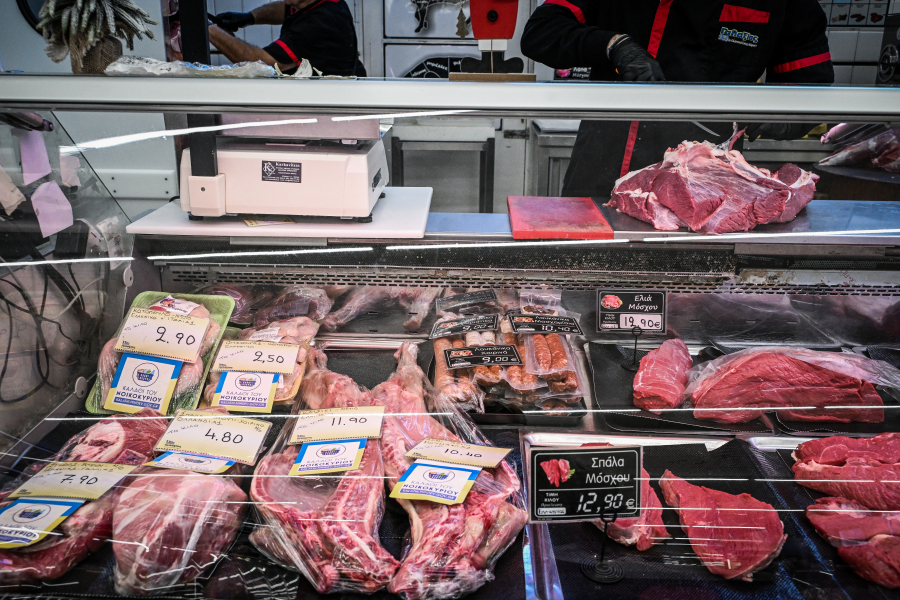

A shrinking livestock population, soaring production costs, and Greece’s heavy reliance on imports have created a volatile mix driving prices higher, with no sign of stabilization in sight.
Month after month, consumers are watching prices climb to levels they can neither follow nor afford. According to data from the Central Market, imported beef brisket shot up from €8 to €12 per kilo in just one year—a 50% increase. A similar surge was recorded in imported liver, while in niche categories such as frozen lamb intestines, hikes exceeded 70%.
The only exception is imported pork, where prices have edged lower. Overall, meat prices in July were 6% higher than a year earlier. Meanwhile, a survey by IELKA found that from August 2024 to August 2025, fresh meat saw a sharp 11% rise—the steepest increase among all product categories.
Greece’s dependence on imports—covering 80% of demand—continues to weigh heavily on the market. The country consumes around 160,000 tons of beef annually, while domestic production barely reaches 40,000 tons. In 2024 alone, meat imports were valued at €1.8 billion, up 7% from 2023, underscoring the growing reliance on foreign supply.
Fresh figures from the Hellenic Statistical Authority also reveal a decline in livestock numbers. In 2023, cattle fell by 4% compared to 2022, while losses were steeper in pigs (-16%) and goats (-10%). Poultry was the only category to show growth, with a 6% increase, though not nearly enough to offset the overall contraction in production.