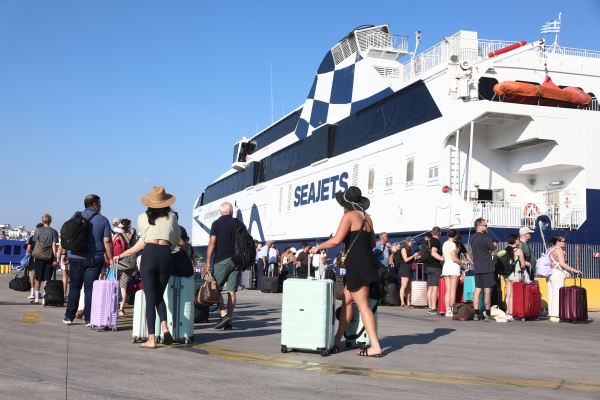

Greece’s summer tourism season is becoming increasingly compressed, with demand peaking for only about twenty days — from August 3 to August 24 — before dropping sharply. Popular destinations see full occupancy during that brief period, but immediately afterward, bookings fall by roughly half, leaving hotels with empty rooms despite the sunny weather stretching well into September.
Industry observers say this is no longer a one-off quirk but a structural shift, and one that is placing strain on thousands of small and medium-sized businesses. The impact is especially visible in coastal towns and islands reliant on domestic tourism. Many Greek holidaymakers are now limiting their vacations to a single week, a sharp reduction from past habits.
The change is not just in the length of stay but in spending patterns. More Greeks are avoiding restaurants and tavernas, opting instead to buy groceries and cook for themselves. This reflects a growing emphasis on cost control over the traditional holiday spirit of relaxed consumption. While this frugality eases the strain on family budgets, it has serious consequences for the hospitality and dining sector, a cornerstone of the Greek tourism economy.
Foreign visitors are expected to make up some of the shortfall, yet the majority of arrivals this year are younger travelers with tighter budgets and different priorities. They often choose cheaper accommodation, such as rented rooms or Airbnb properties, spend less in local businesses, and focus on low-cost activities.
The contrast with last year is striking. In 2024, Greece welcomed 36 million visitors (excluding cruise passengers) and generated €20.6 billion in tourism revenue. Hopes were high that 2025 would deliver even stronger results. While the country is on track to receive around 37 million visitors this year, revenues are expected to remain flat at about €20.5 billion. That means more tourists, but less spending per head.
For tourism professionals, this is a warning sign. A falling average spend suggests either a growing shift toward budget travel or tighter spending due to economic pressures. It also underscores the sector’s difficulty in upgrading its offerings to attract higher-value tourism that could deliver greater returns. In essence, Greece is welcoming more visitors but failing to translate those numbers into increased economic benefit — a dynamic that risks straining both infrastructure and natural resources without a proportional payoff.