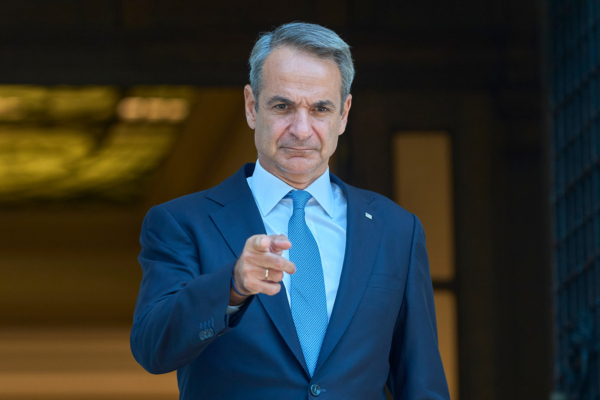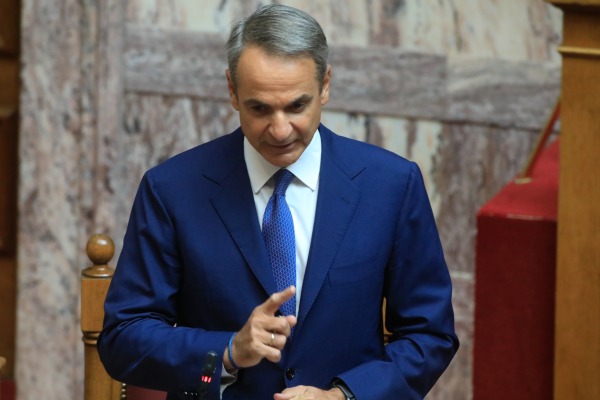
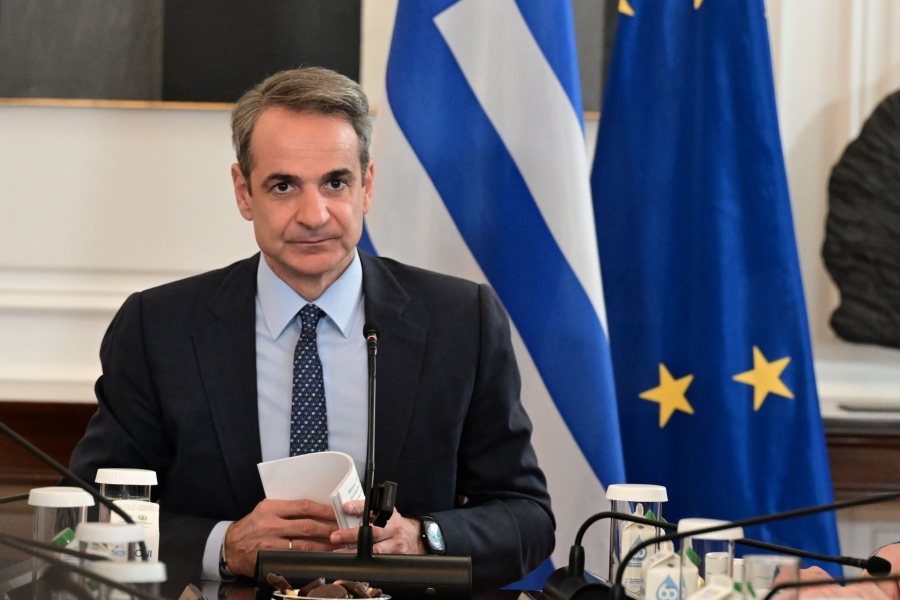

Greek Prime Minister Kyriakos Mitsotakis has come under intense criticism from opposition parties following a wide-ranging interview he gave to the pro-government newspaper Proto Thema. While the piece leaned heavily into lifestyle themes—covering everything from his personal reading habits and views on artificial intelligence to his spelling mistakes—it notably avoided addressing a major political controversy that has rocked the country in recent days. Specifically, the Prime Minister made no mention of the government's midweek maneuver in Parliament to block the formation of a preliminary inquiry committee into the agricultural subsidies scandal at the state agency OPEKEPE, where at least two government ministers are reportedly under investigation by the European Public Prosecutor.
In the interview, Mitsotakis spoke extensively about his government’s record and ambitions. He praised recent reforms in digital governance, referenced the trauma of the 2023 Tempi train disaster, and emphasized what he sees as his administration’s progress on healthcare, job creation, and military modernization. He reiterated his belief that Greece has become more stable, more respected abroad, and more serious as a country under his leadership. Acknowledging some missteps—particularly regarding the OPEKEPE scandal—he nonetheless insisted that his government is on track to fulfill its election pledges from 2023, expressing confidence that in four years' time voters will recognize the improvements.
Mitsotakis defended his tough stance on migration, touted military advancements such as the forthcoming delivery of three state-of-the-art frigates, and claimed a strategic edge over Turkey in aerial defense. On foreign policy, he made clear that Turkey should not expect access to EU funding programs such as SAFE unless it abandons hostile rhetoric and removes its long-standing casus belli threat over maritime disputes.
Despite the optimistic tone, Mitsotakis painted a sobering picture of the political climate in Greece. He lamented the lack of cross-party cooperation, saying that every time he attempts to reach consensus, “it feels like pushing against a wall.” He criticized what he described as a breakdown in political dialogue, where opponents are treated as enemies to be eliminated rather than interlocutors. Still, he insisted on seeking a parliamentary majority in the next election and argued that no one could deny the country's progress over the past six or seven years.
On a personal note, Mitsotakis said that his greatest source of strength is his family, who aren’t afraid to call him out when necessary. He acknowledged that his time in politics will eventually come to an end, but also made clear that he aspires to a third term in office. What troubles him most, he said, is the growing public perception that all politicians are corrupt—a mindset he called dangerous and self-destructive, even admitting that the political class itself bears some responsibility for fueling it.
Opposition leaders reacted with fury. The center-left PASOK–KINAL party accused the Prime Minister of lurching “from blunder to blunder” and lacking any real vision. They derided his suggestion that inflation would ease by 2027 while failing to address monopolistic practices or the soaring cost of living. They also took aim at the government’s inaction on consumer protection and its silence on surging private healthcare costs and housing prices. According to PASOK, Mitsotakis appears more focused on optics than substance, unable or unwilling to tackle the deep-rooted problems affecting Greek society.
From the left, SYRIZA-Progressive Alliance accused Mitsotakis of using calls for political cooperation as a smokescreen to avoid accountability. Party president Socrates Famellos responded sharply to the Prime Minister’s appeal to “sit down and talk” rather than pursue legal consequences for political wrongdoing. Famellos charged that Mitsotakis was effectively asking for complicity in covering up corruption, shielding his ministers from prosecution in the OPEKEPE affair, and diluting public outrage over the deadly train crash at Tempi. “No, we cannot agree to that,” Famellos said, adding that the only consensus possible is on the need for Mitsotakis to step down.
The New Left party joined the chorus of criticism, with its leader Alexis Haritsis blasting the Prime Minister for reducing Greek politics to a “circus.” In a scathing online post, Haritsis accused Mitsotakis of manipulating parliamentary procedures to bury the OPEKEPE investigation and of humiliating even his own party’s MPs in the process. Haritsis questioned why, amid multiple scandals, the Prime Minister thought it appropriate to share personal anecdotes rather than offer concrete accountability.