
The vote, held under a cloud of controversy, has deepened the standoff between the government and the opposition, raising serious constitutional questions and accusations of institutional misconduct.
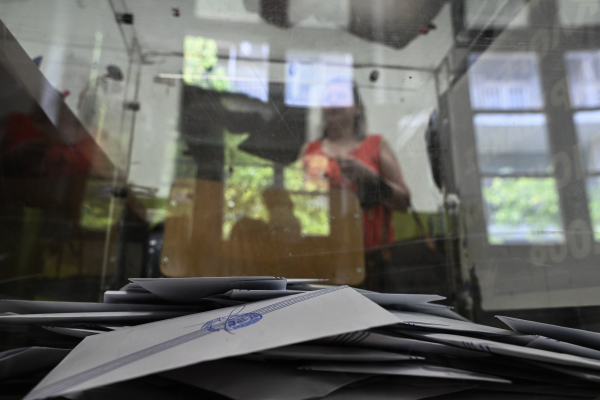
At the center of the dispute is the decision by the ruling New Democracy party to allow 75 of its MPs to cast their votes by mail, bypassing a traditional in-person vote. The government defends this move as legitimate and in line with parliamentary regulations, pointing out that postal voting has increasingly become an accepted practice in recent years. To support its claim, it cited statistics showing that its own use of this method was lower than that of opposition parties such as PASOK, SYRIZA, and others. According to government spokesperson Pavlos Marinakis, the procedure fulfilled the constitutional requirement for a quorum — defined as at least 75 MPs present — even if the actual majority needed for passing the opposition's proposals was not achieved. Therefore, he argued, the process was procedurally sound, and the opposition’s motions simply failed to garner enough support.
However, opposition parties have strongly challenged this narrative. They argue that the vote lacked legitimacy and was designed to avoid potential defections within New Democracy ranks, amid rumors that as many as 15 government MPs might have supported an investigation targeting one of the implicated ministers. The decision to rely heavily on postal votes, they claim, was a strategic maneuver to mask internal dissent and sidestep political embarrassment. Former PASOK leader Evangelos Venizelos, a constitutional law expert, issued a fierce critique, accusing the government of “flagrant violations” of both the Constitution and the parliamentary rulebook. He characterized the vote as a “multiple degradation of institutions” and called into question the government's commitment to democratic procedure.
Venizelos’ position has sparked a fierce public exchange with the government, which insists that his legal interpretation is flawed. Marinakis, among others, pushed back, asserting that Venizelos confused the concepts of quorum and majority, and emphasizing that the Constitution sets no minimum number of MPs beyond 75 for a vote to take place. Deputy Speaker of Parliament Nikitas Kaklamanis added that there was no procedural justification to halt the vote, since the opposition had not officially withdrawn or challenged the quorum while it was in place.
The political fallout has been significant. The government, while maintaining procedural correctness, has suffered reputational damage. Critics, including PASOK leader Nikos Androulakis, accuse Prime Minister Kyriakos Mitsotakis of losing control of his parliamentary group and failing to act transparently. Androulakis warned that “no prime minister can stand who does not even trust his own MPs,” and accused the government of trying to protect what he called a “criminal network” within the state. He also pointed out that in 2008 and 2009, New Democracy itself had walked out of similar votes when in opposition, and that it had then accepted the same constitutional interpretations now being dismissed.
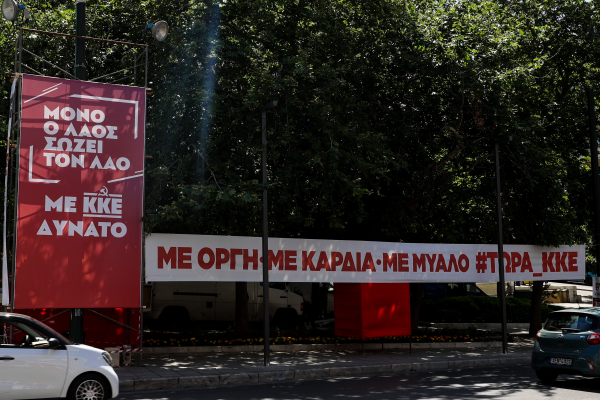
SYRIZA’s Socratis Famellos described the vote as “null and void,” arguing that it exposed not only a scandal but also a lack of control within the ruling party. Meanwhile, leaders from other opposition parties — including the Communist Party (KKE) and the New Left — joined forces to demand an emergency session of Parliament’s Presidents’ Conference, hoping to have the vote invalidated or repeated. Speaker Kaklamanis rejected both this request and a separate appeal to consult Parliament’s scientific council on the matter.
Underlying this procedural battle is a race against time. The statute of limitations for one of the ministers implicated in the case, Makis Voridis, expires on October 6. This deadline is likely to accelerate developments, and PASOK has already signaled that it is exploring further legal and parliamentary steps — possibly during the summer session — to revive the proposal for an investigative committee. Whether through a re-submission of the original motion or a new initiative entirely, the opposition is determined to bring the issue back to Parliament.