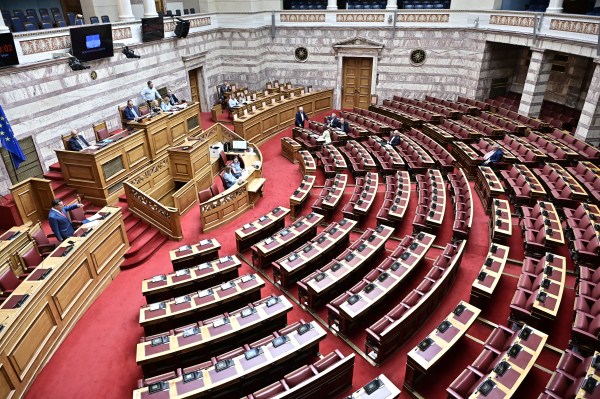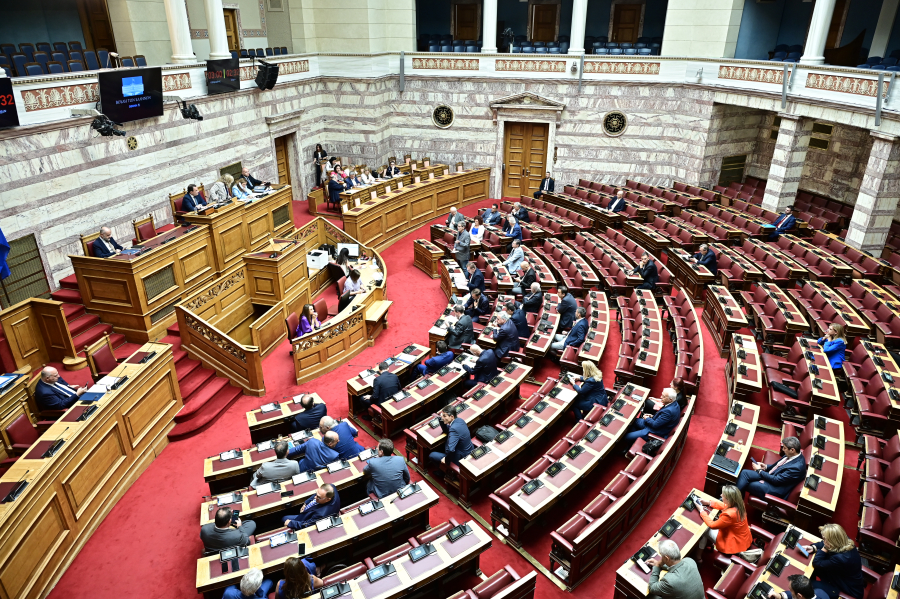

The governing New Democracy party has proposed the formation of a parliamentary inquiry committee to investigate all subsidy programs dating back to 1998. At the same time, opposition parties are pushing for the establishment of a preliminary investigation committee, which could potentially lead to criminal proceedings against former ministers.
The government’s motion is expected to pass, despite unified resistance from opposition parties such as SYRIZA and PASOK. Anticipating this, the government is reportedly considering a strategic withdrawal from Wednesday’s vote on the opposition’s proposal, signaling a further escalation in political brinkmanship.
In a statement that drew attention within political circles, government spokesman Pavlos Marinakis left open the possibility that New Democracy MPs may abstain from the upcoming vote. He argued that if today’s motion to establish an inquiry committee is approved, it makes the creation of a separate preliminary investigation committee redundant, since the inquiry would cover all time periods and political responsibilities involved in the scandal.
The government has defended this stance by accusing the opposition of double standards. Marinakis noted that opposition parties have previously chosen to abstain from similar votes, such as the recent one involving former Minister Kostas Karamanlis, and stressed that the ruling party has the same right. He dismissed opposition criticism as both rushed and hypocritical.
This latest development comes amid speculation that the potential withdrawal may also be aimed at avoiding internal party tensions. Although Marinakis publicly denied any fear of defections within the New Democracy parliamentary group, the timing of a secret vote and the fragile state of internal party dynamics have fueled concerns that some MPs could break ranks.
Marinakis also sought to address claims that Greece is under disproportionate scrutiny by European authorities. In response to opposition allegations that the country is being targeted by the European Public Prosecutor’s Office (EPPO), he presented official statistics showing that EPPO is currently investigating a total of 2,666 cases across 24 EU countries. Of those, 84 concern Greece, with 25 related to agricultural subsidy programs. By contrast, Italy faces 764 investigations, Germany 295, and Romania 380. Marinakis emphasized that the mere existence of an investigation does not imply wrongdoing, criticizing what he called a new opposition “trend” of politicizing legal cases.
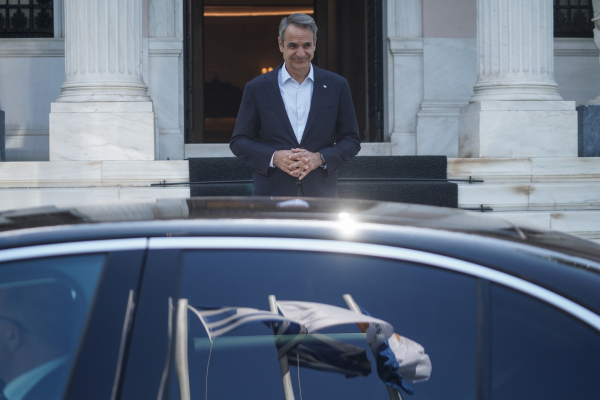
Today’s debate in Parliament is likely to be intense. Prime Minister Kyriakos Mitsotakis has signaled a preference for a low-key tone, though it remains uncertain whether the opposition will adopt a similarly restrained approach. With this week marking the close of the current parliamentary session, political parties on all sides are seizing the opportunity to score points in what is shaping up to be one of the most politically charged episodes of the year.