
The announcement was made through a video address in which Mitsotakis emphasized Greece’s deep-rooted connection to the sea, calling it “the silent strength of the country,” and a fundamental part of its culture, history, and identity.
This move follows a pledge the Prime Minister made during the UN Ocean Conference held in France earlier this year. He described the parks as essential steps toward safeguarding Greece’s marine heritage for future generations. These newly designated areas will be among the largest protected marine zones in the Mediterranean and are expected to help Greece achieve its goal of protecting 30% of its territorial waters well before the 2030 global target.
A key feature of these parks is the complete ban on bottom trawling, a highly destructive fishing practice. Mitsotakis highlighted this measure as critical to restoring ecological balance and setting a bold new standard for marine conservation. He also cited inspiration from Sir David Attenborough’s recent documentary Ocean, calling it a powerful reminder that the sea is not only a place of beauty but also a vital, endangered source of life.
The Prime Minister framed the initiative not only as environmental protection but as a collective effort involving local communities, fishermen, scientists, and international partners. He expressed his vision of Greece becoming a “voice for the ocean” in Europe and beyond, adding, “When we protect our ocean, we protect our future.”
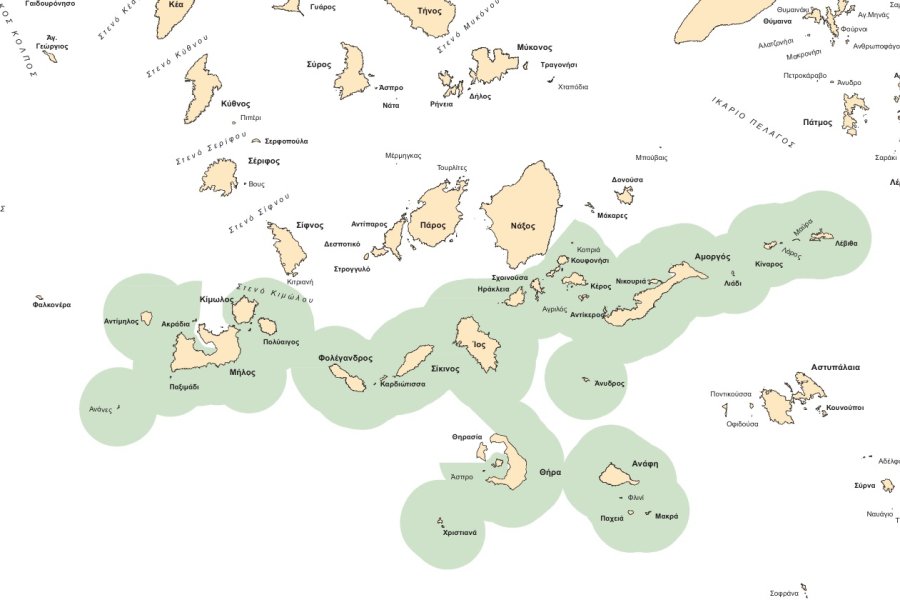
The two marine parks will cover a combined area of approximately 27,500 square kilometers—significantly more than initially promised. The Ionian park will encompass roughly 18,000 square kilometers, while the park in the Southern Cyclades will cover around 9,500. These areas include dozens of sites already part of or being considered for inclusion in the European Natura 2000 network of protected environments. Their boundaries were defined through comprehensive environmental studies and have now entered a public consultation phase, open until September 22.
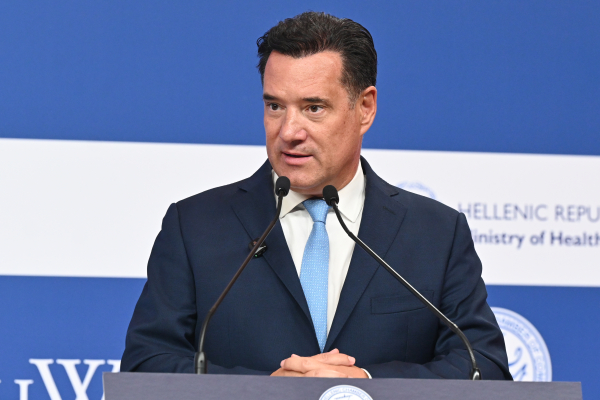
According to Greece’s Environment and Energy Minister Stavros Papastavrou, the establishment of these parks ensures that more than 35% of the country’s territorial waters are under protection, placing Greece ahead of most European countries in meeting conservation goals. He emphasized the government’s long-term vision to expand marine protection efforts to additional parts of the Aegean, underscoring the sea’s central role in the nation’s environmental and cultural identity.
The Southern Cyclades were selected as the first phase of this broader initiative due to the region’s ecological sensitivity and the pressures it faces from intensive tourism. The Ionian Sea, meanwhile, is known for being a crucial habitat for endangered marine mammals that use the deep Hellenic Trench as a migration and feeding corridor. Both parks are designed to be ecologically cohesive and manageable, with high-tech monitoring systems including drones, radar, and satellite imaging overseen by the Natural Environment and Climate Change Agency in collaboration with local maritime authorities.
Once the public consultation ends, the Greek government plans to submit a Presidential Decree to the Council of State by October. If approved, it will formally enshrine the parks in law and ensure their active governance.
The initiative has been welcomed by environmental organizations, including the World Wildlife Fund (WWF), which praised the government’s announcement as a significant step. However, WWF also urged Greek authorities to show the same urgency in finalizing protections for dozens of other designated areas that have been left in legal limbo for years. The organization stressed the importance of coordinated, ongoing efforts to ensure these parks are not merely symbolic but function as real sanctuaries for marine life.