
Despite signs of stability on the surface, the country continues to grapple with deep-seated structural weaknesses, low productivity, and widening social inequality. According to an in-depth report presented by economics professor Kosmas Marinakis as part of his Greekonomics series on YouTube, Greece’s economy is not just underperforming—it is structurally stuck. Drawing from the latest Eurostat and ELSTAT data, Marinakis lays out why the country has failed to catch up with the rest of the EU, and why the prospects for real convergence remain slim without a radical shift in economic strategy.
The report paints a stark picture: Greece has not only failed to close the gap with the wealthier European countries but is increasingly resembling the EU’s poorest economies. In 2024, Greece’s per capita GDP ranks 24th out of the 27 EU member states, ahead of only Bulgaria, Romania, and Hungary. Adjusted for inflation, the country's real GDP per capita remains consistently below the EU average and has been drifting closer to the group of the ten poorest member states. Even in purchasing power terms, Greece is ahead of only Bulgaria.
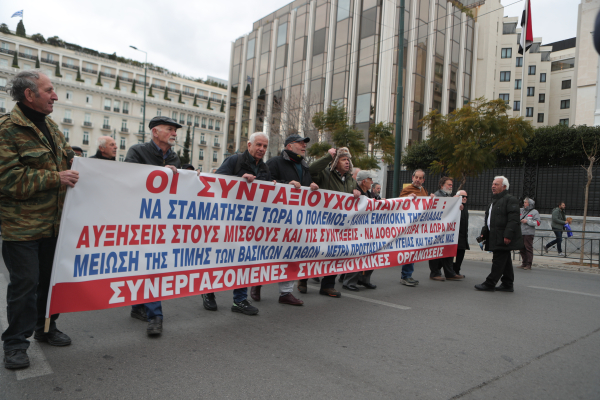
The economic stagnationn is most evident in income and wages. Real disposable income in Greece is still 18 percent lower than it was in 2008. Meanwhile, the same income level in the EU’s poorest countries increased by 38 percent over the same period. Real hourly wages in Greece have also fallen behind, now sitting below the average of the EU’s ten poorest economies and hovering at around half of the broader EU average. These figures signal not just stagnation but long-term erosion in living standards.
While Greece has managed to bring its public debt down significantly—from 209 percent of GDP in 2020 to 153 percent in 2024—the numbers tell only part of the story. More than half of that reduction is attributable not to growth or fiscal prudence but to inflation. The underlying economy, the report suggests, is not growing fast enough to carry the debt burden in a sustainable way.
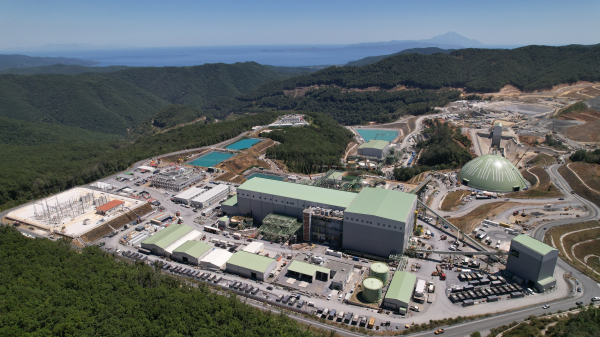
Investment levels are another red flag. Greece continues to invest less than the EU average, and even less than the ten poorest EU countries. What’s more concerning is the nature of those investments: they are concentrated in real estate and public sector infrastructure, rather than in productive sectors like manufacturing or technology. In contrast, countries like Poland and the Czech Republic have used strategic industrial investment to rapidly modernize and expand their economies.
Despite improvements in labor costs, Greece’s productivity has been in steady decline. Productivity per hour worked has been falling by 9.4 percent annually compared to the EU average, and by 14.7 percent relative to the poorest EU member states. The country ranks last in the EU for economic complexity—a measure of a nation's capacity to produce and export sophisticated, high-value goods. In essence, Greece is not just producing less; it is producing less of what matters in a modern economy.
The labor market also reveals troubling trends. While overall unemployment has returned to pre-crisis levels, the working-age population has shrunk by nearly 300,000 people since 2009, due to emigration and demographic decline. Youth unemployment remains stubbornly above 30 percent. A significant 68 percent of jobs in Greece are low- or mid-skilled—far higher than the EU average. Perhaps most troubling is the so-called “brain waste”: one in three Greek university graduates works in a job that does not require a degree, the highest rate in the EU.
Income inequality has also deepened in recent years. During the SYRIZA government (2015–2019), incomes for the bottom 10 percent of earners rose by nearly 46 percent. Under the New Democracy government (2019–2023), the greatest gains were recorded among the top 10 percent, whose incomes rose by almost 27 percent. Once inflation is factored in, it becomes clear that purchasing power declined for 80 percent of Greeks during New Democracy’s tenure, while it increased for that same share during the SYRIZA period.
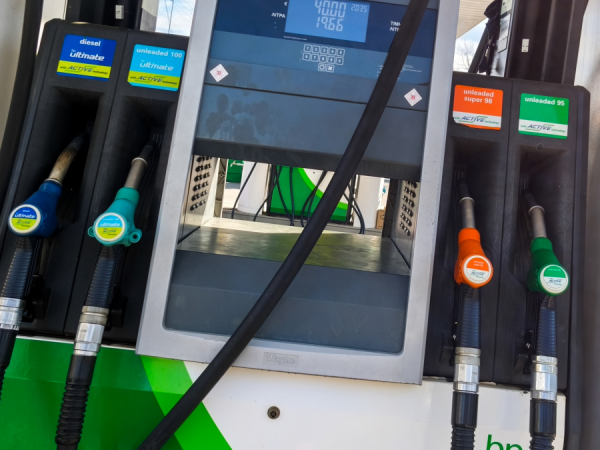
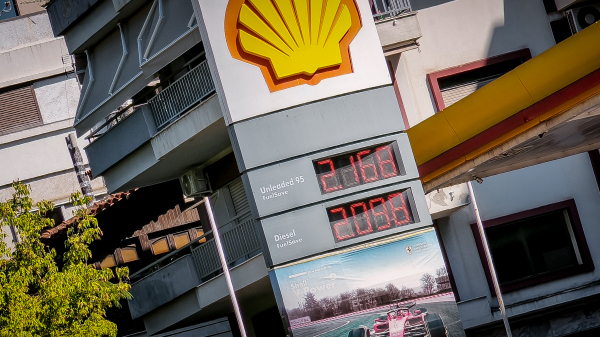
Inflation, particularly after 2021, has had a profound effect on the economy. Prices in Greece rose by 18.6 percent between 2020 and 2024. While this helped reduce debt ratios on paper, it also hit consumers hard. The spike in energy prices—especially electricity, gas, and fuel—was more abrupt and prolonged in Greece than in most of Europe.
The government’s intervention via the controversial “adjustment clause” helped contain the damage somewhat, but the lack of genuine competition in the energy market allowed price gouging to flourish. Food prices also rose, though less sharply than elsewhere in Europe, but the state’s response was slow and largely ineffective. The poorest households were hit hardest: from 2019 to 2023, the bottom 10 percent faced inflation of nearly 15 percent, compared to 13.5 percent for the wealthiest, illustrating a regressive impact that worsened inequality.
The housing crisis is another acute issue. Greece is among the few EU countries where rent inflation not only persisted after 2022 but intensified. This surge is partly driven by specific policy decisions, such as the Golden Visa program for foreign investors, the unregulated expansion of short-term rentals like Airbnb, and the consolidation of housing assets in the hands of banks. These factors have pushed rents beyond the reach of many households, turning access to adequate housing into an increasingly urgent problem.
The energy crisis has also taken a heavy toll, particularly on rural and mountainous regions. High electricity and fuel prices, coupled with ineffective subsidies, have made adequate heating unaffordable for many families. In these communities, the crisis goes beyond economics—touching on health, well-being, and social stability—though much of this impact remains hidden in official data.
Although the report does not focus explicitly on crime, it suggests that the combination of economic insecurity, housing instability, and the erosion of social protections is fueling a slow-burning form of social fragmentation. As poverty deepens and affordable housing becomes scarce, the risk of informal labor markets and social unrest grows.
The takeaway from Marinakis’s Greekonomics analysis is sobering: while Greece may have exited its official bailout programs and restored a sense of macroeconomic order, its economic foundations remain weak and uneven. Without a bold reimagining of its development model—centered on productive investment, industrial renewal, and social cohesion—the dream of catching up with Europe may remain, at best, a distant aspiration.