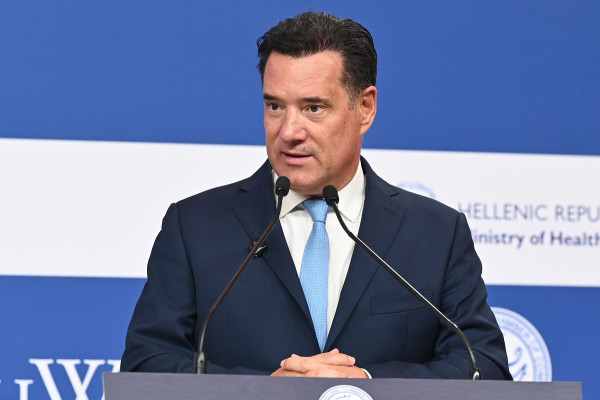
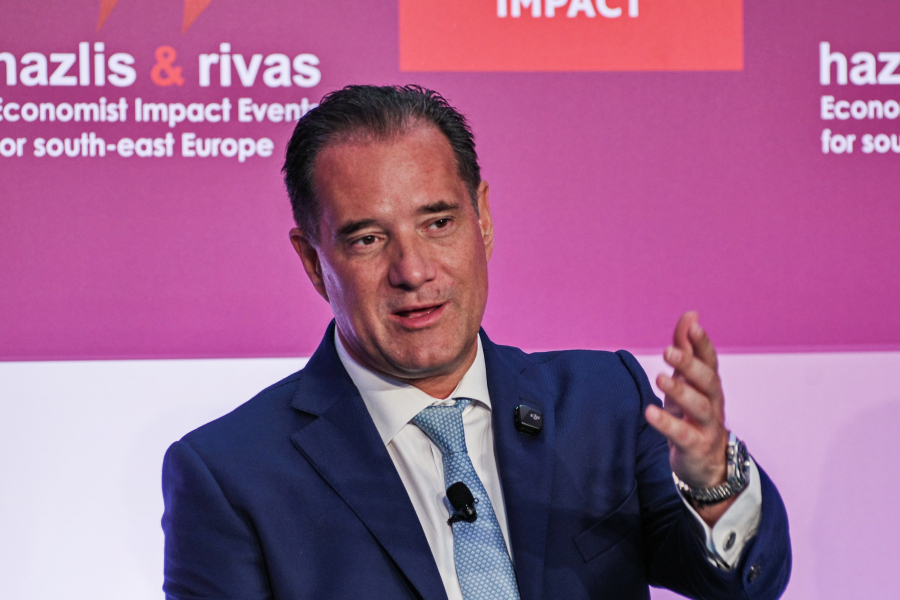

Greek Minister of Health Adonis Georgiadis revealed that 12% of all medicines consumed in the European Union are now produced in Greece—an unexpected statistic that underscores the rapid growth of the country’s pharmaceutical sector.
He attributed much of this progress to government initiatives aimed at fostering investment, particularly the introduction of an “investment clawback” mechanism. This policy, designed to reward pharmaceutical companies that reinvest in the local economy, has already mobilized €1.6 billion in sector-specific investments.
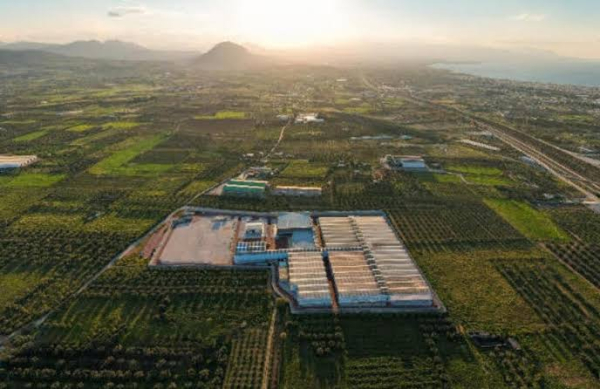
Georgiadis also pointed to the city of Tripoli, in the central Peloponnese, as a developing pharmaceutical hub, thanks to the expansion of production facilities in the region. He announced a new round of investments set to unfold over the next three years, supported in part by public funding. In parallel, the government plans to implement a new digital prescription filter aimed at reducing medication waste—an initiative expected to generate €300 million in annual savings by curbing the oversupply of unused pharmaceuticals.
The discussion extended beyond national achievements to touch on wider economic concerns. Theodoros Tryfon, president of the Hellenic Association of Pharmaceutical Companies (PEF), board member of the Federation of Greek Industries (SEV), and executive board member of Medicines for Europe, offered a more cautious perspective. He warned that Greece continues to face a significant investment gap, which, combined with an overreliance on the services sector and demographic pressures, could create serious long-term risks—including the potential need for a new international bailout if structural issues remain unaddressed.
Tryfon called for strategic investment in sectors where Greece holds a competitive advantage, such as pharmaceuticals. He noted that the industry has already emerged as one of the top three sectors in terms of added value derived from European recovery funds. However, he emphasized that long-standing challenges—including high energy costs, land-use planning obstacles, bureaucratic delays, and a shortage of skilled labor—continue to hamper the industry’s full potential.
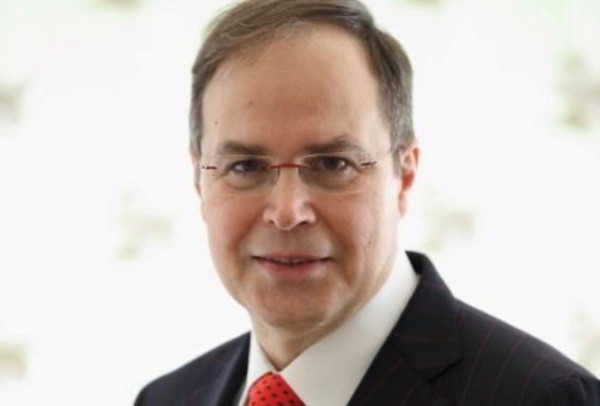
Echoing the sector’s optimism, Dimitrios Demos, CEO of pharmaceutical company DEMO and vice president of PEF, spoke about the significant expansion underway across Greece. He noted that new production facilities are either under development or already operational in regions as diverse as Tripoli, Athens, Thessaloniki, Patras, Ioannina, Larissa, Trikala, and Sapes in northern Greece.
Demos described this wave of activity as an “investment boom,” largely driven by the government’s development clawback policy, first introduced in 2019. He emphasized that this growth is not limited to economic metrics alone but also carries meaningful social and environmental benefits.
In Tripoli alone, the new pharmaceutical installations are expected to create 2,000 direct and 6,000 indirect jobs—many of them high-quality, skilled positions that surpass the typical employment opportunities available in Greece’s regions. To ensure local communities are prepared to meet this demand, career training and professional orientation initiatives are being launched alongside the industrial development.
From a European policy standpoint, former Deputy Minister of Health Vassilis Kontozamanis, now a board member of the EU’s Health Emergency Preparedness and Response Authority (HERA), placed the Greek pharmaceutical surge within the broader context of Europe’s evolving public health strategy. He explained that the continent is adopting a more strategic, autonomous approach to healthcare, seeking to strengthen its resilience against global shocks. This includes building capacity in research and development, addressing the rising threat of antimicrobial resistance, and safeguarding pharmaceutical supply chains.