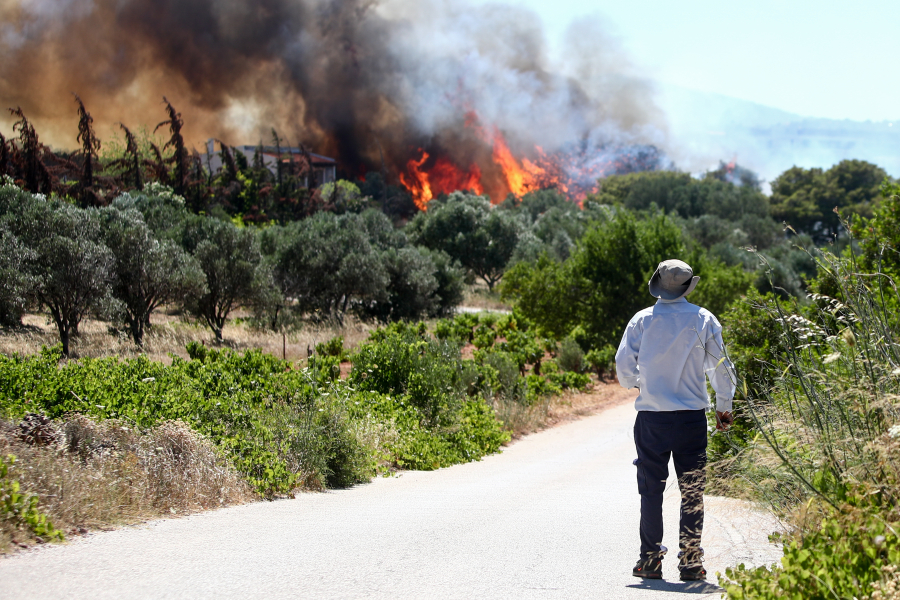

Fueled by strong winds and high temperatures, the fire forced Greek emergency services into a state of maximum alert, prompting large-scale evacuations and a major firefighting operation.
Although by Thursday evening the situation had improved and the active fronts had begun to subside, firefighting crews remained on high alert due to the high risk of flare-ups.
The scale of the emergency response was significant: 170 firefighters, supported by eight specialized forest units and 48 vehicles, were deployed on the ground, alongside a large number of volunteers and private firefighting resources. In the air, 17 firefighting aircraft and seven helicopters, including one designated for coordination, battled the flames from above.
The fire tore through residential neighborhoods despite concerted efforts from emergency crews and locals. Homes were destroyed and many properties suffered extensive damage. Authorities reported conducting around 57 rescues and evacuating approximately 300 residents and 22 animals from the affected zones.
An emergency evacuation alert had been sent earlier in the day to mobile phones in several districts—Agia Kyriaki, Etos Steko, and Imeros Pefkos—urging residents to seek safety at a designated evacuation point in a nearby stadium in Artemida.
The Greek Fire Service also confirmed that an investigative team from the arson crimes unit was being dispatched to Rafina to determine the cause of the fire. Once the blaze is fully under control, a formal assessment will begin to document damage to homes and infrastructure.
According to fire service spokesperson Vasilis Vathrakogiannis, the wildfire in Rafina was one of 40 rural and forest fires reported across Greece in the previous 24 hours—a figure that underscores the severity of this year’s fire season. The fire service warned that the coming days are expected to be even more challenging due to continued extreme weather conditions.
Later in the day, a high-level inter-ministerial meeting was convened to coordinate the response. Greece’s emergency health services deployed two ambulances and two rapid-response motorcycles to the area.
Giannis Kefalogiannis, Greece’s Minister for Climate Crisis and Civil Protection, described the situation as exceptionally dangerous, noting that the fire affected a mixed area of forest and residential housing. He emphasized the need for continuous vigilance and coordination among all responding agencies, warning against any sense of complacency.