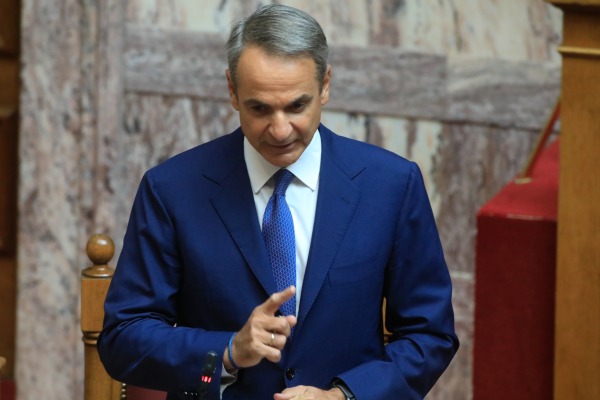


Former Greek Prime Minister Alexis Tsipras has reignited debate over one of the most pivotal moments in recent Greek history, calling for the public release of official transcripts from a confidential meeting of political leaders held on July 6, 2015—the day after Greece’s dramatic referendum on its bailout terms. In a Facebook post on Sunday, Tsipras urged that the records of that meeting, held under the presidency of Prokopis Pavlopoulos, be made public in the interest of historical truth and democratic transparency.
“The question is simple,” Tsipras wrote. “Why couldn’t the political leaders or their parties agree, even now, to release what was said that day? Why not let the truth come to light so everyone can form their own conclusions?”
The former premier, who led the country through one of its deepest financial crises, emphasized that ten years of what he described as propaganda and distortion must come to an end. He argued that the time has come for
Greece to confront its recent past with clarity and documentation—not slogans. In his words, “The best way to evaluate that historic period—the most difficult since the fall of the dictatorship in 1974—is not through political narratives, but with the facts on the table.”
Tsipras challenged the claim that such transcripts are too sensitive for public release, pointing to precedent. He reminded readers that in 2012, then-President Karolos Papoulias published the full minutes of a similar political leaders’ meeting. The only reason such transparency isn’t embraced again today, he said, is because “some people aren’t comfortable with the truth. They prefer the safety of propaganda.”
The 2015 referendum, which Tsipras himself initiated, saw over 60% of Greek voters reject the austerity terms offered by international creditors. The vote shook the foundations of Greece’s relationship with the European Union and the eurozone. In the aftermath, Tsipras faced enormous pressure both domestically and abroad, ultimately reversing course and signing a third bailout agreement. What was said among party leaders behind closed doors at that time remains one of the last major political events of that crisis period still shrouded in official secrecy.
Tsipras criticized those who, in his view, continue to define modern Greek history as beginning with his government in 2015—ignoring the root causes of the crisis that began with the country's effective bankruptcy in 2009. “They act as though the Greek Republic was founded in January 2015,” he said. “As if the country didn’t collapse years earlier.”
He accused today’s political establishment of continuing the same policies and practices that led to Greece’s downfall: illegal subsidies, misuse of public funds, rampant patronage, systemic corruption, and efforts to deceive European institutions. Those who once used the slogan “Stay in Europe” during the referendum campaign, he claimed, are the same people whose governance is now pulling Greece away from core European values.
“They’ve turned Greece’s relationship with Europe into one dominated by investigations and prosecutions,” he said, pointing to the country’s poor rankings on income and household purchasing power relative to other EU members. “They’ve Balkanized Greece,” he added, describing a state marked by inequality, institutional decay, and entrenched clientelism.
In some of his most pointed remarks, Tsipras said the so-called “deep state” that successive governments promised to dismantle is, in fact, the very system they operate. “It’s their circle. It’s their practices. These are the methods that built a regime of kleptocracy,” he said, recalling the notorious phrase used by a former minister to describe Greece’s unsustainable spending prior to the crisis: ‘We all ate it together.’
Tsipras concluded by reaffirming that responsibility for the crisis lies squarely within Greece, not with foreign powers. Although his administration bore no blame for the financial collapse, he said, it carried the burden from 2015 to 2019 to steer the country toward recovery. Yet six years later, he warned, Greece has once again sunk into “mud and clouds,” with the same political forces trying to rewrite the past to justify their control of the present.
“That’s why they fear the truth about 2015,” he wrote. “Because the truth is not just a threat to the story they’ve told about the past—it’s a threat to the power they want to hold onto today and tomorrow.”