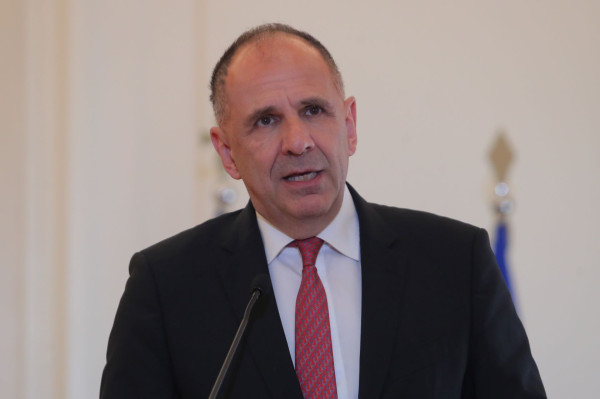


The term, often used to describe fragmentation and institutional backsliding in Southeast Europe, was employed by Tsipras to highlight what he sees as Greece’s ongoing divergence from European norms.
Tsipras said that the brain drain—the large-scale emigration of educated Greek professionals—continues largely unchecked, driven by Greece’s deepening gap with the rest of the European Union in terms of income, institutional trust, and social cohesion. “The country has undergone a significant regression,” he said, noting that the average income in Greece has fallen by 13 percentage points relative to the EU average since 2007—from 80 percent down to just 60 percent. “Greece is steadily falling behind Europe,” he added.
Citing studies comparing Greece with other European nations, Tsipras highlighted that 28 percent of Greeks now live at or near the poverty line, a rate comparable to that of Bulgaria and Romania. He argued that this economic deterioration is reflected across all facets of society—from wages and public services to the justice system and perceptions of fairness. “For the first time since World War II, the younger generations in Greece believe they will have a worse quality of life than their parents,” he said. “That is the core reason people continue to leave.”
He also pointed to high taxation on salaried workers as a contributing factor, criticizing the conservative government of Prime Minister Kyriakos Mitsotakis for focusing tax relief on higher-income brackets. “When this government took office, it cut taxes for the wealthy. Meanwhile, wage earners still face one of the heaviest tax burdens in Europe,” Tsipras said.
When asked whether living conditions have improved since he left office in 2019, Tsipras was blunt. “In the past six years, we have missed major opportunities. Whether things are better depends on who you ask,” he said, referencing a recent Metron Analysis poll showing that only 21 percent of Greeks report being able to save money from their earnings. Another 35 percent say they can’t make ends meet at all, and the remainder manage only marginally. “In 2024, Greece saw a fifteen-year record in profits for publicly listed companies. So yes, the government is doing very well—for the interests it serves,” he remarked, suggesting that average Greek citizens have not shared in this economic success.
Tsipras criticized the government for failing to overhaul what he described as an outdated economic model that contributed to Greece’s financial crisis in the first place. “No real effort has been made to change our development strategy or reverse the widening gap with Europe,” he said. “What we need now is a leap in growth—well above the current 1.5 to 2 percent—combined with a pivot toward social investment and reducing inequality. Otherwise, we’re headed for a crash.”
Turning to the political implications of this economic stagnation, Tsipras suggested that the government’s narrative is at odds with reality. “If we believed the government’s rhetoric, there would be no brain drain. Just like there would be no inflation problem, no crisis in agricultural subsidies, and no safety issues in the railway system,” he said sarcastically. “But as long as the income gap between Greece and Europe remains wide, people will keep leaving.”
He acknowledged that Greece’s political opposition is struggling to offer a coherent alternative, and attributed the government’s enduring popularity to its consolidation of support among a relatively small but economically secure segment of the population. “We’re drifting toward a ‘society of the one-fifth,’” Tsipras said, referencing the segment of Greeks who feel financially stable. “That 21 percent has no reason to vote against this government. And if that group includes powerful economic actors with influence over the media and public opinion, it could grow to 30 percent. But where is the other 70 percent? Fragmented, disillusioned, scattered, and lacking a clear vision.”
When asked if he believes the current trajectory is sustainable, Tsipras said it could continue indefinitely—unless a viable political alternative emerges. “That’s the big question now. The political system, too, is becoming Balkanized. If no credible alternative appears, stagnation will continue. But if there’s a serious attempt to build a new vision and offer a real choice, then things can change.”
The government quickly responded to Tsipras’ remarks. Government spokesperson Pavlos Marinakis accused the former prime minister of hypocrisy, reminding the public that it was during Tsipras’ time in office that hundreds of thousands of young Greeks left the country in search of better prospects abroad. “It is, of course, the right of any former leader to speak publicly,” Marinakis said, “but how can the very man whose policies drove out so many now demand answers from the current government?”
Marinakis claimed that under the Mitsotakis administration, 420,000 out of the estimated 650,000 who left Greece during the crisis years have returned. “The tragedy of Tsipras’ first government is still fresh in the minds of Greek citizens,” he added. “And now, without any real admission of error, his second act comes across less as a comeback—and more as a farce.”