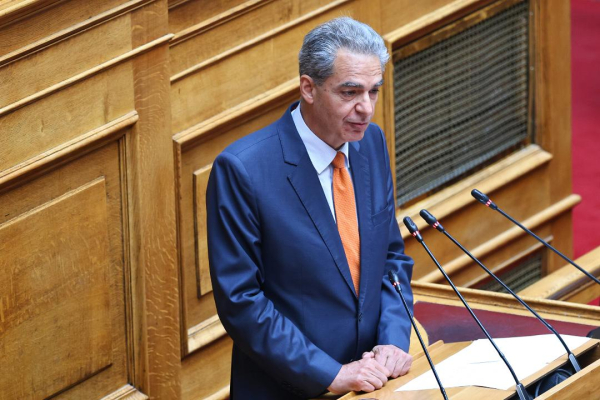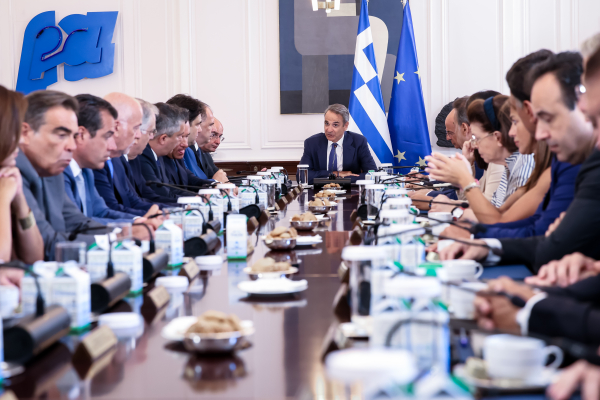


“Elections will be held in 2027, and they will be victorious with me at the forefront of the battle,” he declared. “New Democracy will be in government again—and why not, with even more of us in this room.”
His comments come amid a period of political strain within Greece, triggered in part by public backlash over the tragic train accident in Tempi in early 2023, which claimed dozens of lives and led to intense scrutiny of the government. Mitsotakis acknowledged that the tragedy had dominated the political conversation and allowed opposition parties and certain media outlets to “sow confusion” among the public. He accused them of exploiting the event for political gain and spreading misinformation.
“Now it is the truth’s turn to fight back,” Mitsotakis said, arguing that new evidence has revealed what he described as “an organized effort to conceal the truth and manipulate public opinion” around the national tragedy. He suggested that the government had become the target of a coordinated campaign of distortion, particularly from the opposition.
At the same time, Mitsotakis was eager to highlight what he views as overlooked achievements of his administration. He pointed to a series of economic milestones, including five consecutive increases to the minimum wage, the creation of half a million jobs over the past five and a half years, and an unemployment rate now lower than countries such as Sweden. He also noted that wages in the Armed Forces have been raised and drew attention to renewed international interest in Greece’s energy reserves, particularly from the American energy giant Chevron, which has expressed interest in conducting exploratory work south of Crete—something Mitsotakis presented as a recognition of Greece’s sovereign rights in the region.
Turning to the international stage, the Prime Minister warned of growing global economic instability. He called the recent U.S. decision to launch what he described as a trade war “unprecedented in global economic terms,” and announced that the Greek government’s Economic Policy Council would meet the following Monday to assess how Greece should respond, both nationally and within the EU framework.
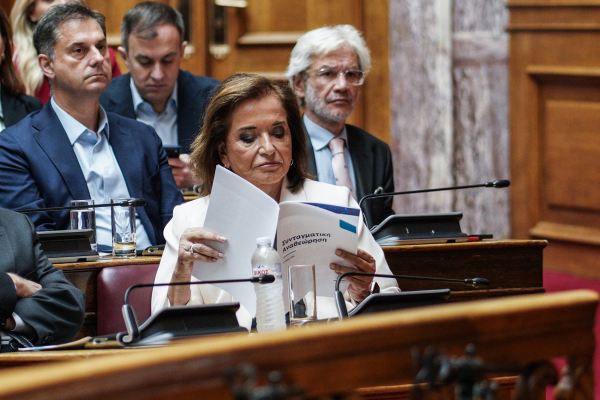
Domestically, Mitsotakis focused much of his address on internal party discipline and communication. He acknowledged frustration among New Democracy MPs who felt sidelined by ministers, particularly during regional visits where local representatives were not always kept informed. He urged his ministers to improve coordination and treat parliamentary deputies as essential links to the public.
“Politics is not only about positions, but about everyday behavior,” he said. “It’s about making sure our words are measured and grounded in a landscape dominated by exaggeration and distortion.”
He emphasized that despite the recent difficulties, it was time to “close a cycle of reflection—and perhaps discomfort—for the government and the party,” and move forward with renewed confidence. The speech also included a proposal to restructure the party’s internal parliamentary coordination.
Mitsotakis announced that Apostolos Vesyropoulos would be his nominee for the next secretary of the parliamentary group and said MPs would soon be assigned coordinator roles across six key parliamentary committees. He also opened a new channel for lawmakers to submit practical policy proposals directly to the Prime Minister’s office.