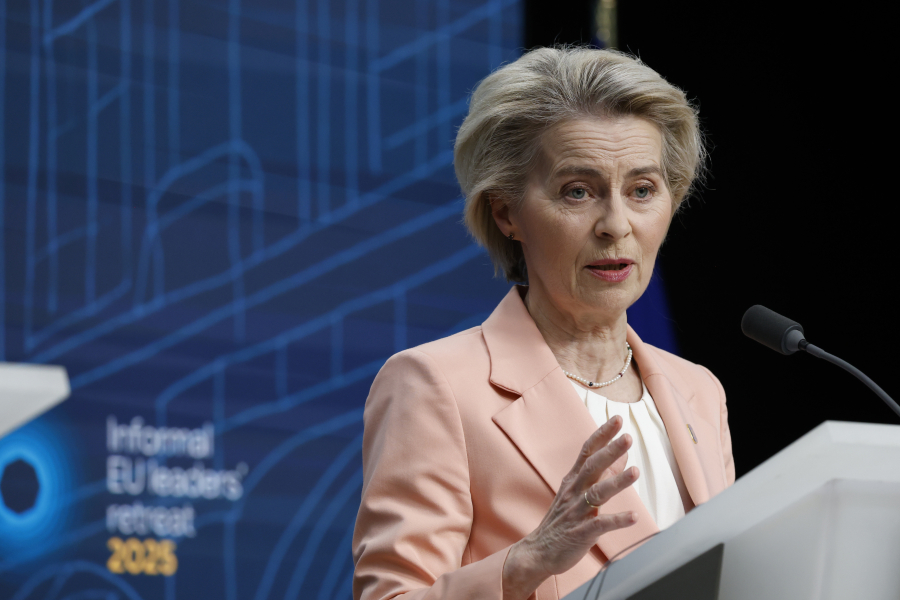
The fiscal impact of increased military spending, a key topic at the EU Leaders’ Summit on Thursday, is drawing close scrutiny from global markets, especially as European Commission President Ursula von der Leyen prepares to outline new funding proposals.
Governments across Europe have committed to higher defense budgets, both to bolster the continent’s security and to support Ukraine. However, this move has triggered concerns among investors about swelling budget deficits and mounting public debt, raising fears that interest rates may remain elevated for longer than expected.
The fallout is evident in eurozone bond markets, where yields are surging as prices drop. German bonds, traditionally seen as among the safest, have come under significant pressure. The yield on Germany’s 10-year bond has jumped 29.6 basis points to 2.776%—one of the sharpest daily increases in the past two decades.
Other major European economies are seeing similar movements. France’s 10-year bond yield has climbed 26 basis points to 3.482%, while Italy’s has risen by 30 basis points. Greece has not been spared from the sell-off, with its 10-year bond yield spiking to 3.577%, up from 3.22% just four days ago.
This sudden market shift is raising concerns that borrowing costs could trend higher across the EU at a time when investors and governments had been anticipating interest rate cuts from central banks. The European Central Bank (ECB), which had previously signaled a potential 0.25% rate reduction, now faces increased uncertainty over whether it can proceed with its expected monetary policy easing.