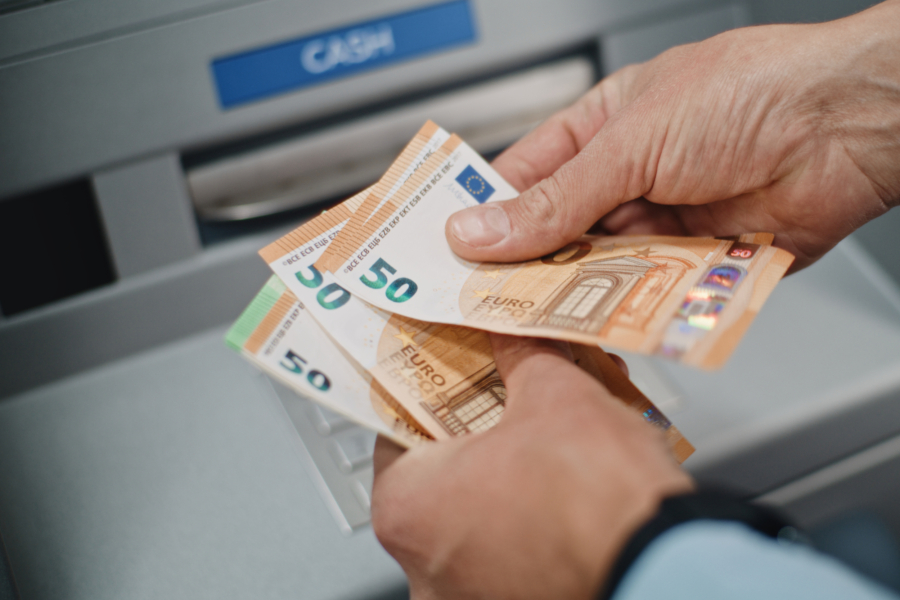
Greece’s investment spending continued to surge in 2025, but the increase failed to translate into faster economic growth, raising questions about whether the country’s post-crisis investment recovery is doing enough to strengthen productivity and competitiveness.
Revised figures released by the Hellenic Statistical Authority, known as ELSTAT, showed that fixed-capital investment rose 8% in inflation-adjusted terms last year, nearly four times the economy’s 2.1% growth rate.
In nominal terms, investment in buildings, machinery, equipment and infrastructure climbed 9.9% to €44.85 billion ($52.3 billion), from €40.82 billion in 2024. Yet the broader measure of capital formation, which also includes changes in inventories, contracted 2.5% in real terms, highlighting a divergence between investment spending and overall economic activity.
ΔΙΑΒΑΣΤΕ ΕΠΙΣΗΣ

The main reason was a sharp reversal in inventories. Changes in inventories and net acquisitions of valuables swung from a positive €2.94 billion in 2024 to a negative €1.40 billion in 2025, a €4.34 billion shift that more than offset the increase in fixed investment.
As a result, total gross capital formation slipped to €43.44 billion from €43.76 billion, a nominal decline of 0.7%. The inventory drawdown could reflect more cautious expectations about future demand, although the figures alone don't establish the reasons behind the decline.
Other economic indicators reinforce concerns about Greece’s growth model. Exports of goods and services increased just 0.4% in real terms in 2025, while final consumption expenditure rose 1.8%. Imports declined 1.7%.
The figures suggest that rising investment has yet to produce a corresponding expansion in export capacity, a critical challenge for an economy seeking to strengthen its international competitiveness.
Greece has made substantial progress in rebuilding investment since the financial crisis that devastated its economy during the previous decade. Annual fixed-capital investment has more than doubled in nominal terms since 2020, rising from €20.61 billion to nearly €45 billion in 2025. Its share of gross domestic product has increased from approximately 12.3% to 18%.