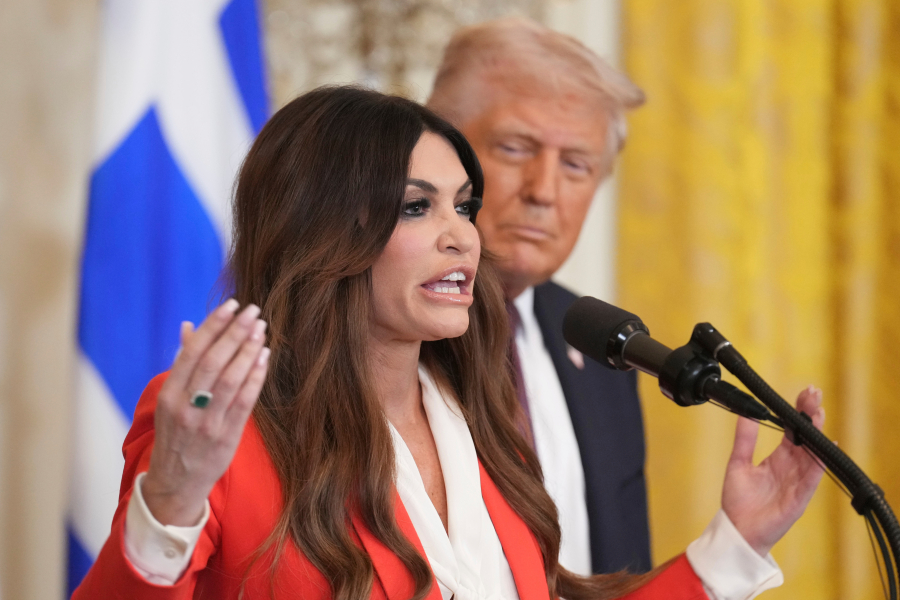
The abrupt departure of Kimberly Guilfoyle as U.S. ambassador to Greece has left Washington’s diplomatic mission in Athens facing an uncertain transition, while allegations surrounding her conduct threaten to develop into a broader political controversy for President Donald Trump’s administration ahead of November’s midterm elections.
Joshua Huck, a career diplomat who previously served as chargé d’affaires in Athens, is expected to assume temporary leadership of the embassy. Diplomatic sources suggest that the White House is unlikely to nominate a replacement before the Nov. 3 congressional elections, potentially leaving the post without a Senate-confirmed ambassador for several months.
Guilfoyle’s removal follows a series of reports in The Wall Street Journal concerning her relationships with businessmen, financial transactions and acceptance of private travel arrangements. The allegations, which she disputes, have prompted congressional Democrats to demand further scrutiny of both her activities and the administration’s handling of the controversy.
ΔΙΑΒΑΣΤΕ ΕΠΙΣΗΣ


For Greece, a NATO member and increasingly important U.S. energy and defense partner in southeastern Europe, the departure creates an unexpected diplomatic complication at a time of expanding bilateral cooperation.
Huck, who has served in China, Japan, Hong Kong and Bulgaria, brings considerable regional experience to the position. His appointment as acting head of mission would ensure institutional continuity, although major diplomatic initiatives could face delays until Washington selects a permanent ambassador.
According to accounts circulating in Washington, the decision to remove Guilfoyle took shape after successive newspaper revelations raised concerns within Trump’s inner circle about the political damage caused by the controversy.
Following Secretary of State Marco Rubio’s visit to Greece, White House officials reportedly explored the possibility of Guilfoyle resigning voluntarily. She initially resisted and sought support from senior administration figures, including the defense secretary and the U.S. ambassador to Turkey.
The White House eventually confirmed that it had requested her resignation. Trump subsequently acknowledged that the reports had influenced his decision, saying that although Guilfoyle had performed well in Greece, he was unhappy with what he had been reading.
He also said he hadn't personally contacted her before her dismissal and played down their personal relationship, referring to her previous relationship with his son, Donald Trump Jr.
The episode illustrates the political vulnerability of high-profile diplomatic appointments drawn from the president’s personal and political networks.
The controversy began Sept. 25, when The Wall Street Journal reported on Guilfoyle’s relationship with Greek-American businessman and lobbyist Chris Marafatsos, who allegedly participated in diplomatic meetings across the Balkans without a clearly defined official role.
The newspaper also described a dinner at the U.S. Embassy in Athens during which Guilfoyle allegedly invoked American political influence in Romania. The account prompted objections from Bucharest, while the Greek government denied that any threats had been made. Guilfoyle, through her attorneys, disputed the characterization of the incident.
More damaging allegations emerged Oct. 8, when the Journal reported that Guilfoyle had requested $100,000 from Republican donor Eric Dieters to settle a personal credit-card bill before her Senate confirmation hearing. Dieters claimed he had sought her assistance in gaining access to influential figures around Trump, describing the arrangement as “pay to play.” He also provided messages purportedly exchanged with Guilfoyle. Her representatives challenged their authenticity, although CBS subsequently reported that the White House believed the messages were genuine.
Guilfoyle’s lawyers offered a different explanation, arguing that Dieters owed her approximately $150,000 for speaking engagements and consulting services performed before her diplomatic appointment.
Further reports raised questions about private-jet travel and hospitality provided by wealthy businessmen, including trips to Davos, Paris and Gstaad.
Her legal representatives denied wrongdoing, maintaining that she had sought State Department guidance and complied with federal regulations governing gifts and outside benefits.
Guilfoyle’s departure is unlikely to end the controversy in Washington. Congressional Democrats have called for an investigation into whether she used her diplomatic position for personal financial advantage and whether administration officials were aware of potential concerns before her appointment.
The questions could prove politically uncomfortable for Trump as Republicans prepare for congressional elections in which government ethics and accountability may become campaign issues.
In her farewell statement, Guilfoyle described serving in Greece as the greatest honor of her life and thanked Trump and Rubio for their support.She highlighted American liquefied natural gas exports, the Vertical Corridor energy project linking southeastern European markets, defense cooperation and investment opportunities as accomplishments of her tenure. She also reaffirmed her commitment to Trump and his “America First” agenda.
For Athens, however, the immediate concern is less Guilfoyle’s political future than the implications of another period without a permanent American ambassador.
The broader question for Washington is whether her dismissal will contain the controversy—or intensify scrutiny of how political loyalty, private business interests and diplomatic appointments intersect under the Trump administration.