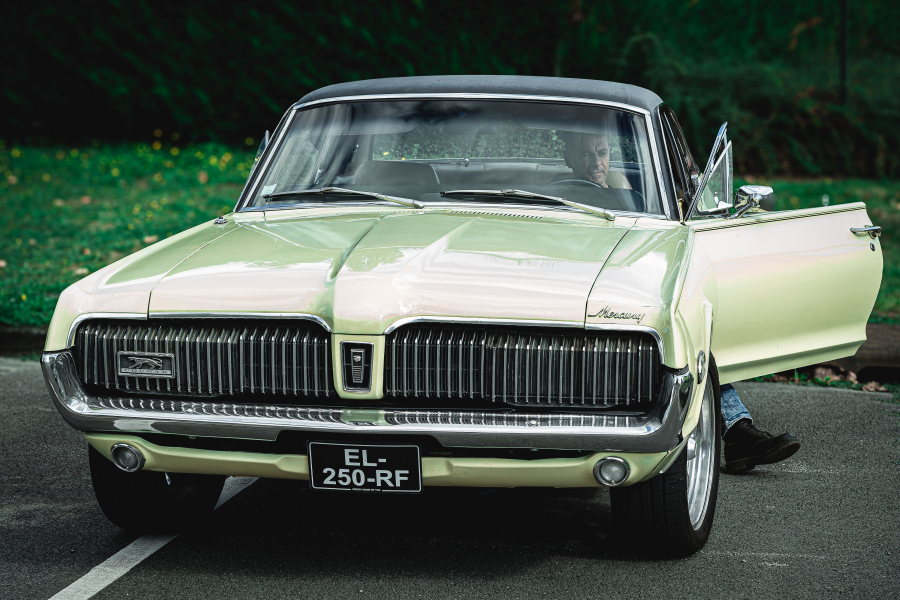

A 1969 Porsche, a 1970 Audi and a 1972 Lancia Fulvia might sound like the beginnings of a classic-car auction. In Greece this week, however, the winning bidders won’t be restoring them. They will be dismantling them.
Greece’s Independent Authority for Public Revenue, known as AADE, is putting a collection of aging vehicles up for public auction on Thursday, Sept. 24, through its property-management directorate. Among them are cars that would ordinarily attract the attention of collectors but have instead been designated as end-of-life vehicles or vehicles for dismantling.
One of the standouts is a 1969 Volkswagen-Porsche 914, offered with a starting price of €500. The catalog also includes a 1970 Audi and Ford Transit, a 1971 Opel Kadett and a 1972 Lancia Fulvia.
ΔΙΑΒΑΣΤΕ ΕΠΙΣΗΣ



The auction, scheduled for 11 a.m. at AADE facilities in Ano Liosia, northwest of Athens, will be conducted as a public, oral bidding process.
The list reads like a compressed history of European and Japanese motoring. It includes a 1975 Seat 124 and Zastava Yugo, as well as Toyota models, a Ford Fiesta and a Nissan-Datsun truck from 1977. The Fiesta starts at €240 and the Toyota at €320.
There are also Toyota Hilux and Corolla models from 1978, while the 1979 entries include another Corolla and a Mercedes 123D. A 1979 Toyota Corolla SR carries a starting price of €320. Other vehicles dating from around 1980 bear Renault, Dacia, Peugeot, Mazda, Oldsmobile and Opel badges.
The bargain-basement prices come with a catch: Private buyers can’t purchase the cars for restoration and return them to the road.
Bidding on vehicles classified as end-of-life is restricted to entities licensed under Greece’s authorized vehicle-recycling system. Businesses bidding on vehicles designated for dismantling must also meet environmental and professional requirements.
Successful bidders must formally declare that the vehicles will be dismantled and won’t return to circulation. For end-of-life vehicles, destruction certificates must subsequently be submitted to the authorities.
That means the auction isn’t offering collectors a cheap route into classic-car ownership. For vehicles that survived decades after leaving the factory, it marks the end of the road.