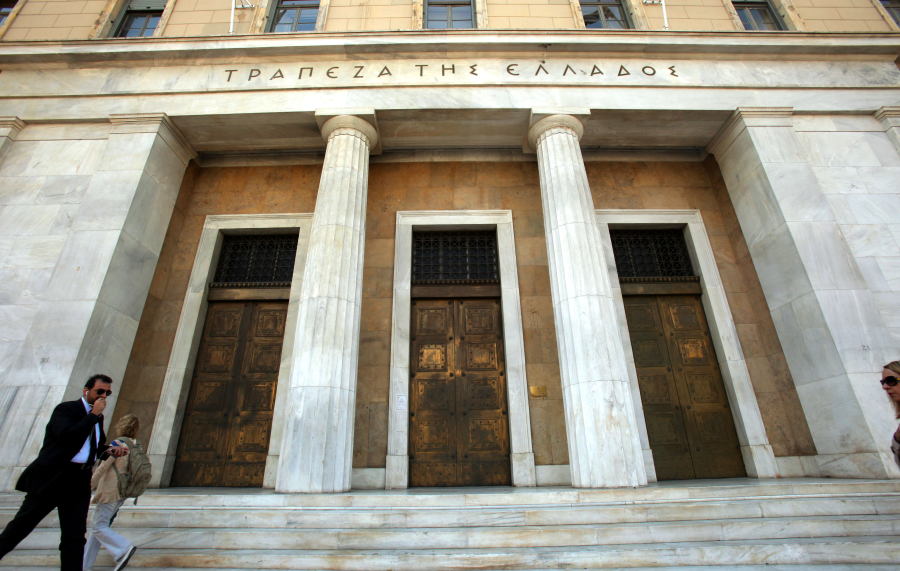

Inflation in Greece is expected to accelerate this year as higher energy costs and persistent price pressures in services complicate the country’s path back toward price stability.
The Bank of Greece expects harmonized inflation, the measure used for comparisons across the European Union, to average 3.5% in 2026, up from 2.9% in 2025, according to its latest Inflation Monitor.
The central bank said the increase largely reflects higher energy prices and stubborn services inflation, a combination that has kept underlying price pressures elevated even as the broader inflation shock of recent years has moderated.
ΔΙΑΒΑΣΤΕ ΕΠΙΣΗΣ
The outlook is more favorable further ahead. Greek inflation is projected to ease to 2.7% in 2027 and 2.2% in 2028, helped by an expected decline in energy-commodity prices.
Recent data underscore the near-term challenge. Greece’s consumer-price index rose during the first five months of 2026 before slowing in June and July. Inflation rebounded to 3.7% in August, bringing the average rate for the first eight months of the year to 3.6%.
The August acceleration was broad-based, with all five major inflation components registering stronger price growth. Services and energy made particularly significant contributions. Core inflation also increased sharply, reflecting stronger services inflation, including a notable rise in accommodation prices—a closely watched category in Greece, where tourism plays an outsized role in the economy.
Price pressures are also complicating the outlook for the wider eurozone. According to the latest expert projections cited by the Bank of Greece, eurozone inflation is expected to peak at 3.6% in the fourth quarter of 2026, driven by the surge in energy prices.
Inflation is then forecast to fall sharply to 2.5% in the second quarter of 2027 as favorable energy base effects take hold, before stabilizing near 2% over the medium term.