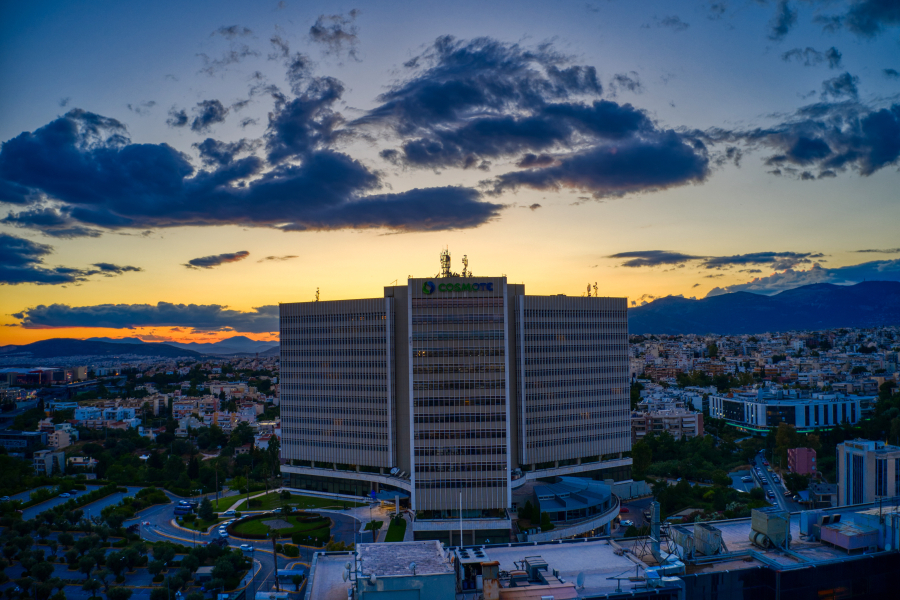

For more than 75 years, Greece’s largest telecommunications company has changed alongside the country itself. OTE, once the state telecommunications monopoly, traces its roots to Greece’s difficult postwar years, when securing a fixed telephone line could represent a significant milestone for a household. Over the decades, the company navigated the liberalization of the Greek economy, the explosion of mobile telephony, the arrival of the internet and, more recently, the construction of fiber-optic networks and the rollout of 5G.
Technology changed. Ownership changed. Competition arrived. And the way Greeks communicated was transformed with it. Now, one of the most familiar names in Greek telecommunications is disappearing.
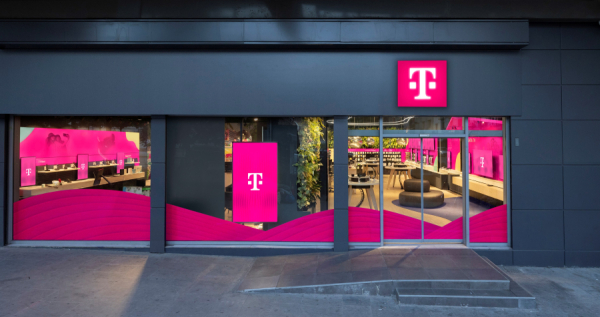
OTE is undertaking one of the biggest branding overhauls in its history, gradually retiring the Cosmote name from stores, products, services and digital platforms and replacing it with Telekom, the brand of its controlling shareholder, Germany’s Deutsche Telekom. The green and blue associated with Cosmote for nearly three decades are giving way to Deutsche Telekom’s distinctive magenta, turning a corporate strategy that until recently existed largely on paper into an increasingly visible feature of everyday life in Greece.
ΔΙΑΒΑΣΤΕ ΕΠΙΣΗΣ



For OTE, the move represents a significant consolidation of its commercial identity with that of its German parent. For Greeks who remember Cosmote’s arrival in the late 1990s, when mobile telephony was still a relatively new phenomenon, it carries another significance: the end of a corporate era.
The transition is now reaching virtually every point at which the company interacts with its customers.
Storefront signs are being replaced, products renamed and apps, websites and social-media accounts shifted to the new identity. The Telekom name is even beginning to appear in perhaps the most conspicuous location of all—the network identifier at the top of customers’ mobile-phone screens.
OTE Chairman and Chief Executive Kostas Nebis outlined the timetable at the group’s annual general meeting in June, saying the full adoption of the Telekom name would begin in the second half of 2026. Since then, the transformation has moved quickly from corporate announcement to the marketplace.
OTE’s 111 stores across Greece are gradually shedding the Cosmote branding in favor of Telekom’s magenta identity. Cosmote 5G is becoming Telekom 5G, while Cosmote Fiber is being renamed Telekom Fiber. On mobile devices, the network identifier is changing to Telekom.gr.
The overhaul is unfolding online as well. The Cosmote App is becoming the Telekom App, while the company’s social-media accounts are moving under the Telekom GR name. What’s Up, a prepaid mobile brand particularly familiar to younger Greek consumers, is becoming What’s Up by Telekom.
Other businesses are being folded into Deutsche Telekom’s broader Magenta family of brands. The group’s subscription-television service is adopting the MagentaTV name, payments service payzy is becoming Magenta Pay, and Cosmote Insurance has already been renamed Magenta Insurance. The changes are expected to spread gradually across OTE subsidiaries, with the group aiming to complete the transition by early 2027.
For customers, little changes beyond the branding. Existing contracts and services remain in place, and subscribers aren't required to take any action as the company makes the transition.
The more consequential change is one of identity.
Cosmote was launched in 1998, when Greece’s mobile-phone market was still in its infancy. It entered as the mobile subsidiary of OTE and quickly became one of the country’s most recognizable consumer brands. Its rise coincided with a period in which mobile phones went from expensive accessories used mainly by businesspeople to indispensable objects carried by almost everyone.
The brand endured through an unusually turbulent period in modern Greek history. It survived the dot-com era, the adoption of the euro, the rapid spread of broadband and smartphones, Greece’s decade-long debt crisis and the subsequent digitalization of large parts of the economy. As OTE itself moved from state control toward private ownership and ultimately into Deutsche Telekom’s orbit, Cosmote remained a constant presence on Greek high streets, television screens and mobile phones.
That continuity is what makes its disappearance notable.
Corporate rebrandings are rarely sentimental exercises. For Deutsche Telekom, putting its name and magenta identity more prominently on the Greek business creates a more unified European presence and makes OTE increasingly recognizable as part of a much larger telecommunications group. Greece is becoming another market in which the Telekom name, rather than a distinct local consumer brand, sits at the center of the customer relationship.
Yet brands that survive long enough can become markers of time as much as commercial assets. Cosmote arrived just as mobile telephony was beginning to reshape daily life in Greece. For a generation of Greeks, its name became inseparable from that transformation.
Soon, Telekom’s magenta storefronts will become another familiar feature of Greek cities, and Telekom.gr will cease to look unusual at the top of a mobile-phone screen. New customers may eventually give little thought to the name that preceded it.
Until then, every Cosmote sign that comes down will mark the quiet closing of a chapter that began in 1998, when mobile phones were only starting to make their way into the pockets of ordinary Greeks.