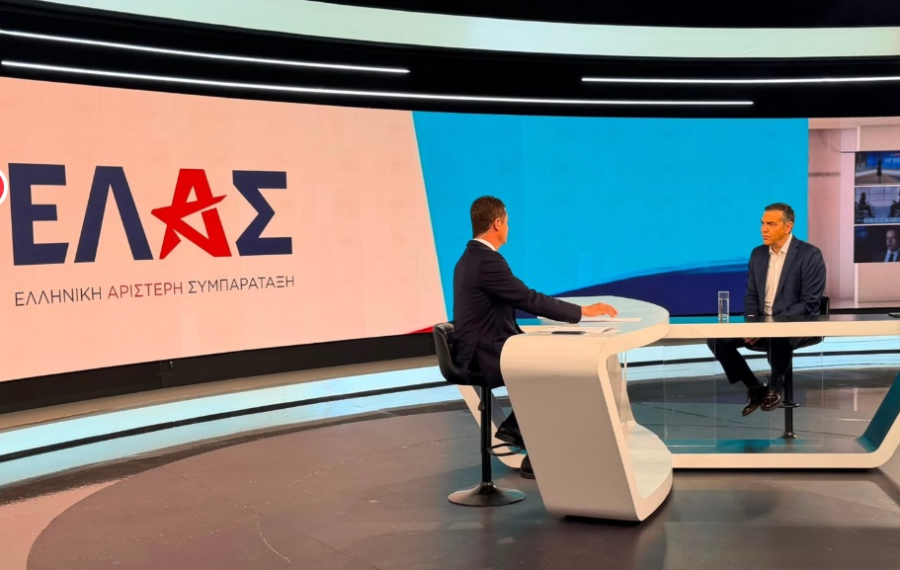

Former Greek Prime Minister Alexis Tsipras used his first television interview since launching his new left-wing political vehicle to draw a sharp line between his emerging movement and the fractured parties that once formed Greece’s progressive opposition.
Speaking on Alpha TV, Tsipras said the Hellenic Left Alliance was created to fill what he described as a large vacuum in Greece’s political system after years in which Prime Minister Kyriakos Mitsotakis’s center-right government faced no strong opposition. “Even with the best intentions, a government becomes more arrogant when it has no powerful opponent,” Tsipras said.
Tsipras, who led Greece during some of the most turbulent years of the eurozone debt crisis, framed his return not as a personal comeback but as an effort to rebuild a governing left. “I have no ambition to return just to be leader,” he said. “My goal is to be useful to a country that is suffocating today.” He added: “People accuse me of many things, but no one accuses me of dishonesty.”
The former premier said his departure from Syriza marked the end of a political cycle, both for the party and for himself. He described his new project as a fresh start with new faces but the same values, aimed at bringing together broader progressive forces. The objective, he said, is to build “a left that governs, not a left of protest.”
Tsipras also appeared to rule out a simple reunification of Greece’s fragmented left. He said the new party was not created to cooperate with forces that had “completed their cycle,” a phrase widely understood as a reference to Syriza and other parties in the former progressive camp. Any participation, he said, would come without reserved positions or parliamentary shortcuts.
His comments come as Greek politics shows signs of moving away from the dominance Mitsotakis’s New Democracy has enjoyed since 2019. Tsipras argued that opinion polls suggest the gap is narrowing and that the country is returning to a system of strong political poles. “That was half the goal,” he said. “The other half is victory for a change in policy.”
On the question of government formation, Tsipras signaled a hard line. If his party wins the next election but cannot implement its program, he said, it would seek a second vote to secure a clear mandate.
Much of the interview focused on economics, where Tsipras rejected claims that his program would require broad tax increases. He said Greece has enough fiscal room to support social measures without raising taxes on low-, middle- or even higher-income groups. At the same time, he argued for a redistribution of wealth through what he called a “patriotic contribution” from the richest 1% of individuals and companies.
Tsipras said Greece places a heavier burden on salaried workers than on capital and pledged to rebalance the system. He also criticized the Mitsotakis government’s use of European recovery funds and said corruption and tax exemptions would be key areas where a future government could recover resources. Among the measures he cited were free public transport in Athens and Thessaloniki and higher pay for doctors, teachers and other public-sector workers.
The government responded sharply. Pavlos Marinakis, a spokesman for New Democracy, challenged Tsipras to explain how he would fund his pledges without breaching European Union fiscal rules or returning Greece to the instability of the past. Marinakis said Tsipras appeared to be promising billions of euros in new spending while ignoring the constraints that apply to all EU member states.
Tsipras is expected to present more detailed economic proposals at the Thessaloniki International Fair, a traditional venue for Greek political leaders to set out their policy agendas. His new party’s sector chiefs are also due to meet for the first time in Athens, marking the next step in the organizational rollout of his attempted political comeback.