Senior shipping executives and government officials gathering at the opening of the world's largest maritime exhibition this week delivered a unified message: any agreement between the U.S. and Iran must provide clear operating rules that allow commercial vessels to resume normal transit through the Strait of Hormuz.
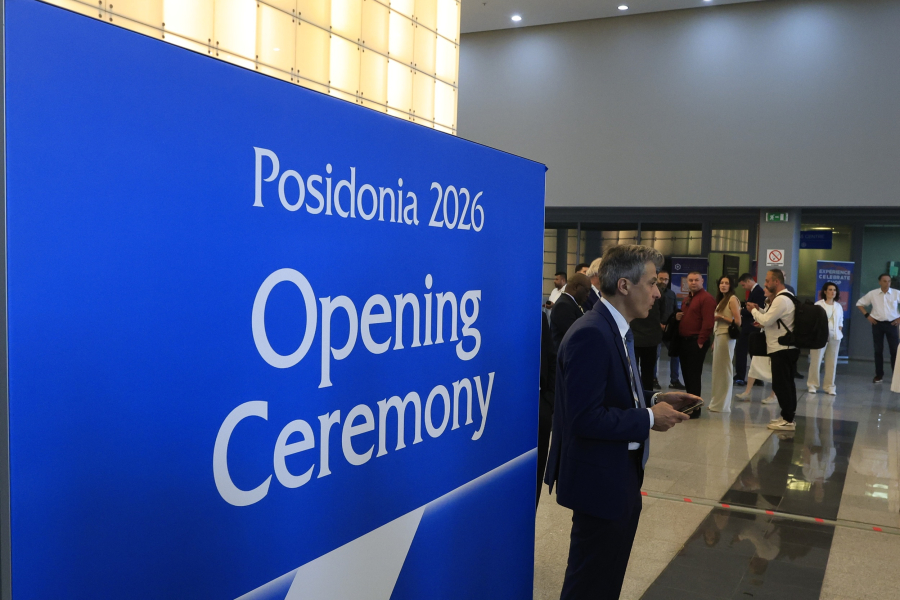
The call came during discussions surrounding Poseidonia, the biennial shipping exhibition held in Greece, as the maritime industry continues to grapple with disruptions caused by tensions in the Gulf region.
Industry leaders said that even if a ceasefire or broader political agreement is reached, uncertainty over security arrangements and operating procedures could continue to hinder traffic through one of the world's most critical energy and trade chokepoints.
"There have been recent announcements suggesting the possibility of a 60-day ceasefire," said Arsenio Dominguez, Secretary-General of the International Maritime Organization (IMO). "If that includes the Strait of Hormuz and we receive guarantees from the countries involved that the route is safe, then mechanisms can immediately be put in place. Our first concern is always the safety and welfare of seafarers."
The Strait of Hormuz handles roughly a fifth of global oil consumption and serves as a vital route for crude exports from Gulf producers. Months of heightened tensions have forced shipping companies to reassess routes, insurance coverage and crew deployment, while some vessels remain stranded in the region.
Pankaj Khanna, chairman of tanker operator Heidmar Maritime Holdings, said the industry requires more than a political agreement to restore confidence.
"What we need is a framework—clear rules that tell us exactly how ships can enter and exit the area," Khanna said. "Even if a peace agreement is signed, those details still need to be clarified."
Khanna said one of his company's vessels has remained trapped inside the Gulf for the past three months. Beyond the commercial impact, he noted the toll on crews.
"Seafarers are missing births, deaths and weddings. They are paying a personal price for this situation," he said.
Greek Shipping Minister Vasilis Kikilias warned that predicting an end to the conflict remains difficult, while emphasizing the importance of maintaining freedom of navigation.
"We hope there will be a solution," Kikilias said. "The world cannot accept a situation in which commercial ships are unable to enjoy free passage. Global trade and seafarers should be kept outside geopolitical conflicts, but unfortunately that is not the reality."
The comments reflected growing concern across the maritime sector that uncertainty, rather than physical risk alone, has become one of the biggest obstacles to restoring normal shipping operations.
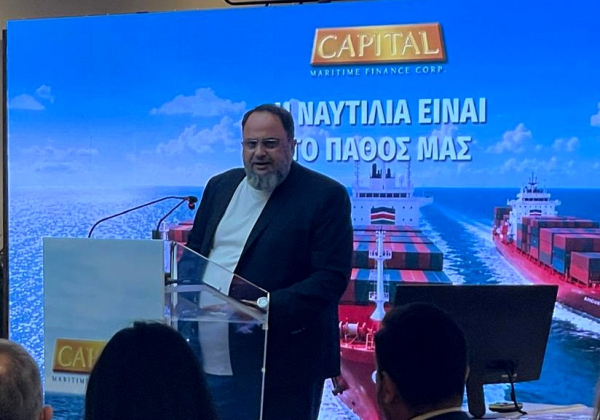
Evangelos Marinakis, founder and chairman of Capital Maritime & Trading, argued that the industry would accept a delay in reaching a settlement if it produced a durable outcome.
"Everyone agrees that the war must stop. It should have ended yesterday," Marinakis said. "Consumers around the world are paying the price."
Still, he added that waiting several more weeks for a comprehensive agreement would be preferable to a rushed settlement that fails to provide long-term stability.
"If the final agreement gives us confidence and security for the future, then waiting two weeks or even a month longer would be worthwhile," he said. "I remain optimistic that a solution can be found."
George Prokopiou, founder of tanker operator Dynacom and gas shipping company Dynagas, said freedom of navigation must remain non-negotiable.
"Freedom of navigation is fundamental," he said. "No one should be able to impose tolls or other burdens on international shipping."
His son, Yiannis Prokopiou, chief executive of ship manager Centrofin, cautioned that the availability of insurance does not necessarily mean operators are willing to send vessels through the waterway.
"Even if insurance is available, that doesn't mean the Strait is somewhere you want to transit," he said. "Until there are clear rules of engagement and clarity regarding how the U.S. and Iran will operate, this remains a very high-risk proposition."
For an industry responsible for moving about 90% of world trade, executives at Poseidonia made clear that any lasting resolution in the Gulf must deliver not only peace, but also the predictability needed to restore confidence in one of the world's most important maritime corridors.