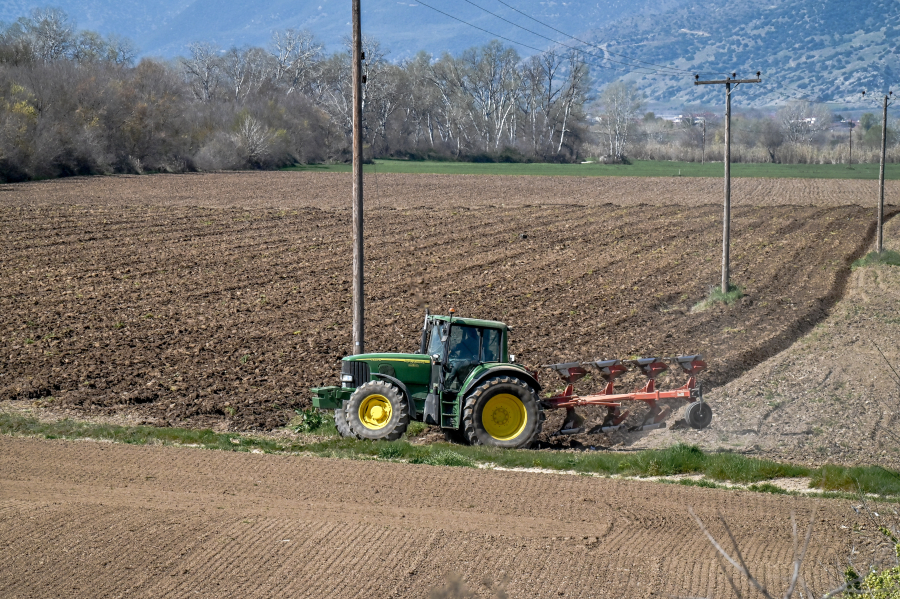

Greece’s agricultural sector is facing mounting pressure after losing 83,200 jobs in 2025, according to the latest report by the Centre of Planning and Economic Research (KEPE), highlighting deepening structural challenges in one of the country’s key productive sectors.
Although overall employment continued to expand, driven almost entirely by strong growth in services, the scale of the losses in agriculture, livestock farming and related activities has raised concerns about the long-term sustainability of Greece’s production model and food supply capacity.
The figures, covering the third quarter of 2025, show total employment reaching 4.4 million people, an increase of 79,000 jobs compared with the same period a year earlier. However, behind the positive headline numbers lies a significant shift in the composition of the labor market.
The primary sector recorded the sharpest decline, shedding 83,200 jobs in just one year, equivalent to nearly 18% of its workforce. The contraction is not considered temporary. KEPE notes that since the onset of the financial crisis in 2008, Greece’s agricultural sector has lost around one-quarter of its employees, underlining a long-term trend of rural decline.
The development comes at a time when Greece is already facing labor shortages across several industries, particularly in lower-skilled occupations. Analysts warn that the continued weakening of agricultural production could undermine the country’s productive base while increasing dependence on imports and reducing resilience in food supply chains.
At the same time, the services sector emerged as the main driver of employment growth, adding 163,200 new jobs over the past year, more than offsetting losses in agriculture and industry. Services expanded by more than 5%, effectively generating the entire net increase in employment across the economy.
The secondary sector, which includes manufacturing, also recorded losses, albeit on a much smaller scale, with employment declining by 3,400 positions.
Professional, scientific and technical activities led job creation with 42,200 new positions, followed by wholesale and retail trade with 36,500 jobs and accommodation and food services with another 23,800.
Construction activity also strengthened, adding 10,700 workers.
The data illustrate Greece’s gradual transition toward a more service-oriented economy, reflecting broader trends seen across Europe. However, economists note that the speed of the decline in agriculture is particularly concerning in Greece given the sector’s importance for exports, regional economies and food security.
KEPE argues that the sustained contraction of the primary sector now requires targeted intervention, including measures aimed at modernizing agricultural production, attracting younger workers and strengthening incentives for employment in rural areas.
The report also highlights the untapped potential of female participation in the labor market. Women accounted for 60% of newly created jobs over the past year, while female employment grew at a faster pace than male employment, rising by 2.6% compared with 1.3% for men. Nevertheless, women still represent less than half of Greece’s total workforce, with their share standing at 43.4%, suggesting there is still significant room for further labor market expansion.