

Greece’s persistent inflationary pressures are increasingly reshaping the economy in ways that extend beyond consumer price data, boosting business revenues and tax receipts while placing growing pressure on household finances.
After years of economic recovery and strong growth following the sovereign debt crisis, the country is now facing a more familiar challenge seen across much of Europe: inflation that continues to outpace consumers’ purchasing power even as it lifts nominal economic activity.
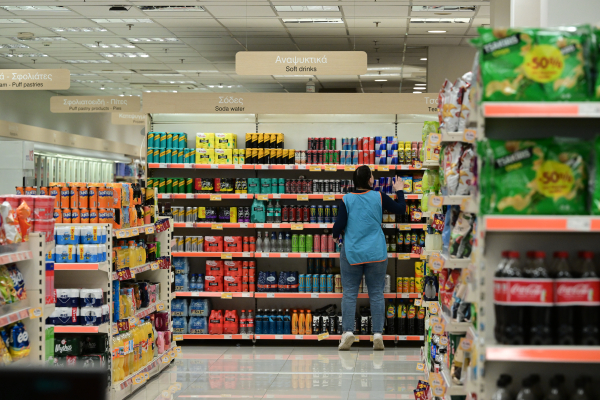
Data for the first four months of 2026 show price pressures remaining firmly embedded across the economy. Greece’s goods price index, measured against a 2020 base year, rose to 129.12 points in April from 121.69 in January, after accelerating further in March. Services inflation also continued to climb, with the services index reaching 123.04 points in April compared with 120.61 at the start of the year.
Core inflation, which strips out more volatile categories and is often viewed as a better gauge of underlying price trends, followed the same trajectory. The index increased to 119.25 points in April from 115.81 in January, underscoring the persistence of inflationary pressures across sectors.
The latest figures build on momentum already established in 2025, when average annual readings for goods, services and core inflation had already reached elevated levels, suggesting that price increases have become increasingly entrenched.
At the same time, inflation is contributing to stronger headline revenues across parts of the economy as businesses pass higher costs onto consumers. Total business turnover in Greece rose 2.6% year-on-year in the first quarter of 2026 to €111.27 billion ($126 billion), up from €108.48 billion during the same period a year earlier. In the final quarter of 2025, turnover had reached €133.9 billion, marking annual growth of 2.2%.
Construction recorded the strongest expansion, with turnover surging 17.4% to €4.68 billion, reflecting continued investment activity and infrastructure demand. Water supply, wastewater treatment and waste-management services posted growth of 10.8%, while professional, scientific and technical services expanded by 9.5%.
Information and communications activities also advanced strongly, rising 7.4% to €4.03 billion, while healthcare and social services grew 5.7%.
Trade remained the largest contributor to overall activity, generating turnover of €42.25 billion and increasing 1.8%, while manufacturing — one of Greece’s key productive sectors — recorded turnover of €22.88 billion, up 1%.
Not all sectors benefited equally. Accommodation and food services, a critical pillar for the tourism-driven economy, saw turnover decline 1% to €2.67 billion. Agriculture, forestry and fisheries also contracted slightly.
For the government, inflation is delivering an additional fiscal dividend. Higher prices automatically increase value-added tax collections because VAT is levied on final prices. Rising corporate revenues also support tax receipts through business taxation and other levies, creating additional fiscal space.
Yet the gains come with a cost.
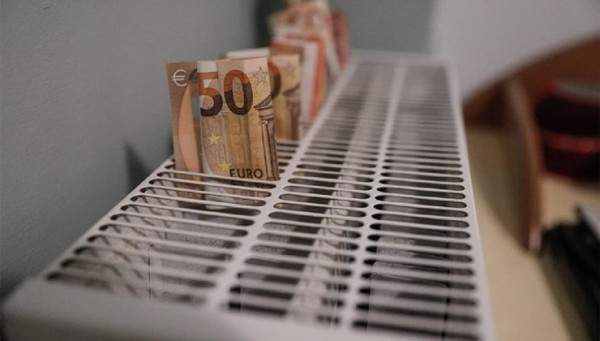
For Greek households, inflation continues to erode purchasing power as wages struggle to keep pace with rising living expenses. Consumers are spending a larger share of their income to purchase the same goods and services, squeezing real disposable income and limiting consumption capacity.
The result is a widening divergence between nominal economic indicators and household reality: businesses report stronger revenues and public finances improve, while consumers face mounting pressure from a cost of living that is rising faster than their ability to absorb it.
In that sense, inflation has become a double-edged force in Greece’s economy — supporting turnover growth and government revenues while shifting the burden onto households already navigating higher living costs.