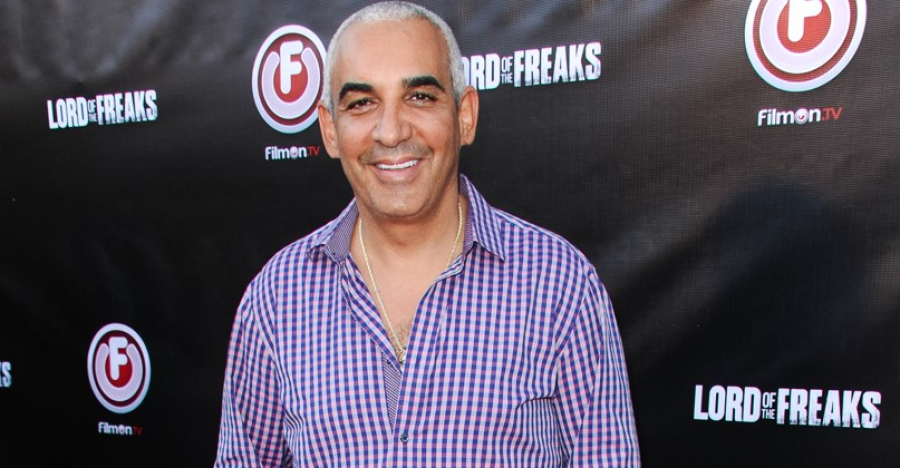

Alki David, the high-profile entrepreneur and heir to one of Greece’s wealthiest business dynasties, has suffered a setback in Antigua and Barbuda after the country’s Supreme Court stayed a sweeping lawsuit he had brought against 43 individuals and organisations, ruling that the case was more appropriately heard outside the Caribbean state.
David, a member of the family that holds a significant stake in Coca-Cola HBC, had argued that he was the target of a coordinated international campaign aimed not only at damaging his business interests but at sabotaging an ambitious environmental and investment initiative that he claimed could have transformed Antigua and Barbuda’s economy.
At the centre of the case was a large-scale environmental restoration project that David said he had developed together with the government of Antigua and Barbuda, the SwissX Sovereign Wealth Fund and Farmers Antigua Trust. According to court filings, the project involved the restoration of coral reefs and seagrass meadows covering roughly 28 million acres and was designed to create one of the world’s most ambitious carbon credit ecosystems.
David claimed the initiative could absorb between 17 and 19 million metric tonnes of carbon annually and generate approximately $8bn a year through carbon credit markets. He argued the project had the potential to turn Antigua and Barbuda into one of the world’s first carbon-negative countries.
The businessman alleged, however, that the effort was deliberately undermined through defamation campaigns, legal actions and what he described as hostile media coverage, resulting in “catastrophic” losses for both himself and the country.
The lawsuit placed particular emphasis on what David described as the vested interests of financial institutions and media organisations. Among the entities named were major global banks including JP Morgan, Citibank, HSBC, UBS, Deutsche Bank, Wells Fargo and Bank of America, which David argued remain significant financiers of fossil fuel industries. He claimed these interests sought to prevent the success of an economy built around carbon credits, fearing Antigua could become a global proof of concept for such a model.
David also presented extensive damage calculations in support of his claims. He argued that delays to the creation of an “Antigua Carbon Registry” had deprived the country of roughly $8bn annually in potential carbon credit revenues, a figure he projected could rise to $80bn over a decade and as much as $400bn over 50 years.
He further alleged that a three-year delay to the SwissX B100 biofuels programme resulted in an additional $1.5bn in lost revenues, while claiming that reputational damage had also cost Antigua billions in investment and tourism income.
The lawsuit additionally introduced a political dimension, with David alleging that members of Antigua and Barbuda’s opposition United Progressive Party had cooperated with foreign actors to obstruct the projects for political reasons.
The Supreme Court of Antigua and Barbuda ultimately declined to move the case forward, finding that key allegations lacked sufficient factual support. The court noted that the claim failed to identify specific defamatory statements and did not clearly establish how the defendants had allegedly coordinated their actions.
Judges also questioned whether some of the alleged damages — particularly those linked to carbon credits and tourism losses — related to David personally or instead to the state itself.
In its ruling, the court concluded that the dispute was fundamentally international in character. It noted that most defendants were based in the United States and the United Kingdom, where many of the witnesses, evidence and related legal proceedings were also located.
The judgment further pointed to parallel litigation already underway in California and the UK and warned of the risk of conflicting rulings if the case proceeded in Antigua.
As a result, the proceedings were stayed under the legal doctrine of forum non conveniens, with the court determining that either the US or the UK represented more suitable jurisdictions for hearing the dispute.