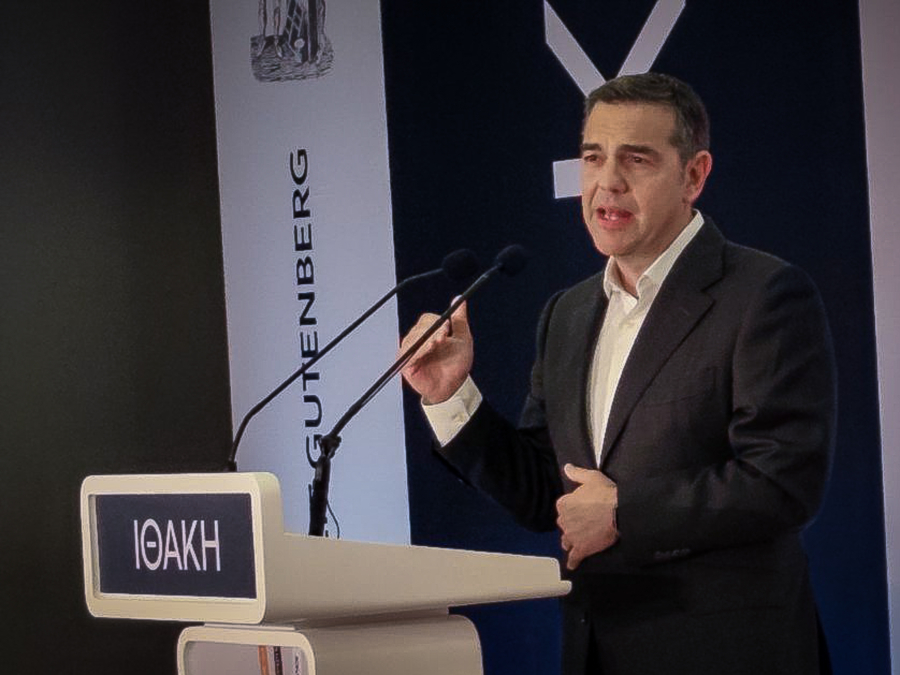

Tsipras described the surveillance affair as a scandal that, in his words, “bears the signature of Kyriakos Mitsotakis,” arguing that both the alleged monitoring of individuals and the subsequent cover-up were politically directed. He claimed that Greece’s National Intelligence Service (EYP) operated a surveillance mechanism that was effectively coordinated from the Prime Minister’s office, targeting politicians, military officials, journalists and business figures.
He pointed in particular to the resignations of Grigoris Dimitriadis and the head of the intelligence service when the scandal first came to light, arguing that their departures amounted to an indirect admission that the scandal existed. According to Tsipras, the developments at the time showed that the case was not an isolated incident but part of an organized surveillance system.
The former prime minister also criticized the role of the judiciary, claiming there had been attempts to limit the scope of the investigation and attribute responsibility only to private individuals rather than political figures. He referred to court rulings and investigative findings which, he said, describe serious indications of criminal acts, potentially at the level of felonies, while also alleging pressure had been exerted on judicial officials and independent authorities.
Tsipras also referred to Tal Dilian, the founder of the surveillance technology company Intellexa, who has been convicted by an Athens court in relation to the Predator spyware.
He argued that Dilian’s public statements suggesting that the Greek government was a client of Intellexa raise serious political questions about responsibility and the operation of surveillance networks in Greece.
Tsipras also warned that if the government were to introduce what he described as tailor-made legislation to benefit Dilian, it would confirm, in his words, that the government was operating “like a gang.” He added that the responsibilities of the prime minister and his nephew had now moved beyond the realm of political criticism and into the sphere of prosecutorial investigation and potential criminal charges, including felony-level offenses, which he said would be difficult to avoid.
He further questioned why, as he put it, in a democratic country a convicted individual making such serious accusations and threats toward the government had not been officially answered either politically or legally. At the same time, he accused the prime minister’s nephew of using legal actions and SLAPP-style lawsuits against journalists in an attempt to intimidate them into not reporting his name, noting that a court decision reportedly refers to him hundreds of times.
He concluded by stating that the wiretapping affair is no longer merely a political controversy but a matter for judicial investigation that could involve serious criminal offenses, adding that further developments in the case are expected in the coming period.