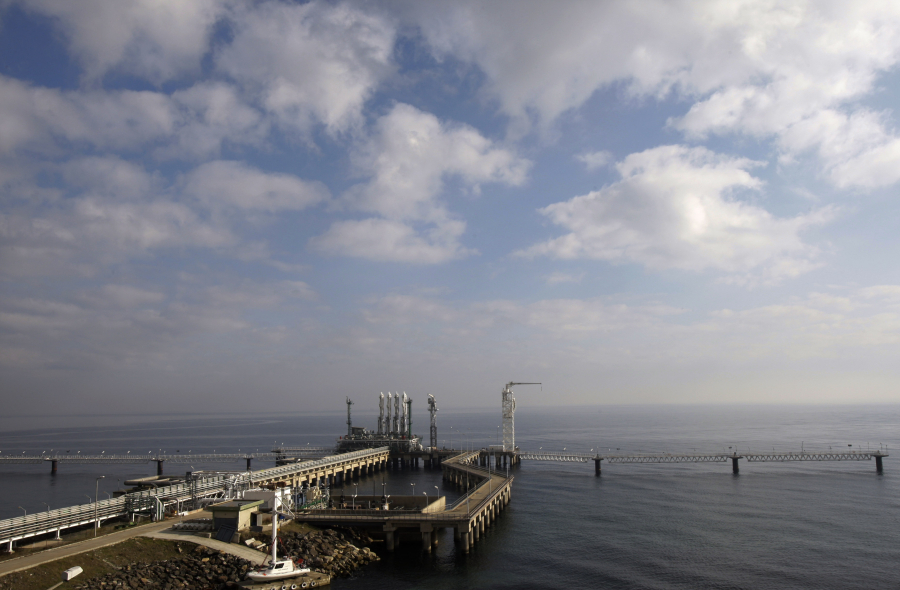

The Vertical Natural Gas Corridor is facing one of its most decisive moments since it entered operation, with the auction scheduled for Monday, 26 January widely seen as a critical stress test for both the commercial viability and long-term sustainability of the project. The corridor is a key piece of infrastructure underpinning Greece’s ambition to position itself as a regional transit hub for liquefied natural gas, channeling mainly U.S.-sourced LNG to Southeastern Europe and ultimately to Ukraine.
Market attention is centered on whether shippers will be willing to book capacity for February under particularly challenging conditions. Available volumes are limited, commercial risk is elevated, and competition from alternative supply routes to Ukraine has intensified. These factors are compounded by unresolved regulatory issues affecting the corridor, which currently undermine the attractiveness of its auction products for major international market participants. As a result, sentiment in the market ahead of Monday’s auction is broadly pessimistic.
The volumes being offered are substantially lower than in the previous month. Daily capacity has been reduced to around 26,000 MWh, compared with approximately 51,000 MWh made available in December, an auction that ultimately failed to attract any bids. According to market sources, this reduction reflects the cold spell affecting the Balkans and Eastern Europe, which has sharply increased regional demand and prompted traders to secure a significant share of available capacity along the Bulgaria–Romania interconnection.
On a monthly basis, total capacity available through the Vertical Corridor amounts to roughly 728,000 MWh. This is below the energy content of a full LNG cargo, typically close to 1 TWh, a factor that adds to commercial uncertainty. The relatively small volumes make it more difficult for market participants to design competitive trading strategies and have reignited discussions about the need for longer-term capacity products, rather than relying almost exclusively on short-term auctions.
Despite increased activity at both corporate and political levels aimed at avoiding a repeat of December’s unsuccessful auction, broader international conditions remain unfavorable for risk-taking. Heightened volatility in energy markets, elevated transportation costs, and growing geopolitical friction between the United States and the European Union are discouraging potential participants from committing capacity.
At the same time, the Vertical Corridor is under strong competitive pressure from other routes supplying Ukraine. Most Ukrainian gas imports are currently routed through Hungary and Poland, corridors that are generally considered more cost-effective due to shorter distances and lower transit tariffs. Illustrating this competition, Poland’s system operator has recently upgraded the Hermanowice metering station, increasing transmission capacity toward Ukraine from 600,000 to 720,000 cubic meters per hour starting in February.
A key variable for the outcome of Monday’s auction is the stance of Ukraine’s state-owned gas company, Naftogaz, and whether it chooses to activate a memorandum of understanding it has signed with Greece’s DEPA covering the period from January to March 2026. The agreement envisages gas deliveries through Atlantic–See LNG Trade, a joint venture between DEPA and construction group Aktor. However, Naftogaz did not seek gas supplies from DEPA in January, a development that contributed to the absence of the Greek company from December’s auction.
Regulatory uncertainty further clouds the outlook. The European Commission is examining complaints filed by traders concerning the structure of the Vertical Corridor’s capacity products, focusing on whether the bundled Route 1, Route 2, and Route 3 offerings comply with EU rules that require capacity to be allocated separately for each infrastructure asset. Market participants argue that the current horizontal booking model may distort competition, with a final decision from the Commission expected by April.
With limited volumes, relatively high tariffs, growing competition from alternative routes, and unresolved regulatory questions, the 26 January auction has taken on heightened significance. While its immediate impact will be on the corridor’s short-term performance, the outcome is also expected to send a broader signal to policymakers and market participants that further adjustments will be needed if the Vertical Gas Corridor is to evolve into a credible pillar of energy security for Eastern Europe amid intensifying geopolitical and energy challenges.