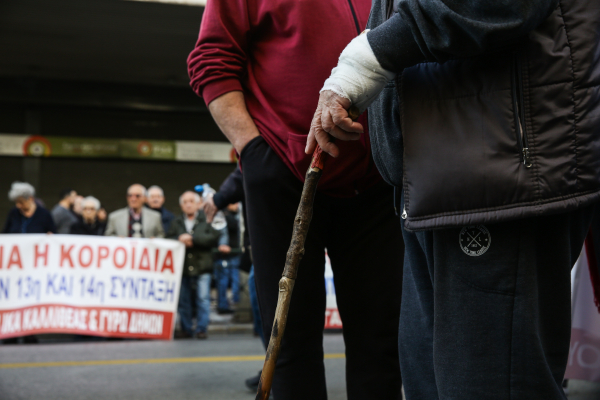
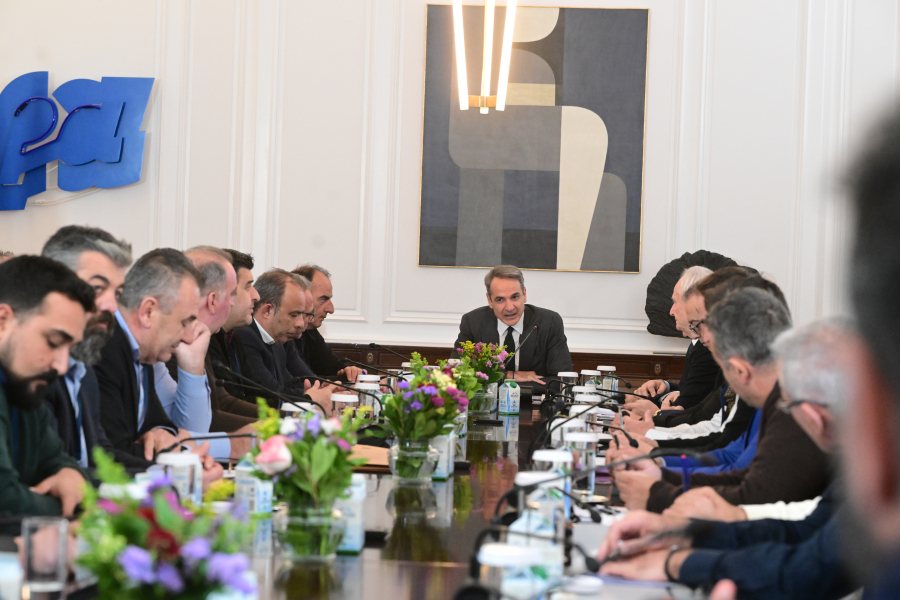

After nearly four and a half hours of talks, a closely watched meeting between Greek farmers and Prime Minister Kyriakos Mitsotakis ended on Monday at the Maximos Mansion in Athens, leaving farmer representatives openly disappointed and signalling that nationwide protests may continue.
Farmers said the meeting delivered “nothing new,” accusing the government of once again invoking fiscal constraints and European Union rules to avoid meaningful concessions. Protests and road blockades by farmers, livestock breeders, beekeepers and fishermen have now lasted more than 50 days, driven by rising production costs, falling incomes and the impact of animal disease outbreaks.
Speaking after the talks, Development Minister Kostas Tsiaras described the meeting as “productive,” but stressed that the government is prepared to discuss only technical issues within a fixed framework. Broader demands, he said, run up against budgetary limits and EU regulations.
The farmers’ delegation, made up of 31 representatives, presented 14 demands focusing on reducing energy and fuel costs, compensating for lost income and tackling sheep pox, which has severely affected livestock farmers. According to participants, while some technical matters were discussed—such as electricity billing schedules and fuel taxation—key demands, including direct income support, were rejected or left dependent on possible EU approval under limited aid schemes.
Later the same day, Mitsotakis addressed the issue publicly during a discussion in Athens, striking a more political tone. “I want to believe that reason will prevail,” he said, adding that society is exhausted after 50 days of protests. “Farmers have nothing more to gain by remaining at the roadblocks. I think they understand that too. I am cautiously optimistic, but ready to manage any situation.”
Describing the earlier talks, the prime minister said the meeting had been “long, interesting and frank,” but also relatively unstructured, as each participant sought to raise individual concerns. He argued that many of the issues could have been discussed earlier, potentially easing tensions sooner.
Mitsotakis also suggested that party-political motives lay behind some of the mobilisations, describing them as rooted in “a logic from the past.” He stressed that there are no surplus public funds and that his government would not repeat previous mistakes. “I prefer to be honest and say that some demands cannot be met, rather than sweep the problem under the carpet,” he said.
Any solution for Greece’s primary sector, he added, must respect fiscal discipline, be socially fair and comply with EU law. He pointed to structural problems in agriculture and cited the transfer of the agricultural payments agency OPEKEPE to the tax authority as a first step toward reform. Mitsotakis also raised the possibility of creating a formal Agricultural Chamber, arguing that the sector needs clear and credible representation.
As farmers return to protest sites across the country to consult with colleagues, the standoff highlights a familiar challenge for Greece: balancing fiscal discipline and European rules with mounting social pressure from a struggling rural economy.