
The decision has ignited anger and anxiety across the country, from small mountain villages in Epirus to Aegean islands and working-class suburbs of Athens. For many residents, the post office was more than a convenience; it was an essential public service that has now disappeared overnight. Mayors speak of “the abandonment of the regions,” small business owners fear disruption to their daily transactions, and elderly citizens lament that they “neither have internet nor cars to travel elsewhere.”
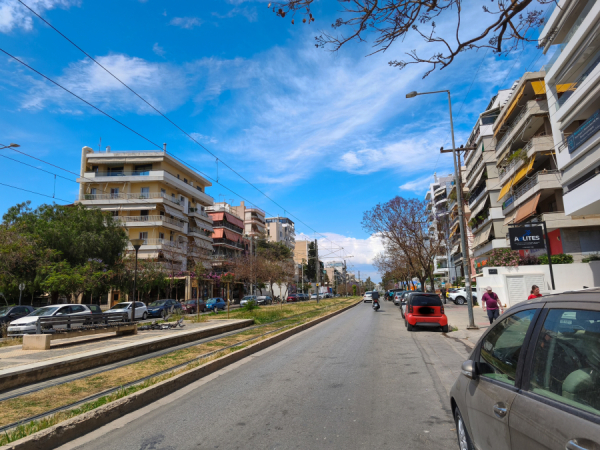
The closures hit both rural and urban areas. Neighborhoods such as Alimos, Dafni, Metamorfosi, Kaisariani, Nikaia and Marathonas in the wider Athens region will be left without a single physical branch.
Entire prefectures like Grevena will operate with just one post office in their capital. In parts of western Greece, such as Aetolia-Acarnania and Evrytania, and on islands including Lesvos and Limnos, residents may now have to travel up to 50 kilometers to send or receive mail.
ELTA’s management argues that the decision is a matter of survival, not neglect. According to the organization, the branches slated for closure handled very low volumes of work, with some operating at annual losses exceeding €150,000. Physical post offices, executives point out, account for less than 10% of total revenue but nearly half of all operating costs. They insist that the postal service is entering a new era — one defined by digital transactions and parcel deliveries driven by e-commerce, rather than traditional letters and paper correspondence.
In place of its traditional branches, ELTA promises a modernized model. The plan includes a larger fleet of postal carriers equipped with POS terminals and handheld devices, home visits for the elderly and residents of remote areas, mobile service units, and partnerships with small local shops that will function as postal access points. Citizens, the company says, will be able to call and schedule a postman’s visit to their door for basic services. ELTA describes this as a fairer, faster, and more financially sustainable system.
But unions and local communities are not convinced. The Panhellenic Federation of Postal Workers has condemned the move as a “doomsday plan” that will lead to the slow death of Greece’s public postal service and hand over the market to private courier companies. Postal employees argue that the universal service obligation — the legal guarantee that every community, no matter how small, must have access to postal services — has long been underfunded by the state. “They are forcing closures because they refuse to finance what they are required to support,” union representatives say. They also reject the government’s claim that Greece can seamlessly transition into the “digital age,” pointing out that in many rural villages, elderly residents lack both internet access and smartphones.
Critics warn that the main beneficiaries will be private courier firms, which already dominate much of the market with their speed and flexibility. Yet these companies typically focus on profitable urban centers, leaving behind smaller, less accessible communities. The question, many ask, is who will serve the residents of remote islands and mountain villages, or those who cannot afford private services.
The controversy has also drawn sharp comparisons with other European countries. Across Europe, public postal systems are indeed modernizing and investing heavily in digital infrastructure and parcel delivery, but few are closing branches on such a large scale or without comprehensive planning. Elsewhere, governments continue to subsidize rural networks, partner with local businesses, install automated parcel lockers, and ensure that no citizen is left without access. In much of Europe, postal services are still viewed not merely as businesses but as public goods — fundamental rights of access, especially in aging societies and geographically fragmented nations like Greece.
According to a recent report by Mordor Intelligence, Europe’s postal market is on a path of steady, diversified growth. The sector’s total value is projected to reach 181.3 billion dollars in 2025 and 198.3 billion by 2030, driven primarily by parcel services, which now account for 62% of all postal activity. Express deliveries are the fastest-growing segment, expanding at an annual rate of over 7% as demand for same-day and next-day shipping continues to surge. Germany remains the region’s largest postal market, holding 24% of the share thanks to its advanced logistics network, while Spain is the fastest-growing, expanding by 6.1% annually due to its flourishing e-commerce sector.
In contrast, Greece’s postal landscape appears to be contracting. Many fear that the ELTA closures mark a quiet retreat of the state from one of its core obligations. As the country moves deeper into the digital era, those left behind may be the most vulnerable — the elderly, rural residents, small business owners, and the people living on the nation’s remote borders. For them, postal access remains not just a service, but a connection to the rest of the world.