
The Greek government is navigating an increasingly volatile political climate. Its initiative to restore the Tomb of the Unknown Soldier—broadly popular among conservative voters—has unexpectedly ignited internal conflict within the ruling New Democracy party, exposing deep rifts and rivalries that now threaten to destabilize its leadership.
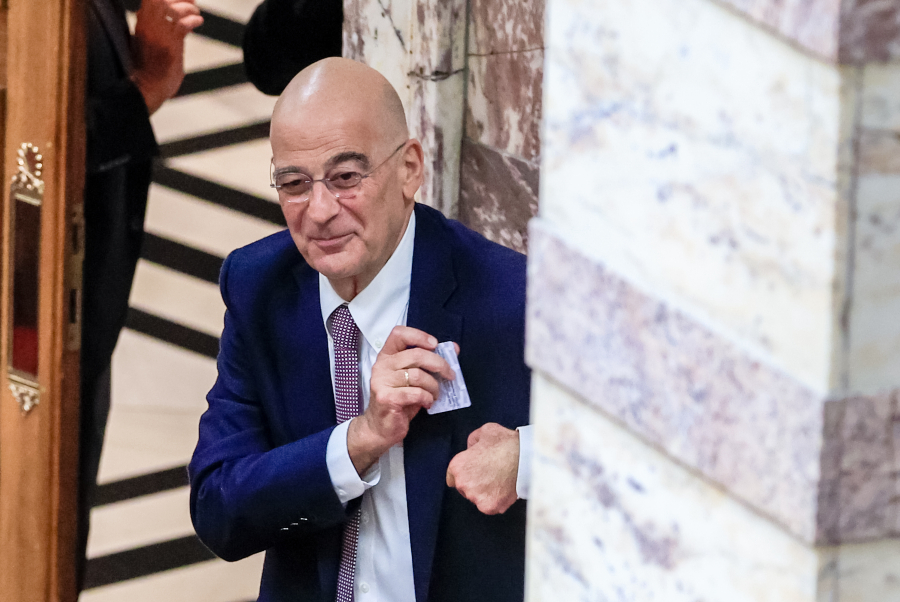
At the center of the storm stands Defense Minister Nikos Dendias, whose tense relationship with Prime Minister Kyriakos Mitsotakis has erupted into public view. What began as quiet friction has turned into open confrontation, with both camps trading blame over the monument initiative. Dendias, widely seen as a potential successor to Mitsotakis, has sought to appeal simultaneously to the party’s traditional right-wing base and to centrist voters—a strategy insiders describe as “standing in two boats.” His absence from a parliamentary vote on a bill he had co-signed was seen even by allies as a misstep, underscoring his delicate position.
The Prime Minister’s office has portrayed the restoration plan as a political win that resonates with core supporters. Yet officials privately concede that mishandling its implementation could turn it into a liability. Asked how the government would enforce the new measures, Mitsotakis’s aides offered only vague assurances about “dialogue and sensitivity,” leaving doubts about whether symbolism will translate into substance.
The dispute intensified after Dendias met with the mayor of Athens and appeared to contradict the government’s stance by claiming that, under the Constitution, maintenance of the monument remains a municipal duty. The Prime Minister’s office swiftly countered that the new law clearly transfers responsibility to the Ministry of Defense. The exchange crystallized the growing divide between the two men and their competing visions for the party’s future.
Dendias has quietly positioned himself as a centrist alternative ahead of a possible post-election scenario in which no single party commands a majority. Mitsotakis, by contrast, is focused on consolidating the conservative base to secure another outright win. “What we’re seeing is a clash of two future strategies,” a senior minister said.
The tensions are expected to come to a head at a high-profile event on October 29, when Dendias will inaugurate the newly renovated façade of Greece’s Pentagon building. Mitsotakis is expected to attend, though his participation has not been officially confirmed. According to political sources, former prime ministers Kostas Karamanlis and Antonis Samaras, along with former president Prokopis Pavlopoulos, were initially invited but declined once they learned of Mitsotakis’s presence—a move widely interpreted as a signal of their distancing from the current leadership.
The episode has become more than a ceremonial unveiling; it is now a political litmus test for the government’s internal cohesion. As Dendias works to ensure strong attendance from party MPs, the event is shaping up as both a symbolic display of unity and a reminder of the widening cracks within Greece’s ruling party—cracks that could determine the future balance of power in Athens.