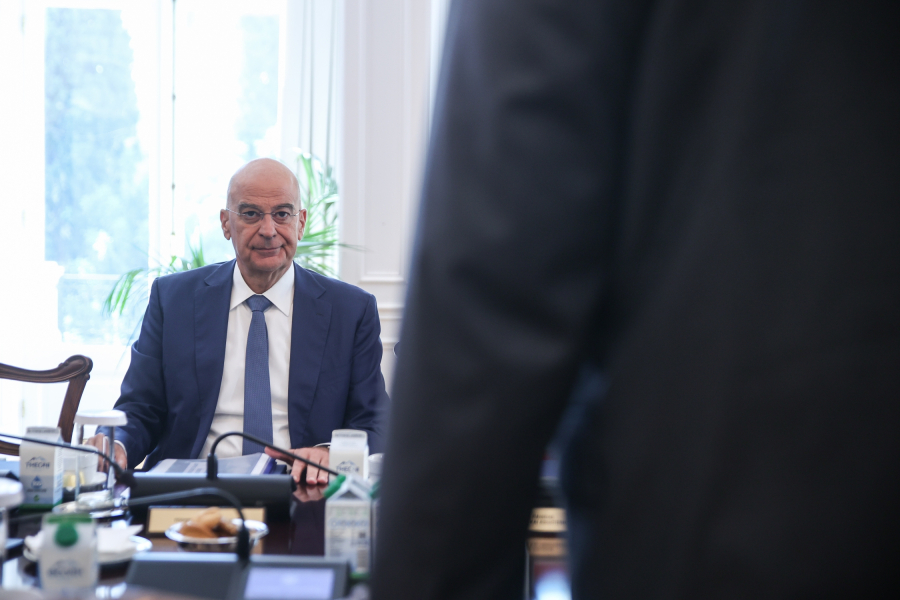

Greece’s Defense Minister Nikos Dendias appeared to distance himself from Prime Minister Kyriakos Mitsotakis on Tuesday, during a parliamentary debate over the government’s controversial amendment concerning the Monument of the Unknown Soldier, a deeply symbolic landmark in central Athens.
In a carefully worded statement—released while the prime minister was still speaking—Dendias emphasized that the Armed Forces would not allow the monument to become a tool of political maneuvering or social division.
“The Monument of the Unknown Soldier is inseparable from national memory—a space of unity and respect for those who sacrificed their lives for the homeland,” Dendias said. “It must never be used to advance political goals.
The Armed Forces will treat it as a sacred symbol, not as a stage for political confrontation.”
He echoed comments by the President of the Republic, who had called for the monument to be kept above day-to-day political disputes and preserved as a timeless tribute to Greece’s national struggles.
Dendias also referred to the 2023 Tempi rail disaster, noting that the area in front of the monument had become associated with the public’s demand for justice. “The prime minister himself demonstrated his respect for the victims through his presence there,” he said. “But the monument unites Greeks—now and forever. Respect for our fallen and our history is a collective duty.”
Speaking immediately afterward in Parliament, Mitsotakis defended the amendment as “an act of national responsibility and democratic sensitivity.” The measure, he explained, places the monument under the jurisdiction of the Ministry of Defense, which will be responsible for its maintenance and preservation. The police will oversee its protection.
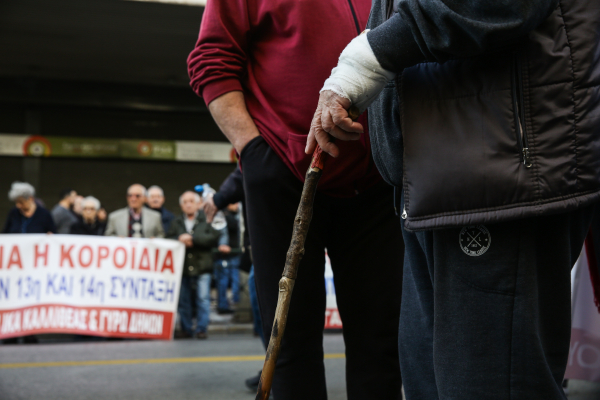
Mitsotakis insisted that the change does not restrict the right to public assembly, which remains fully in place across Athens, including Syntagma Square. However, he argued that gatherings unrelated to the monument’s commemorative purpose would no longer be permitted directly in front of it.
“This is a sacred space that belongs to no government, no party, no person,” Mitsotakis said. “It is a site of remembrance for those who fell for their country. For too long, the monument was held hostage to bureaucratic confusion and turned into a stage for protests of every kind. We are restoring its dignity.”
The prime minister pointed to similar practices across Europe, where national monuments are granted special protection. “Democracy and patriotism are not threatened when we defend our national symbols—they are weakened when we abandon them,” he said.
Addressing the families of the Tempi victims, Mitsotakis urged them not to allow their grief to be exploited by political actors. “Justice will come through the trial, which begins in March,” he said, adding that certain figures were attempting to “weaponize pain” for partisan purposes.
Opposition leader Nikos Androulakis of the PASOK party denounced the government’s move as “a shameful initiative driven by internal party politics and a few extra votes.” He accused the ruling party of hypocrisy, claiming it had shown no concern for the monument’s sanctity in the past and was now “using both the living and the dead to promote its narrative.”
Androulakis argued that existing laws already protect national monuments and that transferring control to the Defense Ministry was unnecessary. He predicted bureaucratic delays in the appointment of a contractor to clean and maintain the site, calling the amendment “political theater.” “Patriotism does not belong to you alone,” he told Mitsotakis. “The homeland belongs to all of us.”