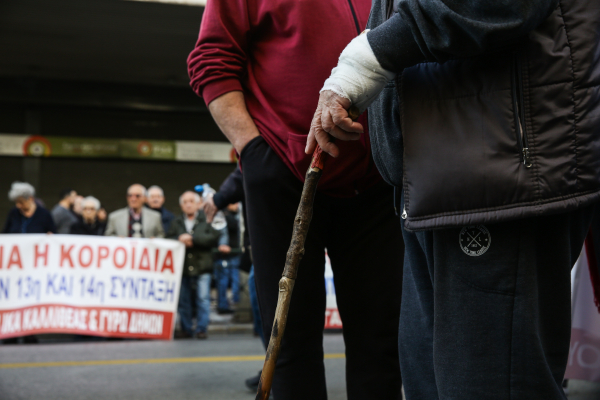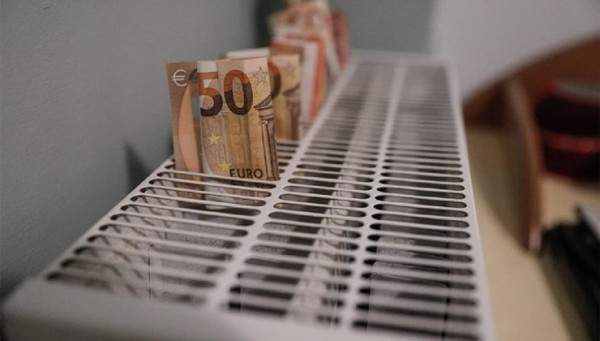

Greece continues to record the highest levels of “subjective poverty” in the European Union, according to new data from Eurostat, with progress in reducing hardship advancing at a frustratingly slow pace. In 2024, nearly seven in ten Greeks (66.8%) said they struggle to make ends meet, a figure that places the country far above the EU average of 17.4%.
The European figure has shown clear improvement since 2023, when it stood at 19.1%, but Greece’s recovery remains largely stagnant.
The decline in perceived poverty in Greece since 2018 has been minimal—just 7.3 percentage points, falling from 74.1% to 66.8%—while other countries starting from similar levels have made far greater progress. Bulgaria, for instance, reduced its rate from 55.9% in 2018 to 37.4% in 2024. Slovakia now stands at 28.7%, while the lowest levels are found in the Netherlands and Germany, both at 7.3%, and in Luxembourg at 8.5%.
“Subjective poverty,” as defined by the EU’s statistical system (EU-SILC), captures how people perceive their ability to meet their financial obligations rather than relying solely on income data. Households that report getting by “with great difficulty” or “with difficulty” are considered to be living in subjective poverty, offering a more human measure of economic stress that reflects day-to-day realities rather than abstract averages.
The 2024 figures also show that children are the most affected group, with 20.6% of those under 18 living in subjective poverty. Adults aged 18 to 64 follow at 17.3%, while 14.9% of people over 65 report the same. Although there have been small declines across all age categories, financial pressure remains deeply felt across Greek society.
This sense of strain is reinforced by findings from the Foundation for Economic and Industrial Research (IOBE) in its Economic Sentiment Survey for September 2025. Two-thirds of Greek households (66%) said their financial situation had worsened over the past year, while only 3% reported any improvement. Looking ahead, 54% expect their finances to deteriorate further over the next twelve months, and a mere 6% anticipate a slight improvement. The pessimism extends to national prospects as well, with 64% of respondents believing the country’s overall economic situation will worsen in the coming year, compared to 19% who expect stability.