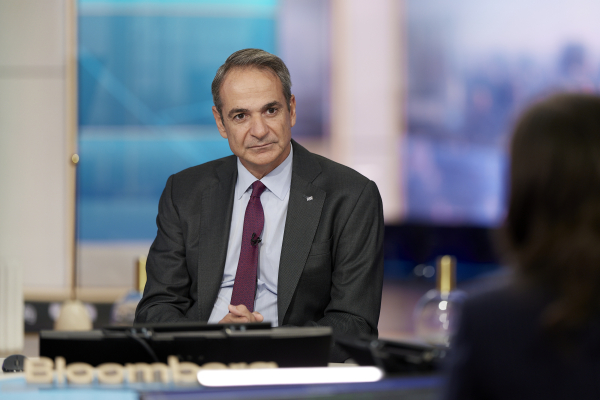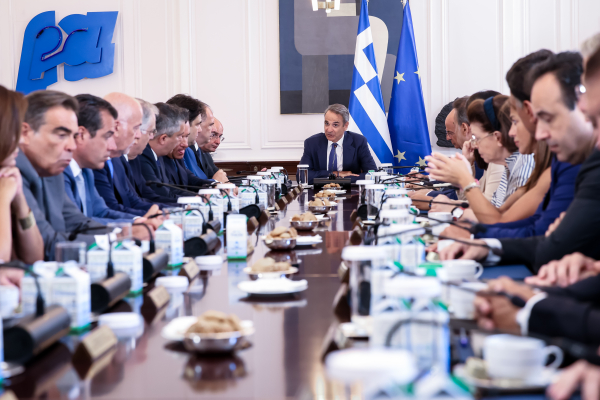
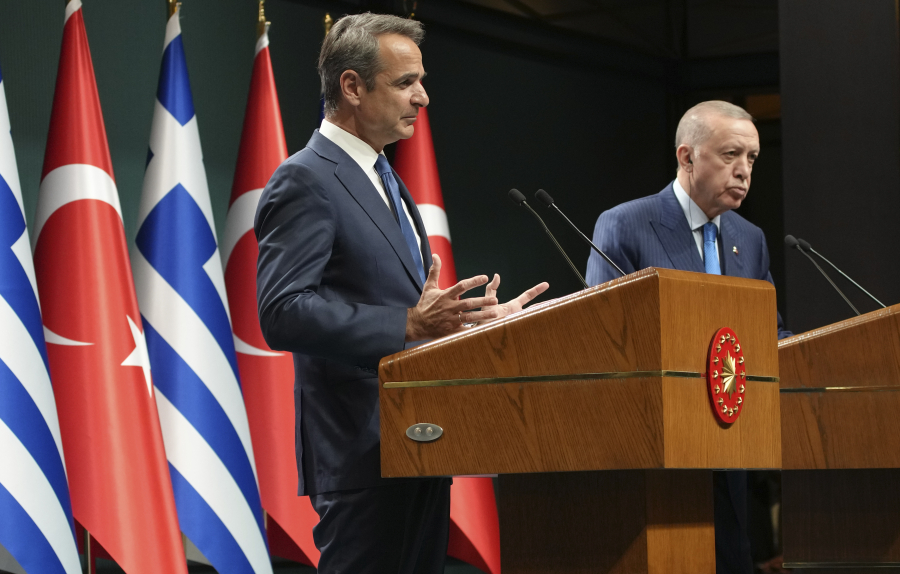

The planned meeting between Greek Prime Minister Kyriakos Mitsotakis and Turkish President Recep Tayyip Erdogan on the sidelines of the United Nations General Assembly in New York has been postponed at Ankara’s request.
The two leaders were scheduled to sit down on Tuesday, but the meeting was called off after Erdogan confirmed his participation in a gathering of Arab and Muslim leaders organized at short notice by U.S. President Donald Trump. Government sources in Athens noted that the summit, which Turkey was obliged to attend, directly overlapped with the slot reserved for the Greek-Turkish encounter. A new time for the meeting is now being sought in the coming days, depending on the availability of both leaders.
For Ankara, the postponement underscores its focus on regional diplomacy and its bid to reposition itself as a central power in the broader Middle East. For Athens, however, the delay has domestic political reverberations. Greek opposition parties seized on the development to argue that Erdogan’s decision highlighted what they see as the diminishing weight of Greek diplomacy.
In Turkey, news of the postponement was reported in local media largely through Greek sources, with few additional details.
The agenda of the meeting was expected to touch on energy and security issues, including Greece’s position on the SAFE program, the electricity interconnection between Cyprus and Crete, and the situation in Libya. The context differs significantly from the leaders’ last meeting in September 2024. Since then, Ankara has pursued an assertive regional role, while Athens has sought to entrench its sovereignty in the Eastern Mediterranean through initiatives ranging from new maritime spatial planning to the creation of marine parks in the Ionian and southern Cyclades. Greece has also welcomed interest from U.S. energy giant Chevron in hydrocarbon exploration south of Crete and the Peloponnese, a move accompanied by high-level discussions in Athens with U.S. Interior Secretary Doug Burgum.
Mitsotakis’ schedule in New York continues to be full despite the setback. He is due to meet with Cypriot President Nikos Christodoulides, Azerbaijani President Ilham Aliyev, Sierra Leone’s Julius Maada Bio, Yemeni President Rashad al-Alimi, and Ecumenical Patriarch Bartholomew. On Tuesday evening, he is expected to attend a reception hosted by Trump for world leaders.
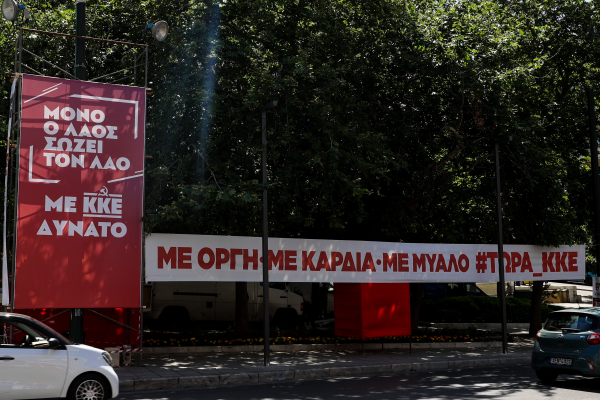
The opposition in Athens reacted sharply to the postponement. SYRIZA, Greece’s main left-wing party, said the episode reflected the “marginalization” of the country in regional affairs, accusing the government of pursuing a reckless and incoherent foreign policy. Rena Dourou, the party’s foreign affairs spokeswoman, argued that the Turkish president considered the encounter of little importance compared with other meetings. The Communist Party (KKE) described the decision as a “diplomatic show of strength” by Ankara, linking it to broader negotiations between Trump and Erdogan on arms deals and influence in the Middle East. PASOK-KINAL, the country’s third-largest party, warned that postponement sent the wrong signals at a sensitive moment for Greek-Turkish relations and the wider Eastern Mediterranean.