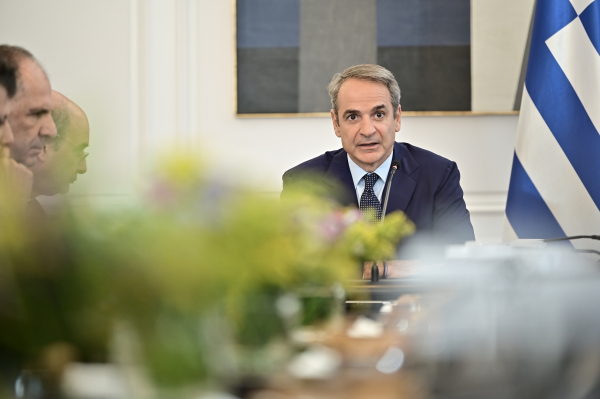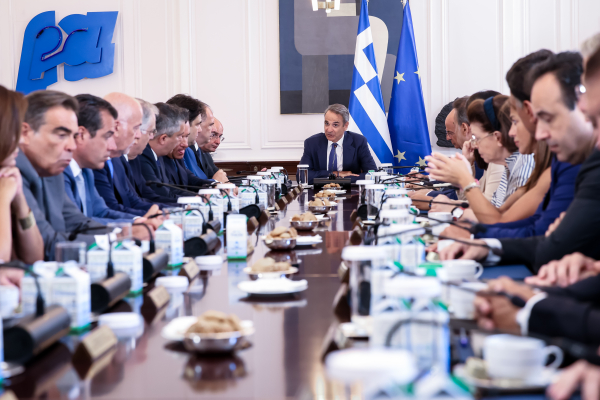
A day after a diplomatic flare-up in Libya, tensions remain high as European governments and the European Commission prepare their response to the unexpected expulsion of a high-level EU delegation by the eastern Libyan administration. Greek Prime Minister Kyriakos Mitsotakis is scheduled to meet today with Migration and Asylum Minister Thanos Plevris in Athens to assess the fallout, following Plevris’s abrupt removal from Benghazi alongside other European officials.
The incident unfolded on Wednesday when Plevris, along with ministers from Italy and Malta and EU Commissioner for Migration Magnus Brunner, arrived at Benina International Airport in Benghazi as part of an official EU mission. Shortly after landing, the eastern Libyan authorities issued a statement denouncing the delegation’s visit as a “flagrant violation” of Libya’s sovereignty and diplomatic protocol. Without warning, they cancelled all planned meetings and declared the officials persona non grata, ordering them to leave the country immediately.
The Libyan statement accused the EU representatives of bypassing established diplomatic procedures for foreign officials—protocols that, according to Benghazi, had been clearly communicated in advance. They cited both Libyan law and international conventions as justification for their decision, which has drawn concern in Brussels and across European capitals.
The European Commission, which organized the mission, is expected to respond formally to what it views as an unjustified diplomatic rebuke. According to Greek government sources, today’s meeting between Mitsotakis and Plevris will focus on both the immediate implications for Greek foreign policy and the broader consequences for EU engagement in Libya.
The episode underscores the fragile and fragmented nature of Libya’s political landscape, where rival governments in Tripoli and Benghazi continue to compete for legitimacy—and where even coordinated EU initiatives can become entangled in regional rivalries.