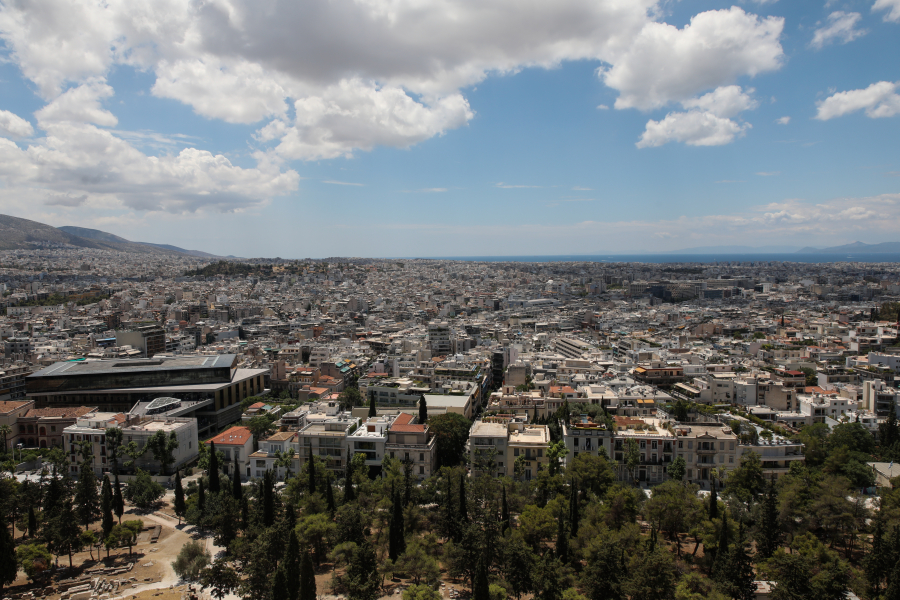

Yet this figure, while impressive in aggregate, masks deep regional imbalances. The lion’s share—more than 54%—is concentrated in the Attica region, highlighting the stark economic divide between Athens and the rest of the country.
Attica, which includes the capital city of Athens and surrounding suburbs, accounts for €111.6 billion in deposits. It also leads by far in banking activity, with more than 14.6 million bank accounts—over one-third of all accounts nationwide. Within Attica, the Athens Regional Unit alone holds €91.5 billion and over 11.2 million accounts, cementing its role as the financial nerve center of the country.
Central Macedonia, home to Greece’s second-largest city, Thessaloniki, ranks a distant second. It holds €25.9 billion in deposits and 5.6 million accounts. Of this, Thessaloniki contributes €18.1 billion and nearly 3.5 million accounts. The rest of the region—comprising smaller units such as Pella, Pieria, and Serres—lags significantly, with deposits between €1.2 and €1.8 billion, underscoring the capital-centric nature of economic activity.
Crete follows with €9.5 billion in deposits and more than 2.2 million accounts. The island’s financial activity is more evenly spread across its regional units, though Heraklion alone accounts for nearly half of the total, at €4.8 billion. The South Aegean region, driven by tourism-heavy islands like the Dodecanese and the Cyclades, contributes €6.8 billion in deposits across approximately 1.3 million accounts.
Thessaly’s financial footprint is slightly smaller, at €8.8 billion in deposits and 2 million accounts, with Larissa and Magnesia as its primary contributors. In Epirus, one of Greece’s less developed regions, deposits total €4.6 billion, with Ioannina standing out at €2.4 billion and over half a million accounts.
The Peloponnese, the large southern peninsula of mainland Greece, holds €7.4 billion in deposits, with its economic strength centered in Messinia and Corinthia. In Western Greece, total deposits reach €6.9 billion, most of it located in Achaia—home to Patras, a key urban and economic hub.
Several regions show more modest financial activity. Western Macedonia, the Ionian Islands, and Eastern Macedonia and Thrace record total deposits between €3.2 billion and €6.6 billion. These areas have a lower number of accounts and more evenly distributed banking figures across their sub-regions, reflecting limited urban concentration and economic dispersion.
In the North Aegean, total deposits amount to €2.86 billion, with Lesbos leading in financial transactions. Central Greece, meanwhile, registers €5.87 billion in deposits, heavily driven by the island of Euboea, which accounts for €2.36 billion and over 635,000 accounts.
At the lower end of the banking spectrum are areas like Evrytania, Phocis, Grevena, and the island of Thasos, each with deposits well under €400 million. These regions illustrate the shallow banking footprint and limited economic resources outside the country’s major urban centers.
Nationwide, the number of bank accounts exceeds 36 million—an impressive figure for a population of around 10 million. This widespread use of banking services points to the maturity of the Greek financial system but also suggests fragmentation. In many of the country’s less affluent areas, deposit balances per account remain very low, revealing a financial landscape marked by inequality and centralization around Athens.