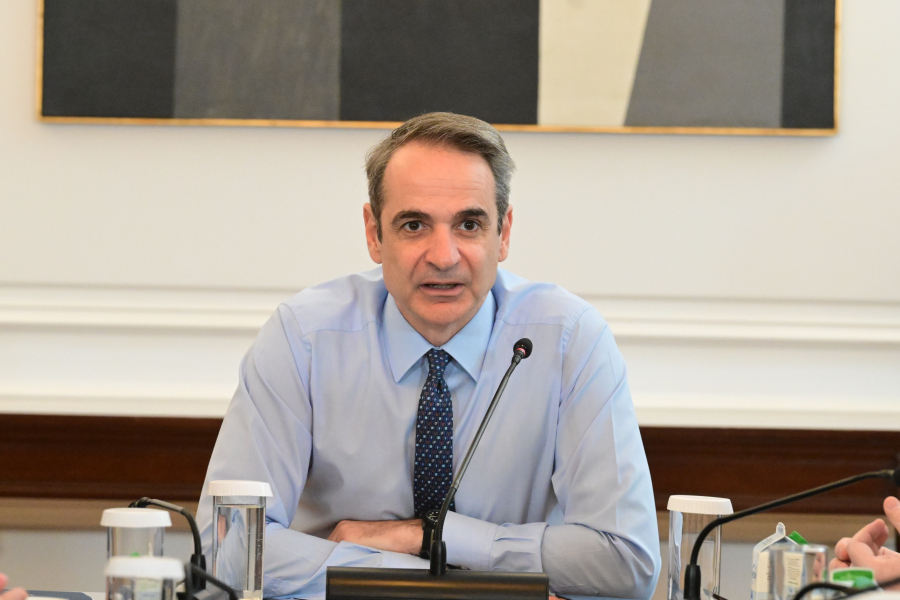

Greek Prime Minister Kyriakos Mitsotakis is set to meet French Minister of the Armed Forces Sébastien Lecornu at the Maximos Mansion on Monday at noon. The meeting underscores the growing cooperation between European allies at a time when the continent's defense sector is experiencing a significant expansion.
According to the Brussels-based think tank Bruegel, 31 companies currently dominate the European Union’s arms manufacturing landscape. These firms, listed in the SIPRI Arms Industry Database maintained by the Stockholm International Peace Research Institute, boast an average annual turnover of €3 billion. Their employee numbers range from just under 2,000 to over 150,000, with an average workforce of around 30,000. France’s Thales Group leads the pack as the EU’s largest defense contractor, employing 62,000 people and generating €7 billion in annual revenue.
The European defense industry as a whole recorded a total turnover of €158.8 billion in 2023, according to the Aerospace, Security and Defence Industries Association of Europe (ASD). In 2024, this figure is projected to grow by 17 percent, reaching approximately €185.8 billion. This sharp rise is driven by sustained geopolitical instability, including the war in Ukraine and mounting pressure on NATO members to boost defense spending.
Employment in the sector has also surged. Direct jobs in European defense now approach 600,000, with significant growth over the past two years tied to rising demand and public investment, such as funding from the European Defence Fund. The industry also indirectly supports over 1.2 million jobs through supply chains and related sectors.
Germany leads EU member states in terms of the number of arms and ammunition manufacturers, with 221 companies operating as of 2020, according to data from Statista. Italy follows with 157, and France with 122. Austria, the Czech Republic, Spain, Poland, and Sweden also maintain sizable defense manufacturing sectors.