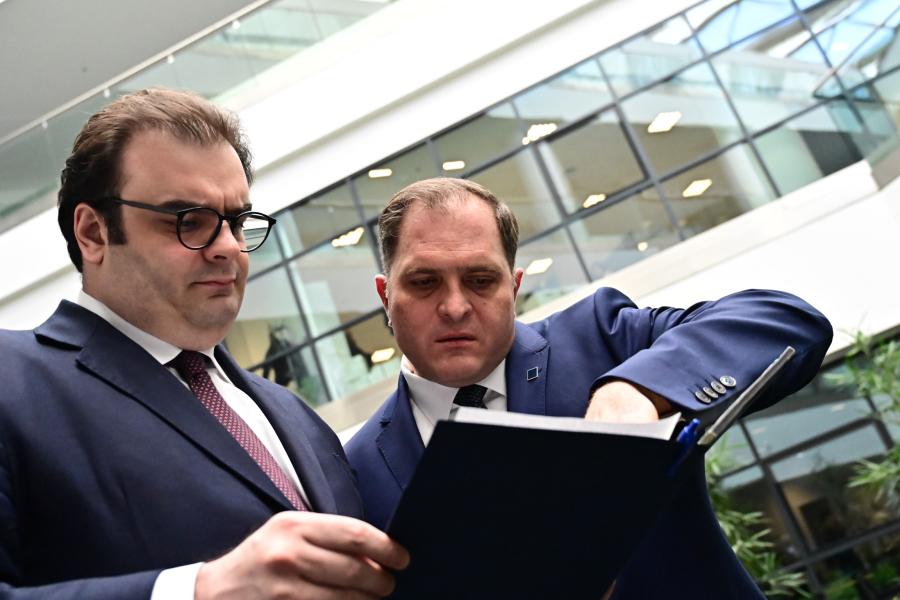

A new initiative launched by Greek Finance Minister Kyriakos Pierrakakis and the head of the Independent Authority for Public Revenue (AADE), Giorgos Pitsilis, is facing early skepticism, with critics already dismissing it as more political theater than practical policy.
The plan, unveiled midweek, aims to locate hidden assets of wealthy Greek taxpayers who owe large sums to the state and are suspected of concealing their wealth abroad. Yet many observers within Greece see it as an unrealistic move—an ambitious-sounding project unlikely to deliver meaningful results.
At the heart of the plan is the assumption that international legal and financial firms will be able to trace assets—such as foreign bank accounts or real estate—belonging to major tax debtors who have taken deliberate steps to obscure ownership. These assets are often hidden behind offshore companies, complex trusts, or are held in the names of relatives or third parties. These structures are notoriously difficult to penetrate, and previous attempts to uncover them have rarely borne fruit.
Nevertheless, the Greek authorities now claim that by sending lists of names abroad, they may succeed where past efforts have failed—a premise critics see as overly simplistic.
The plan also seems to underestimate the complexity of international law, tax confidentiality, and cross-border asset ownership.
Even if investigators identify signs of wealth, turning those findings into actual state revenue is far from straightforward. Legal battles, bureaucratic delays, and the protection of privacy laws in other countries often stand in the way of confiscation. The promise of “results within the year” is widely viewed as overly optimistic, lacking the legal and logistical groundwork such an outcome would require.
Complicating matters further is the profile of the debtors themselves. Out of approximately 9,500 individuals who collectively owe over €82 billion to the Greek state, a large percentage are either deceased or have declared bankruptcy—making debt collection a legal impossibility.
As for those still living, many have long since moved abroad and structured their finances in such a way that no assets or income are traceable in their own names. This is not a new revelation; it's a longstanding issue that Greek authorities have struggled to address for years.
Critics of the plan also point to the high cost of international asset investigations. Hiring foreign law firms and auditing houses to conduct such work is not only expensive but often yields minimal returns.
These services charge premium fees, especially when required to operate across multiple jurisdictions and untangle intricate financial networks. There's no guarantee that the state's investment in these services will translate into proportional revenue, meaning the whole endeavor could become a costly exercise with little to show for it.
Another obstacle is the dependence on the cooperation of foreign tax authorities. While Greece is part of several treaties on information exchange and judicial assistance, the actual processes involved are slow and often hampered by bureaucracy, incompatible legal systems, or outright reluctance. In certain countries, banking secrecy laws and privacy protections can severely limit access to relevant financial data, even when wrongdoing is suspected.
Even in rare cases where foreign assets are successfully identified, seizing them is far from automatic. Legal procedures can drag on for years and are often challenged by the debtors themselves through appeals and counter-litigation. Any potential recovery, therefore, is likely to be a medium- to long-term goal, not something that will significantly impact public finances in the near future.
Lastly, while Greece’s tax authority has made efforts to modernize—investing in artificial intelligence and building a high-tech operations center—these tools require skilled personnel to operate effectively. Unfortunately, the AADE’s auditing departments remain understaffed and largely composed of aging personnel, undermining the state’s ability to act decisively, even when promising leads emerge.