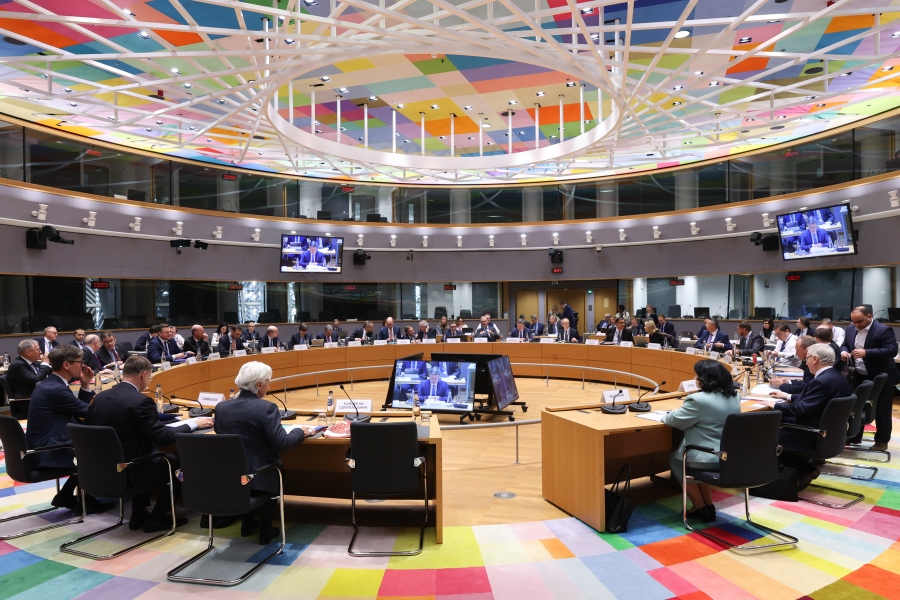
Greece will seek greater flexibility under European Union spending rules at Monday's meeting of eurozone finance ministers, hoping to unlock as much as €600 million in support for households and businesses struggling with rising energy costs.
The discussions at the Eurogroup, which brings together finance ministers from the 21 countries using the euro, will test whether Athens can redirect existing funds toward emergency subsidies without breaching EU fiscal commitments.
Greece's preferred outcome would allow the government to reallocate €400 million from an approved energy-security investment program to direct assistance for consumers and businesses.
ΔΙΑΒΑΣΤΕ ΕΠΙΣΗΣ


Combined with an additional €200 million earmarked for 2027, the arrangement could provide €600 million in support without increasing spending counted against the country's agreed net-expenditure limits.
Such an agreement would give Athens room to cushion the impact of higher electricity and fuel prices while preserving the fiscal credibility it has worked to rebuild since its sovereign-debt crisis.
A more limited compromise could involve the European Commission agreeing to examine special treatment for temporary energy subsidies rather than immediately approving Greece's proposal.
Athens would also welcome an agreement to convene a joint meeting of EU finance and energy ministers to develop a coordinated response to rising energy costs.
The downside scenario is a rejection of additional fiscal flexibility, leaving Greece to finance subsidies within its existing spending limits. That would force the government either to scale back assistance or offset the cost through cuts elsewhere in the budget.
An inconclusive meeting, without an agreement or timetable for further negotiations, would also leave Athens facing uncertainty over how much support it could provide.