Temperatures are forecast to reach as high as 43 degrees Celsius, or about 109 degrees Fahrenheit, in parts of the country, raising fears that even a small fire could spread rapidly and prove difficult to contain. The most severe fire-risk designation has been issued for the greater Athens region of Attica, as well as Boeotia and Phthiotis in central Greece and Argolis and Corinthia in the Peloponnese.
Greece’s Civil Protection Risk Assessment Committee warned that Wednesday could be an especially difficult day, with strong, hot downslope winds in eastern parts of the country adding to the danger posed by extreme temperatures.
“The conditions will be extreme,” Civil Protection Minister Evangelos Tournas said, warning that the combination of strong winds and heat could make it significantly harder for firefighters to contain a blaze.
He urged residents to follow official instructions and avoid any activity that could ignite a fire, including outdoor burning, work involving tools that produce sparks and the careless disposal of cigarettes.
Tournas said the conditions could make it difficult for emergency crews to bring a fire under control in its earliest stages, calling for cooperation among the public, the government and civil-protection authorities to safeguard lives, property and the country’s forests.
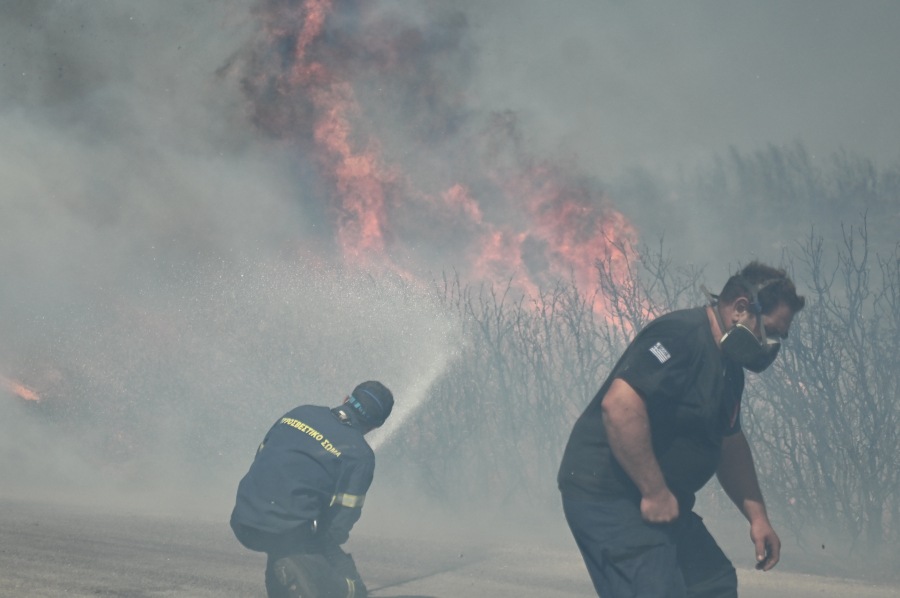
The warnings come as southern Europe faces another period of intense summer heat, with Greece particularly vulnerable to fast-moving wildfires after prolonged dry weather. The country has suffered a series of destructive fire seasons in recent years, prompting the government to expand the use of drones, aerial surveillance and specialized forest-fire units.
The entire Greek Fire Service will be placed on general alert Wednesday, while patrols and aerial monitoring will be increased in high-risk regions. Specialized firefighting teams will be deployed, and aircraft will conduct surveillance flights with firefighting loads so they can intervene quickly if a blaze is detected.
Drone teams and mobile drone-control centers will also be stationed in areas facing the greatest danger, while arson-investigation units will carry out additional patrols.
Representatives from the military, police, coast guard, emergency medical services, electricity-grid operators and local authorities will be stationed at Greece’s national crisis-coordination center to speed up decision-making if fires break out.
The armed forces will conduct patrols and staff designated fire-watch posts around the clock, while heavy machinery and water tankers will be positioned across vulnerable areas. Police and other agencies will step up enforcement of restrictions barring people and vehicles from certain forests, national parks and other fire-prone zones.
Beyond the five regions under the highest, Category 5 warning, large parts of Greece have been classified as facing a “very high” Category 4 fire risk.
The fire threat is being intensified by a heat wave expected to peak Wednesday. The highest temperatures are forecast in the eastern Peloponnese, central Greece, Thessaly and Attica, which includes Athens. Many areas are expected to record temperatures of 40 to 42 degrees Celsius, with local highs reaching 43 degrees.
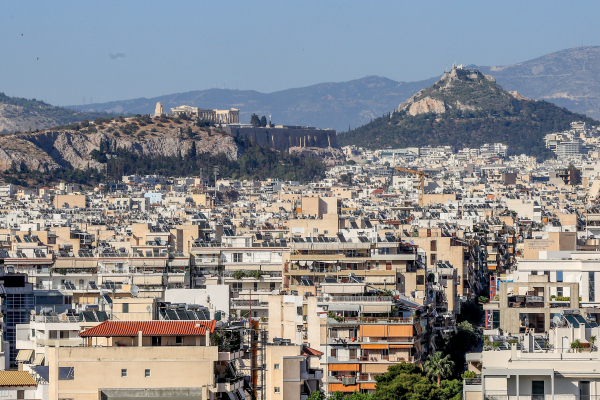
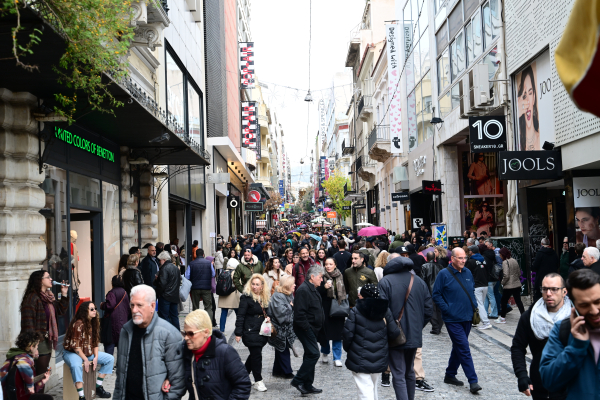
In Athens, temperatures could climb to around 40 or 41 degrees Celsius by late afternoon, according to meteorologists. Conditions in major urban centers are expected to feel even more oppressive because of the urban heat-island effect, as concrete and asphalt absorb heat during the day and release it slowly.
The heat is expected to begin easing Thursday, with temperatures forecast to fall by as much as 8 to 10 degrees Celsius in some areas. Forecasters said rain and thunderstorms could reach parts of mainland Greece from Thursday evening into Friday.
Until then, authorities are focusing on preventing fires from starting at all.