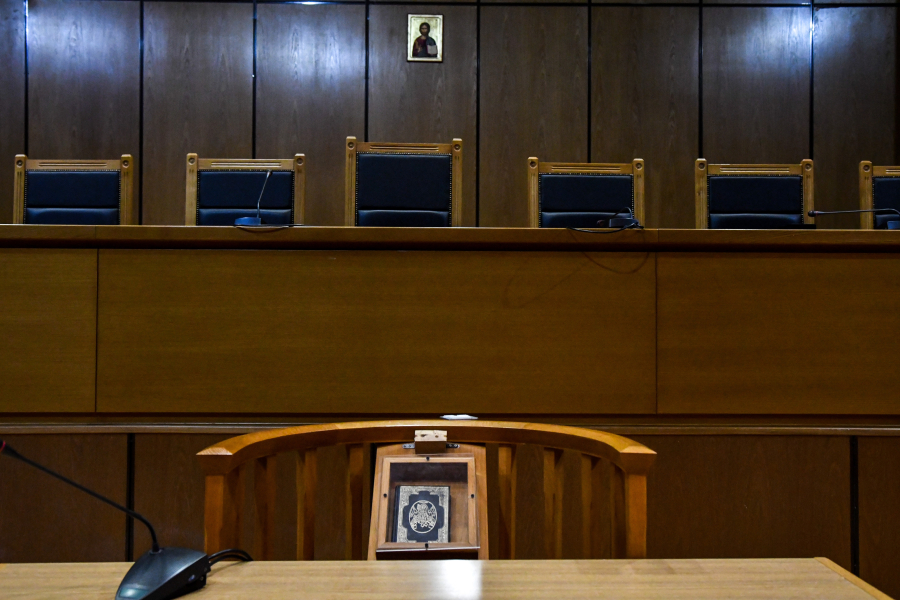

Dimitriadis, who served as secretary-general in the prime minister’s office, was also ordered to pay €7,000, or roughly $8,000, toward Koukakis’s legal costs.
The lawsuit centered on posts Koukakis published on X, formerly Twitter, and comments he made in interviews about Greece’s surveillance affair, which erupted into a major political controversy in 2022. Dimitriadis argued that
Koukakis had damaged his reputation and professional standing by associating him with individuals linked to the Predator spyware case. He sought €350,000 in damages, according to accounts of the proceedings.
The court rejected the lawsuit, finding that the legal requirements for establishing an unlawful infringement of Dimitriadis’s reputation hadn’t been met. Central to its reasoning was the factual basis underpinning Koukakis’s reporting and the distinction between knowingly publishing false information and drawing journalistic conclusions from documented facts.
Rather than assessing Koukakis’s statements in isolation, the court considered them within the broader context of his reporting on Predator, including Dimitriadis’s relationships and contacts with individuals whose names had surfaced in connection with the spyware affair.
Among them were businessmen Giannis Lavranos and Felix Bitzios, both of whom have featured prominently in reporting and investigations into Predator’s presence and use in Greece. Lavranos and Bitzios, along with Tal Dilian and Sara Aleksandra Hamou, were subsequently sentenced by a Greek court to 126 years in prison in connection with the spyware case, though Greek sentencing rules can sharply limit the amount of time actually served compared with the nominal sentence.
In Dimitriadis’s case, the court treated his documented relationships and contacts with figures linked to the affair as part of the factual backdrop against which Koukakis’s reporting should be assessed. The question, in the court’s reasoning, was whether the journalist’s statements amounted to arbitrary and defamatory allegations or represented conclusions that could reasonably be drawn from the available evidence.
The ruling is particularly notable because of Dimitriadis’s former position at the center of the Greek government. A nephew of Mitsotakis, he served as the prime minister’s secretary-general before resigning in August 2022, as revelations about surveillance practices were escalating into one of the most serious political controversies of Mitsotakis’s tenure.
The affair involved two distinct but overlapping forms of surveillance that have come under intense scrutiny in Greece: monitoring by the country’s National Intelligence Service, known by its Greek initials EYP, and the attempted or confirmed targeting of individuals with Predator, a powerful commercial spyware tool capable of gaining extensive access to a compromised smartphone.
Koukakis himself was among those targeted in the surveillance affair, which prompted investigations in Greece and intensified scrutiny from European institutions over the use of commercial spyware and the safeguards governing state surveillance.
Against that backdrop, the court found that reporting on the individuals and relationships surrounding the case was a matter of substantial public interest. Its reasoning recognized that journalists investigating issues of significant public concern have latitude to examine connections, draw links between established facts and reach conclusions, provided those conclusions have a sufficient factual foundation.
The fact that such conclusions may damage the reputation of the person concerned, the court reasoned, doesn’t by itself render them defamatory.
The court also distinguished between knowingly making a false assertion of fact and expressing an assessment or conclusion grounded in established circumstances. Under that reasoning, a statement isn’t defamatory merely because it is harsh or creates an unfavorable impression. A claim of defamation requires more than reputational harm; it requires, among other elements, establishing that the statement at issue concerned a false fact and, where legally relevant, that the person who published it knew it to be false.
The ruling also addressed the heightened scrutiny faced by public officials. Given Dimitriadis’s senior government role and prominence in public life, the court concluded that he couldn’t be treated in the same way as a private individual when determining the permissible boundaries of public criticism. Public figures, the court’s reasoning indicated, must tolerate a broader degree of scrutiny from journalists and the public.
According to an account of the ruling by lawyer Zacharias Kesses, the court also considered Koukakis’s references to Dimitriadis alongside Lavranos and Bitzios in connection with the surveillance scandal. It found that the characterization didn’t exceed the permissible limits of public criticism or amount to an extreme assertion lacking a factual basis.
The court also examined whether Koukakis’s statements were motivated by a specific intention to personally insult Dimitriadis rather than by a journalistic purpose of informing the public about the surveillance affair. It found that such an improper motive hadn’t been established.
The proceedings also highlighted an apparent contradiction in testimony from a witness for Dimitriadis, according to the court record. The testimony portrayed a retweet by Koukakis as having caused Dimitriadis greater harm than the reported Predator spoofing of Dimitriadis’s personal phone number in an effort to compromise senior Greek officials, including the chief of the Hellenic Police and the prosecutor assigned to Greece’s National Intelligence Service.
Dimitriadis pursued legal action against journalists who reported on the episode but, according to the court record, didn’t take legal action against those allegedly responsible for the spoofing itself, some of whom he had maintained close personal ties with until the surveillance scandal came to light.
The decision marks another legal development in a surveillance affair that has reverberated through Greek politics for several years, raising broader questions about press freedom, government accountability and the proliferation of commercial spyware in Europe.
For Koukakis, whose reporting and own experience of surveillance helped draw international attention to the affair, the judgment represents a significant victory in a legal dispute touching on the boundaries of investigative journalism and public-interest reporting. For Dimitriadis, the ruling rejects his argument that Koukakis unlawfully constructed a connection between him and individuals associated with the Predator affair.
Instead, the court concluded that documented relationships and contacts surrounding the case were legitimate subjects of journalistic investigation and public debate. On that basis, it dismissed Dimitriadis’s lawsuit in its entirety and ordered him to pay €7,000 toward Koukakis’s legal costs.