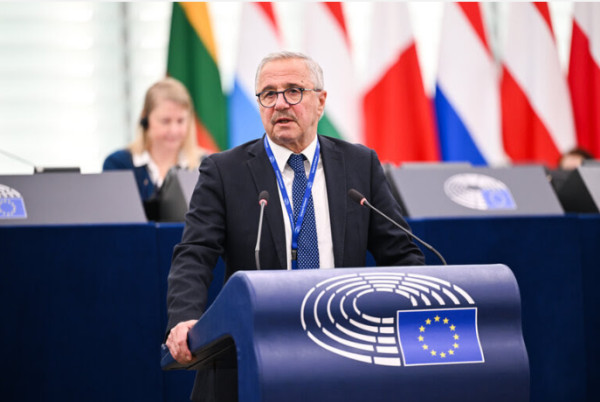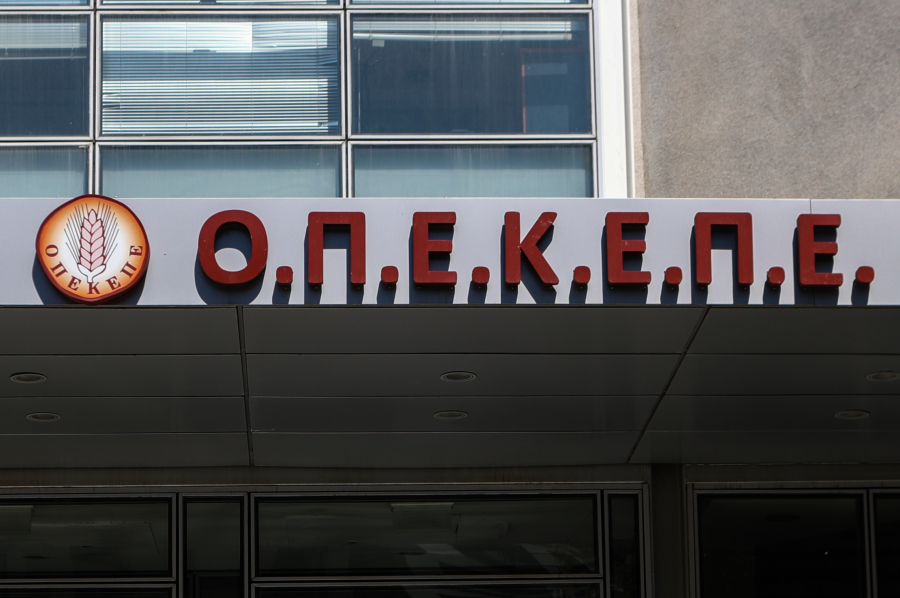
The European Public Prosecutor’s Office, or EPPO, has brought misdemeanor charges against four serving lawmakers—Kostas Skrekas, Christos Boukoros, Maximos Senetakis and Katerina Papakosta—as part of an investigation into Greece’s agricultural-payments agency, known as OPEKEPE.
The agency administers billions of euros in subsidies available to Greek farmers under the EU’s Common Agricultural Policy, making it a critical conduit between Brussels and Greece’s agricultural sector.
The four lawmakers face charges that include instigating breach of trust and the unlawful management of EU funds, depending on the individual case. Papakosta also faces allegations related to the falsification of official records and attempted computer fraud.
All four are presumed innocent under Greek law, and the charges are misdemeanors rather than felonies.
The EPPO said its investigations had uncovered what it described as recurring patterns of corruption in the management of EU agricultural funds. According to the prosecutor’s office, investigators found evidence of unlawful interference in administrative and inspection procedures, alterations to data after mandatory checks had been completed, interference with on-site inspections and the manipulation or concealment of inspection findings.
The charges are part of a broader case involving 22 people, including former senior officials at OPEKEPE, political-office staff and recipients of agricultural subsidies.
At the same time, the EPPO dropped cases against seven other serving New Democracy lawmakers after concluding that there was insufficient evidence to justify prosecution. Cases involving two other politicians had previously been closed.
That split outcome has fueled sharply competing interpretations in Athens.
and his government have seized on the decision to clear most of the politicians who had come under scrutiny, arguing that opposition parties rushed to portray the administration as institutionally corrupt before the investigations had run their course.
“Honest politicians were dragged through the mud for weeks,” Mitsotakis said, accusing political opponents of disregarding the presumption of innocence. He said nine of 13 New
Democracy ministers and lawmakers who had faced scrutiny had effectively been cleared, while the remaining four would answer misdemeanor charges.
The prime minister also criticized the European Public Prosecutor’s Office, saying it had appeared to become entangled in Greece’s domestic political confrontation.
Government spokesman Pavlos Marinakis went further, calling on the main opposition party and other government critics to apologize for having described the Mitsotakis administration as a “government of defendants.”
For the opposition, however, the decision to prosecute four sitting lawmakers was evidence that the scandal remained a major political liability for New Democracy, the center-right party that has governed Greece since 2019.
PASOK, the country’s main opposition party, accused the government of arrogance and said the prosecutions demonstrated that the OPEKEPE affair was closely tied to the governing party and its political network.
“The justice system will now have its say,” PASOK spokesman Kostas Tsoukalas said, arguing that Greece’s agricultural sector had paid a heavy price for political patronage and corruption.
The left-wing SYRIZA party said the prosecutions undermined the government’s contention that problems at OPEKEPE reflected long-running weaknesses in the Greek state rather than wrongdoing linked specifically to the current administration. It called for “full political accountability.”
The smaller New Left party accused Mitsotakis of presiding over a government engulfed by scandals and said the OPEKEPE case had damaged Greece’s credibility with European institutions.
The political confrontation reflects the sensitivity of EU farm subsidies in Greece, where agriculture remains economically and politically important, particularly outside the country’s major cities. Questions over how those funds are distributed—and whether political connections influence payments—have become a significant source of pressure on the government.
According to the EPPO, the investigation into the alleged 2021 offenses found evidence of interference in the system used to approve and monitor agricultural payments. The prosecutor’s office charged a former OPEKEPE president with five counts of breach of trust, while a former director-general responsible for direct payments faces two such counts. Two former regional directors were also charged in connection with breach of trust and the unlawful management of EU funds.
Other defendants include an employee in the office of a serving lawmaker, an associate of a former minister, a veterinary official and several subsidy recipients.
Those convicted could face prison sentences of up to five years as well as fines under Greek law, the EPPO said.
The European Public Prosecutor’s Office is an independent EU body responsible for investigating and prosecuting crimes affecting the bloc’s financial interests.
The office said proceedings remain under way against other individuals, including former lawmakers, and that separate investigations are examining alleged misconduct in other years.
The four New Democracy lawmakers facing prosecution have rejected suggestions of wrongdoing.
Skrekas, a former minister and former secretary of New Democracy, said he had complete confidence in the Greek judicial system and called for the case to be heard as quickly as possible.
He said the case involving him concerned a genuine farmer with legitimate agricultural production, rather than fictitious farming activity or the unlawful collection of subsidies.
“I am certain that the judicial process will reveal the true dimensions of the case,” he said.
Boukoros similarly stressed that being sent to trial didn’t amount to a finding of guilt. He said the farmers connected to his case had undergone repeated inspections and had been found to have legitimate farming operations, landholdings and livestock.
Former minister Makis Voridis, a prominent New Democracy figure, predicted that the misdemeanor cases against the four lawmakers would eventually collapse in court and accused the opposition of damaging political careers by treating allegations as established facts.
For Mitsotakis, the episode presents a complicated political challenge. His government can point to the closure of cases against a majority of the lawmakers initially investigated as evidence that some accusations were overstated. But the prosecution of four sitting members of his party—including politicians who have held senior government or party positions—ensures that the OPEKEPE affair will remain part of Greece’s political debate as the cases move through the courts.
The EPPO said all defendants are presumed innocent unless and until found guilty by the competent Greek courts.