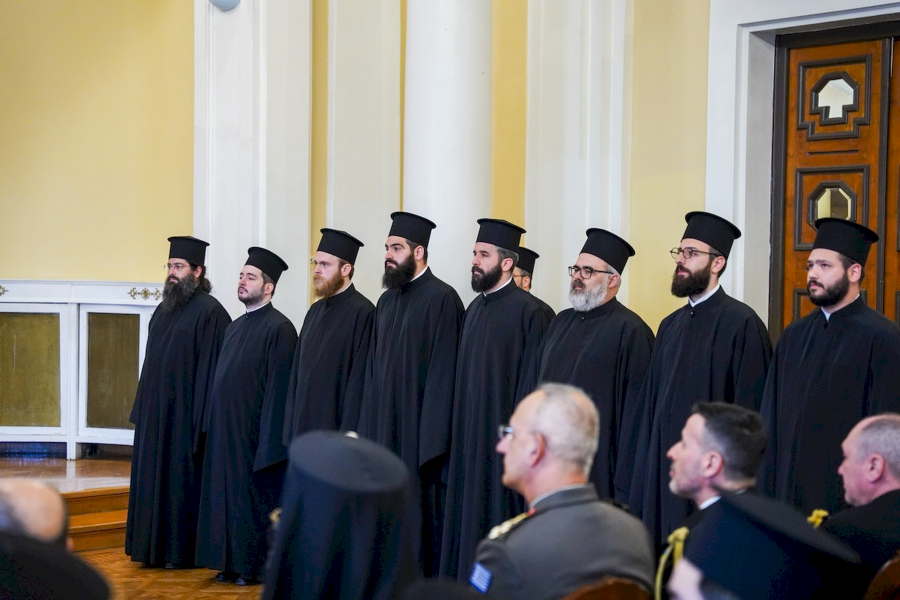
The Greek government has proposed a sweeping overhaul of the pay structure for the country's most senior Orthodox Christian clergy, a move that would more than double the salaries of many bishops and could increase some clerical earnings by as much as 120 percent.
The measure is contained in a broad government bill released this week for public consultation by the Ministry of National Economy and Finance. If approved, it would fundamentally change how senior members of the Church of Greece are compensated, linking their salaries directly to those of top-ranking civil servants.
The proposal comes at a time when Greece continues to grapple with persistent cost-of-living pressures and growing public scrutiny over government spending, making the scale of the planned increases particularly notable.
ΔΙΑΒΑΣΤΕ ΕΠΙΣΗΣ


Under the current system, senior clergy are paid according to fixed salary scales established under legislation enacted in 2017. A metropolitan bishop, one of the highest-ranking positions in the Greek Orthodox Church, currently receives a base salary of €2,210 per month, supplemented by modest allowances. The Archbishop of Athens and All Greece, the head of the Church of Greece, receives a base salary of €2,600 per month, plus a representation allowance.
The new legislation would replace that framework entirely. Instead of fixed salaries, the remuneration of the Archbishop, Metropolitans and Titular Metropolitans would be set at 90 percent of the maximum salary ceiling applicable to senior public officials. In practice, that benchmark corresponds to the salary of a ministry secretary-general, one of the highest-ranking positions in the Greek civil service.
Based on current public-sector pay levels, a ministry secretary-general earns approximately €5,745 gross per month. Under the proposed formula, metropolitan bishops would receive roughly €5,170 gross monthly, more than twice their current compensation. The increase would approach 120 percent for many bishops, while the Archbishop's remuneration would rise by about 91.5 percent.
The government has not yet publicly provided a detailed justification for selecting 90 percent of a secretary-general's salary as the benchmark for senior clergy. Nor has it explained why such a substantial adjustment is being advanced now, at a moment when public resources remain under pressure and many households continue to face economic challenges.
The proposal is likely to reignite a longstanding debate in Greece over the financial relationship between the state and the Orthodox Church. Although the Church of Greece is institutionally distinct from the government, the salaries of its clergy are paid by the state under arrangements that date back decades and are rooted in historical agreements between church and government.
As the bill enters the consultation process, the central question is unlikely to be whether senior clergy deserve a pay increase. Rather, it will be whether the government can convincingly explain why the country's highest-ranking church officials should be compensated at nearly the same level as top state administrators — and why that issue has become a legislative priority now.