Greek lawmakers missed what critics argue was a rare opportunity to scrutinize the record of Bank of Greece Governor Yannis Stournaras ahead of his expected reappointment for a third consecutive term, opting instead for a largely procedural parliamentary hearing that avoided contentious questions surrounding some of the country’s most sensitive banking episodes of the past decade.
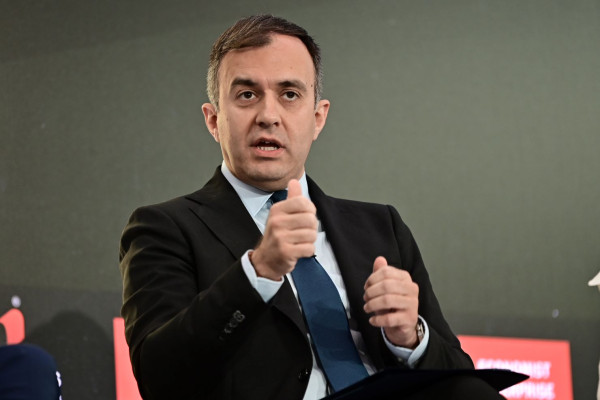
Stournaras, who has led Greece’s central bank since 2014 and remains one of the country’s most influential economic policymakers, appeared Monday before Parliament’s committee overseeing public enterprises, banks and social security institutions. The hearing came just hours before the Greek Cabinet is expected to formally approve the renewal of his mandate.
But despite the significance of extending the tenure of the central bank governor for another six years, members of parliament largely refrained from seeking a broader assessment of Stournaras’ twelve-year record, including his handling of supervisory matters falling under the exclusive remit of the Bank of Greece.
The omission is notable because Greece’s central bank enjoys institutional independence, leaving parliamentary renewal hearings among the few occasions in which elected officials can publicly examine the governor’s track record.
Instead, lawmakers avoided several controversial cases linked to the supervision of non-systemic banks and banking resolutions during the post-crisis period.
Among them was the long-running case of Attica Bank, a smaller lender that underwent repeated recapitalizations between 2016 and 2022 after years of governance and asset-quality problems. The rescue effort ultimately required approximately €952 million in state-backed capital injections through the Hellenic Financial Stability Fund, while the Greek state also incurred an additional fiscal burden of around €239 million through the write-off of deferred tax credits.
The case remains politically sensitive because the bank was led during much of that period by former CEO Theodoros Pantalakis, regarded as a close associate of Stournaras, while its largest shareholder was the engineers’ pension fund TSMEDE, which reportedly suffered losses exceeding €800 million from its investment.
Equally absent from the parliamentary discussion were questions over the Artemis Securitisation scheme involving non-performing loans and the role of asset-management company Thea Artemis, where former Stournaras associate Irini Marangoudaki held a management position while simultaneously representing investor Ellington Solutions.
The securitization structure later came under scrutiny after intervention by the European Central Bank’s Single Supervisory Mechanism (SSM), raising broader questions over supervisory oversight. Shareholders of Attica Bank have yet to receive a full accounting of the financial implications stemming from the transaction.
Lawmakers also sidestepped discussion over PQH, the special liquidator established in 2016 to manage failed banks and financial institutions placed under resolution. Critics argue Parliament should have examined both the company’s decade-long performance and the Bank of Greece’s supervisory role, particularly given the central bank’s involvement in shaping its management structure.
Other topics left untouched included the Bank of Greece’s decisions regarding investor suitability assessments for significant shareholdings in banks — known as “qualified holdings” — and the application of fit and proper criteria to senior executives across Greece’s banking sector.
No questions were raised either on the Bank of Greece’s role in the 2020 conversion of contingent convertible bonds (CoCos) issued by Piraeus Bank, a move that increased state exposure after coupon payments were suspended and the instruments were converted into equity.
Speaking before the committee, Greek Economy and Finance Minister Kyriakos Pierrakakis praised the reappointment process as reflecting “the value of the governor.”
Yet critics argue that such value could have been measured more convincingly through a substantive review of Stournaras’ supervisory decisions during one of the most turbulent periods in modern Greek banking history.
Instead, Parliament’s brief examination left many of those questions unanswered.