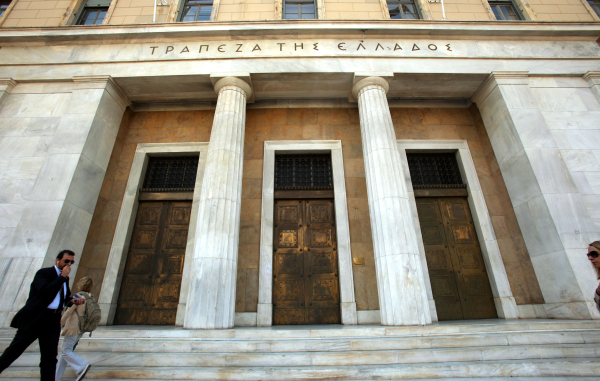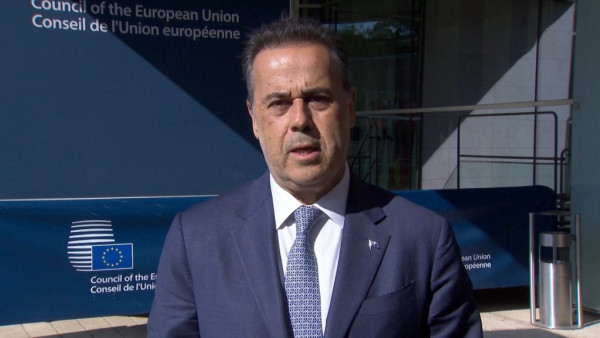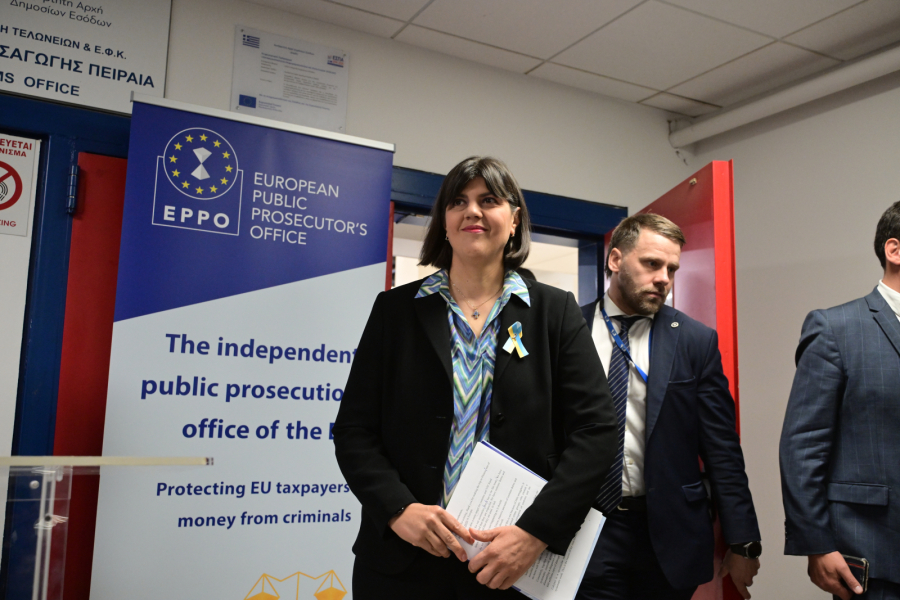

A high-stakes meeting between Laura Kövesi and Greece’s justice minister Giorgos Floridis on Wednesday is set to unfold against the backdrop of an escalating dispute between Athens and the European Public Prosecutor’s Office (EPPO).
Kövesi, who leads the EU body tasked with investigating fraud involving the bloc’s finances, requested the 9:30 a.m. meeting herself, according to officials familiar with the matter. Her visit comes at a sensitive moment, as Greek authorities weigh whether to renew the mandates of three national prosecutors seconded to the EPPO — a decision that has taken on political overtones in recent weeks.
At the center of the controversy is Popi Papandreou, one of the EPPO’s delegated prosecutors in Athens. Greek government figures, including Health Minister Adonis Georgiadis, have publicly criticized her, accusing her of using ongoing investigations involving political figures as leverage to secure a renewal of her term. The allegations have been denied by those close to the EPPO.
Prime Minister Kyriakos Mitsotakis has stopped short of directly endorsing the accusations but has signaled unease, warning in parliament against what he described as selective leaks to the media. Opposition parties say the government’s rhetoric is aimed at preparing public opinion for a decision not to renew Papandreou’s mandate when it expires later this spring.
While the formal authority to extend the secondment of Greek prosecutors lies with the country’s top court, the Areios Pagos, the situation is complicated by EU law. The EPPO’s governing framework provides that the appointment and renewal of European delegated prosecutors ultimately fall under its own authority, based in Luxembourg, and require the approval of its leadership and the College of European Prosecutors.
That legal ambiguity has raised the prospect of a direct institutional clash. The College has already expressed unanimous support for renewing the mandates of the prosecutors in Athens, according to people familiar with the decision. Greek judicial authorities, however, insist they retain the final say, as the prosecutors remain formally part of the national system.
The dispute has broader implications for the relationship between Greece and the EPPO, which has been active in probing alleged misuse of EU funds in the country, including agricultural subsidies. Kövesi is expected to use both her meeting in Athens and her appearance at the Delphi Economic Forum on Thursday to defend the EPPO’s work and underscore the importance of safeguarding EU money.
Privately, EPPO officials argue that any attempt to block the renewal of delegated prosecutors would effectively challenge the primacy of EU law. In their view, the only legal path for Greece to prevent such renewals would be to withdraw recognition of the EPPO altogether — a step widely seen as politically unthinkable.
Still, the rhetoric from some members of the Greek government has fueled concerns in Brussels. Georgiadis has openly questioned the EPPO’s role, prompting critics to draw comparisons with confrontations between EU institutions and governments such as that of Hungary’s Viktor Orbán.
For now, attention is focused on Wednesday’s meeting, which could offer the first indication of whether Athens is prepared to escalate the standoff — or step back from the brink.