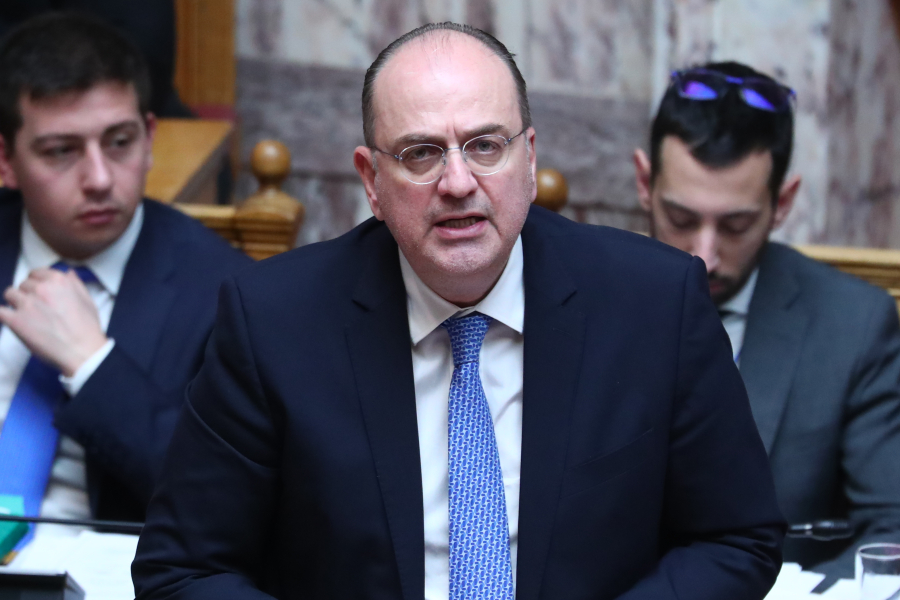

Greek Prime Minister Kyriakos Mitsotakis’s government has rallied behind Deputy Agriculture Minister Makarios Lazaridis after allegations that he secured a senior government appointment in 2007 without holding the university degree formally required for the role, opening a fresh political headache for Athens amid opposition accusations of cronyism and hypocrisy.
The controversy centers on Lazaridis’s appointment under a previous New Democracy government as a “special scientific adviser” at the Education Ministry, a position for which Greek law generally requires advanced academic qualifications. Opposition parties allege Lazaridis lacked the necessary credentials at the time and misrepresented his qualifications in order to obtain the post.
Lazaridis has denied wrongdoing and insisted he was lawfully appointed under the looser rules governing political hires at the time. In a combative television interview Tuesday, he brandished a diploma from the now-defunct The College of Southeastern Europe, a private college in Greece whose qualifications were not formally recognized as equivalent to Greek public university degrees when he graduated in 1992.
“In 2007 you could work as a political appointee even with this certificate of studies,” Lazaridis said, arguing that such positions were filled by ministerial discretion rather than through Greece’s formal civil-service hiring procedures.
Government officials have backed that explanation and signaled Mitsotakis has no plans to dismiss him, despite privately conceding that aspects of the 2007 appointment may raise procedural questions. Officials also sought to downplay the affair by noting that the salary difference between the post Lazaridis held and a standard political appointment was relatively modest.
The opposition has seized on the case as evidence of what it calls entrenched patronage within the governing conservative party. Center-left PASOK accused Lazaridis of effectively admitting on live television that he lacked the formal qualifications for the role, saying his appointment reflected partisan favoritism rather than merit. Left-wing SYRIZA went further, calling Lazaridis a “fraud” and demanding his immediate dismissal.
The affair is particularly awkward for Mitsotakis, who has built much of his political brand on promises of technocratic competence, meritocracy and modernization in Greek public administration. Critics argue the Lazaridis case undercuts that message and revives longstanding accusations that Greece’s political elite continues to reward party loyalists with state positions.
Lazaridis, however, has refused to resign, saying he will not apologize for educational choices he made decades ago and insisting that he submitted all documents requested by authorities at the time of his hiring.
The dispute has also revived scrutiny of Lazaridis’s past public statements after journalists resurfaced an older social media post in which he appeared to refer to himself as a graduate of a public university — a characterization he denied, attributing it to a typographical error.
For now, Mitsotakis appears determined to weather the controversy rather than sacrifice another minister. But with the opposition escalating its attacks and framing the episode as emblematic of broader governance failures, the Lazaridis affair risks becoming the latest test of the government’s reformist credentials.