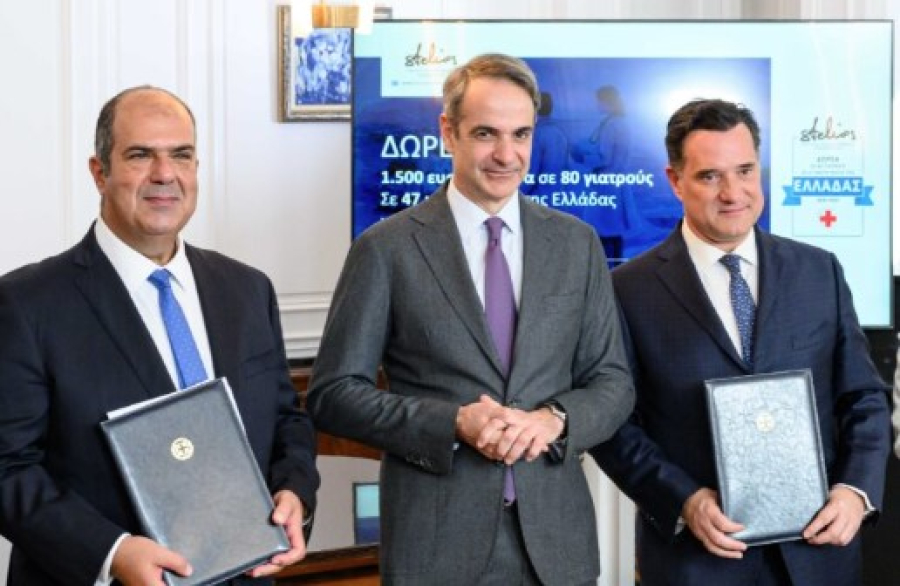

Greece will boost financial incentives for doctors working on its small and remote islands through a €10 million ($10.8 million) donation from the Stelios Philanthropic Foundation, in an effort to address chronic shortages of medical staff in isolated communities.
The donation, made by the foundation established by entrepreneur Sir Stelios Haji-Ioannou, will be distributed over seven years and will fund monthly payments of €1,500 to doctors serving in remote island health facilities, according to a government decision published in the official gazette. The payments are intended both to attract new doctors to underserved areas and to encourage existing medical staff to remain in their posts.
Greek island communities—particularly smaller and more remote ones—have long struggled with limited access to healthcare, often relying on a small number of doctors or temporary staff rotations. Authorities hope the additional financial incentive will help stabilize staffing levels and improve access to medical services for permanent residents and seasonal populations.
The funds will come entirely from the private donation and will not affect the state budget. The money will be held in a special account at the Bank of Greece and can be used exclusively for the incentive program. The government decision explicitly prohibits the funds from being used for other purposes, such as equipment, operating costs or broader health system expenses.
The bonus payments will be supplementary to doctors’ regular salaries and will be tax-exempt. Doctors will receive the payments only while physically serving at healthcare facilities on the designated islands, with payments suspended during long absences or transfers.
The program will also be subject to annual audits and reporting requirements to ensure the funds are used strictly for their intended purpose—strengthening public healthcare services in Greece’s small island communities, where access to medical care remains uneven compared with mainland urban centers.