
The Greek government has unveiled a new set of secondary legislative initiatives aimed at addressing affordable housing shortages and strengthening social cohesion, as presented to the Cabinet on Monday.
The proposals were introduced by the Minister of National Economy and Finance and President of the Eurogroup, Kyriakos Pierrakakis, together with the Minister of Social Cohesion and Family, Domna–Maria Michailidou.
According to the official announcement, the measures put into effect commitments previously announced by Prime Minister Kyriakos Mitsotakis and focus on easing housing pressures in high-demand areas while supporting key public sector workers. One of the central provisions expands housing support for public school teachers, doctors, and nurses who are required to rent accommodation away from their permanent residence. Eligible employees serving outside the greater Athens area and outside the Thessaloniki region will now receive a refund equivalent to two months’ rent, up from one, with no income criteria attached. The government estimates that around 50,000 education and healthcare professionals will benefit from the measure.
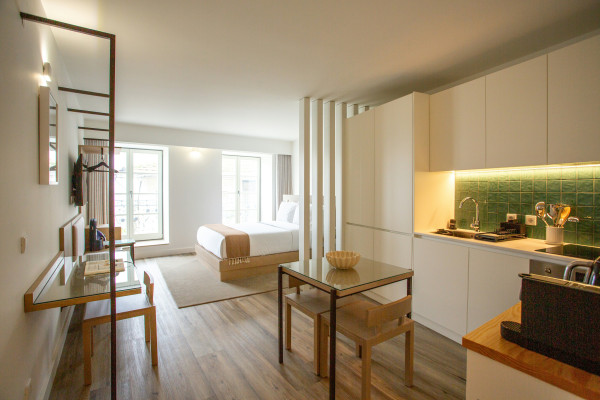
At the same time, the government is moving to curb the expansion of short-term rentals in urban centers facing acute housing shortages. New restrictions will apply to properties located in the central municipal district of Thessaloniki, following a model already in force in central districts of Athens. In addition, properties in restricted areas that change ownership for any reason will automatically be removed from the national short-term rental registry and will not be allowed to re-enter the system for as long as the restrictions remain in place.
The legislative package also introduces a new housing scheme known as “Build to Rent,” designed to increase the supply of affordable rental housing. Under the program, companies operating in construction or real estate management will be allowed to develop new residential properties or convert existing non-residential buildings into housing, provided the units are offered exclusively for long-term rental of at least ten years at pre-determined rent levels. To encourage private-sector participation, rental income generated through the scheme will be exempted from corporate income tax.