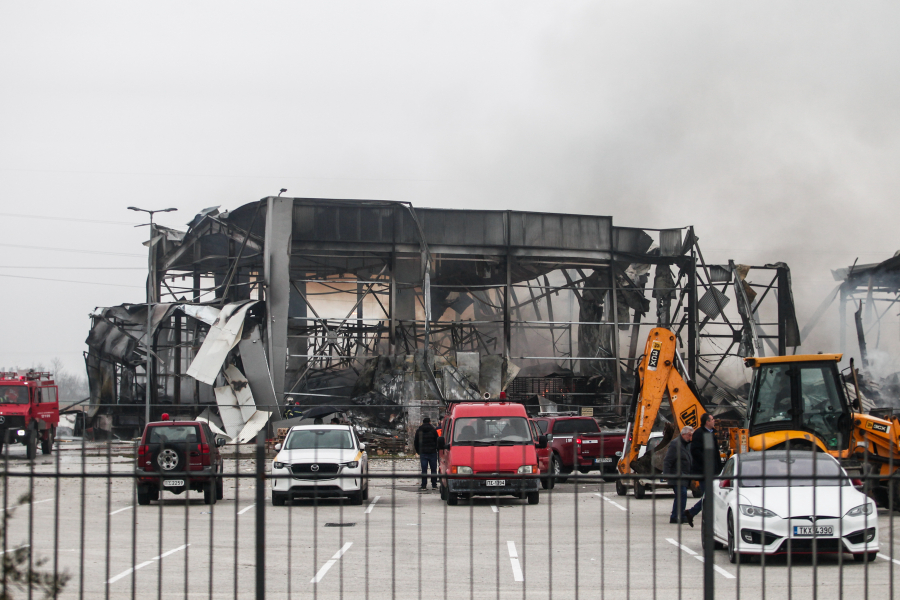

The tragedy at the Violanta biscuit factory, where five workers were killed while on duty in the city of Trikala, has once again cast a harsh spotlight on workplace safety in Greece, particularly the persistent problem of fatal occupational accidents. Although it is still unclear whether this incident reflects a temporary surge or a deeper structural trend, the available data point to the region of Thessaly as the country’s most alarming hotspot for deadly workplace accidents.
Official figures from Greece’s statistical authority, ELSTAT, show that 51 workers lost their lives while working in 2023, up from 35 in 2022, marking a year-on-year increase of 45.7 percent. This translates into a national average of roughly 0.49 fatal workplace accidents per 100,000 inhabitants. Thessaly stands out sharply from this average. With eight fatal accidents recorded in 2023 and a population of about 680,000, the region posted a rate exceeding 1.1 deaths per 100,000 residents—more than double the national figure.
Analysts attribute this to the region’s strong concentration of high-risk economic activities, particularly agriculture, manufacturing, and construction, sectors that across Greece are consistently linked to a higher incidence of serious and fatal accidents.
Central Macedonia, Greece’s most populous region, recorded the highest number of fatal workplace accidents in absolute terms, with 13 deaths. However, given its population of nearly 1.8 million, its fatality rate stands at around 0.7 per 100,000 inhabitants. While this remains above the national average, it is significantly lower than the rate recorded in Thessaly.
The situation in Thessaly underscores the urgent need for a comprehensive and targeted prevention strategy. This would require tighter and more frequent inspections by labor authorities, particularly in high-risk sectors, alongside mandatory and certified health-and-safety training for both workers and employers. Greater use of digital tools to record and analyze workplace accidents in real time, combined with stricter enforcement of existing legislation and meaningful penalties for violations, would be essential steps toward ensuring that prevention becomes an everyday reality in Greek workplaces rather than an afterthought.