
Greece–Israel Defence Cooperation Enters New Phase, Ministers Say
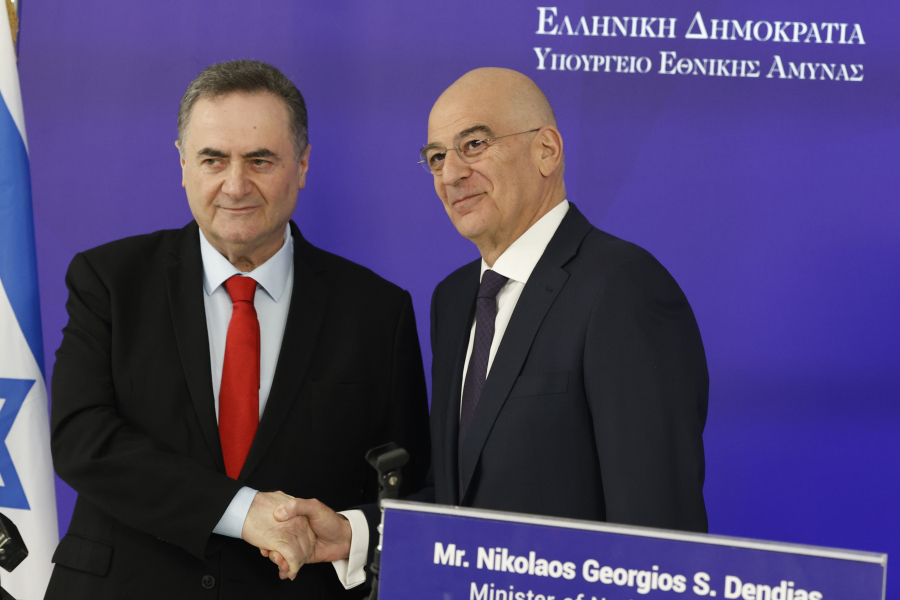
Greece and Israel reaffirmed and expanded their strategic defence partnership on Tuesday during talks in Athens between Greek Defence Minister Nikos Dendias and his Israeli counterpart, Israel Katz, underscoring their shared focus on regional stability, military cooperation and defence innovation.
Following the meeting, Mr Dendias said bilateral defence relations now span the entire spectrum of modern military cooperation, from joint exercises and operational interoperability to collaboration in research, innovation, defence technology and industry. He noted that the two countries recently signed their 2026 Defence Cooperation Programme, which includes dozens of joint activities in both Greece and Israel.
A central theme of the talks was adapting to the realities of 21st-century warfare. The two sides agreed to intensify cooperation on countering unmanned threats, including drone swarms and unmanned underwater systems, as well as strengthening capabilities in cyber defence. Mr Dendias highlighted Israel’s role as a global leader in advanced defence technologies, including missile defence, anti-drone systems, sensors and cyber platforms.
Drawing on Israel’s experience, Greece has sought to reshape its own defence ecosystem. Mr Dendias pointed to the creation of the Hellenic Centre for Defence Innovation, aimed at moving the country from being primarily a buyer of defence systems to a co-producer of innovative, dual-use technologies. He said early results were already visible, citing anti-drone systems deployed with the Greek Navy and the development of domestically produced drones. Both sides agreed to deepen cooperation between Greek and Israeli innovation bodies.
The talks also covered broader regional frameworks, including cooperation among Greece, Cyprus, Israel and the United States, which Athens views as a stabilising axis in the Eastern Mediterranean. Mr Dendias stressed that Greece seeks to safeguard its sovereignty and sovereign rights while contributing to regional deterrence and stability.
Developments in the Middle East featured prominently in the discussions. Mr Dendias said Greece maintains defence ties with Israel while preserving close relations with the Arab world, positioning itself as a stabilising actor. He reiterated Greece’s condemnation of the 7 October attacks, its support for Israel’s right to self-defence and its backing of efforts to secure the return of all hostages. He also briefed Mr Katz on Greek support for the Lebanese armed forces and stressed the importance Athens places on protecting religious and ethnic communities, particularly Christian populations, in Syria and Lebanon.
For his part, Mr Katz described his visit as a milestone in a deep alliance between two democracies with shared values and security interests. He said Israel was committed to further strengthening military cooperation with Greece, including intelligence sharing, joint training and operational coordination, which he described as key force multipliers. Emphasising the challenges facing the region, Mr Katz said Israel, Greece and Cyprus were determined to counter destabilising forces and reinforce security and stability across the Eastern Mediterranean.